Sungai Klang Water Quality Improving, 98,000 Tonnes of Waste Removed Since 2017
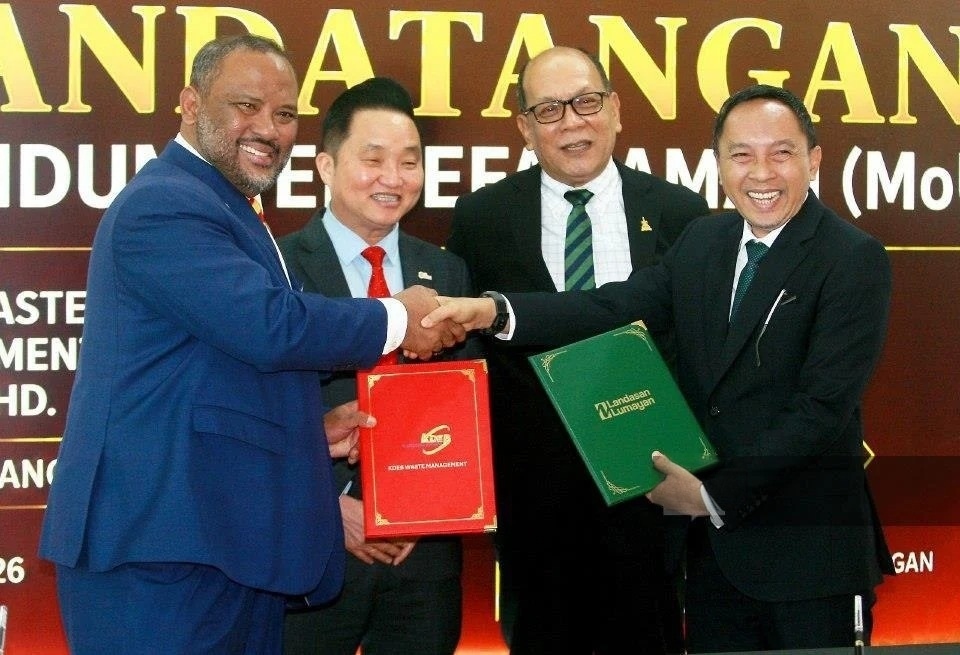
Selangor Infrastructure and Agriculture EXCO, Datuk Izham Hashim (second from right), accompanied by Selangor Local Government and Tourism EXCO, Datuk Ng Suee Lim (second from left), witnessing the exchange of documents between KDEB Waste Management Managing Director, Datuk Ramli Mohd Tahir (left) and Landasan Lumayan Sdn Bhd Managing Director, Syaiful Azmen Nordin at the Memorandum of Understanding Signing Ceremony between KDEB Waste Management and Landasan Lumayan Sdn Bhd at Wisma Dewan Undangan Negeri Selangor, Shah Alam. - NSTP/Faiz Anuar Photo
67
Share
SHAH ALAM: The cleanliness level of Sungai Klang has improved after more than 98,000 tonnes of various types of waste were removed from the 56-kilometre (km) river since 2017.
The accumulated waste collection each year in the river also showed a decrease of up to 63 percent between 2016 and 2017 until last year, when around 5,000 to 6,000 tonnes of waste were removed compared to 16,000 tonnes.
Landasan Lumayan Sdn Bhd Managing Director, Syaiful Azmen Nordin, said the cleaning works carried out nearly 10 years ago cost up to RM10 million, with RM200 needed for every one tonne of waste.
He said, on average every day, waste collection in Sungai Klang is between 100 and 150 tonnes.
“Our target, if possible, is to keep waste (collection) below 1,000 tonnes for each year. We cannot expect zero waste at all; we have to be practical and realistic because Sungai Klang is located in an urban area.
“The significant decrease in waste collection was during the COVID-19 pandemic when there was no waste. So, we knew where the waste came from, because everyone stayed at home and managed their own domestic waste,” he said when met at the Signing Ceremony of the Memorandum of Understanding (MoU) with KDEB Waste Management for the Development of the Telok Kapas Landfill Site, here, today.
He said, various types of waste collected, whether domestic or bulk waste, were removed from the river. LLSB also faced challenges in detecting waste embedded at depths of three to five metres at the riverbed that needed to be removed to improve its water quality.
He said, the decrease in waste collection each year, around 15 to 20 percent from the first year, has had a significant impact, among others, on the improvement of water quality.
“Previously, when there was a lot of waste, the water quality was Class Five, which is very heavily polluted, with odour problems and colour changes. When we removed the waste, now Alhamdulillah the water quality has improved to a middle level between Class Four or Three,” he said.
Meanwhile, Syaiful Azmen informed that the progress of the Sungai Klang deepening project and riverbank upgrading to prevent flooding originating from the canal is currently at 68 percent, increasing the river’s capacity by up to 22 percent.
“There are several areas, especially the critical ones in Taman Sri Muda, Shah Alam, that have been widened and the riverbanks improved, including bunds. So far, we have excavated about 1.5 million cubic metres (from Bandar Shah Alam to the river mouth) to increase capacity.
“We are reducing the risk of ‘overtopping’. Floods still occur but are not caused by river overflow; instead, they are due to internal drainage overflow. Not like what happened in 2021,” he said.