

Saudi Arabia Launches Second Phase of Industrial Incentives Program to Boost Investment and Competitiveness
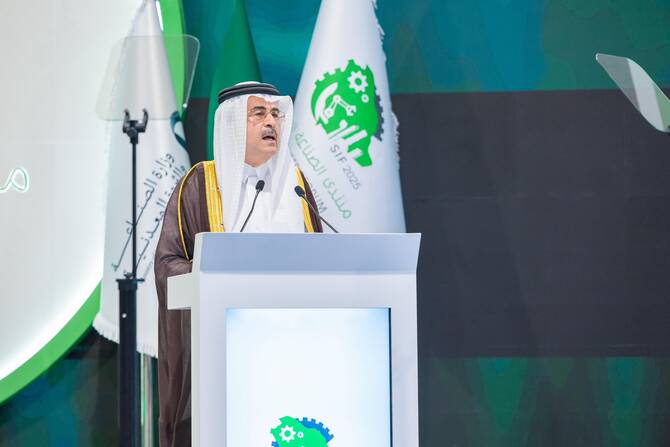
RIYADH, June 24 — Saudi Arabia has launched the second phase of its standardized industrial incentives program, as part of an ambitious strategy to position the Kingdom as a regional and global industrial powerhouse, senior officials announced at the Saudi Industry Forum held in Dhahran.
Khalil Ibn Salamah, Deputy Minister of Industry and Mineral Resources for Industrial Affairs, said the initiative supports high-value investments and aims to strengthen the Kingdom’s trade balance, while encouraging local manufacturing of critical goods.
“It gives me great pleasure to announce the launch of the second batch of standardized incentives under this transformative program,” Ibn Salamah stated. “Investors will be able to apply starting in August.”
Incentives to Drive Localization and Industrial Depth
Under the program, eligible investors can receive up to SR50 million, or 35% of total investment value—whichever is higher. The initiative goes beyond traditional financing, including direct grants to support factories producing goods not currently manufactured locally.
Since the program’s launch, over 1,000 investors have expressed interest. Of 118 submitted applications, 12 have reached the final qualification stage.
“This program is among the most significant in our industrial history,” said Ibn Salamah, highlighting the role of the private sector in the National Industrial Strategy (NIS).
Expanding Industrial Footprint Across the Kingdom
Saudi Arabia currently oversees 61 industrial cities, including
- 37 under MODON (Saudi Authority for Industrial Cities and Technology Zones),
- 18 private and integrated cities,
- 4. Managed by the Royal Commission for Jubail and Yanbu,
- Some are situated within Special Economic Zones such as OXAGON in NEOM.
These zones span over 2 trillion sq. meters, with SR31 billion invested in infrastructure—expected to yield 8–12 times return on investment.
“The industrial investor remains an indispensable partner in our development efforts,” Ibn Salamah added.
Currently, Saudi Arabia is managing over 1,900 industrial projects worth SR380 billion, with nearly half located in the Eastern Province.
Chemicals Sector at the Heart of Industrial Growth
Speaking during a panel session, Fahad Al-Jubairy, Assistant Deputy Minister for Sectoral Strategies and Regulation, identified the chemicals sector as a key pillar of the National Industrial Strategy.
“This sector is expected to account for more than half of the total economic impact projected by the strategy by 2035,” Al-Jubairy said.
The Kingdom aims to:
- Multiply specialty and downstream chemicals production by 4–5 times,
- Boost basic and intermediate chemical production by 12 million tons annually over the next decade.
The sector underpins various industries, including automotive, aviation, construction, and advanced materials, and is expected to generate new jobs and investment opportunities for SMEs.
New Industrial Complexes and Strategic Partnerships Announced
Several key developments were unveiled at the forum:
- Two new industrial complexes were inaugurated:
- In Dammam Third Industrial City, to strengthen service and export integration,
- In Jubail Second Industrial City, targeting high-value chemical investments.
- A strategic joint venture was announced to establish Saudi Arabia’s first tinplate manufacturing plant, in partnership between National Industrial Co. and Shanghai Donghexin Group.
- MODON signed multiple agreements:
- SR40 million deal with Abdullah Al-Shuwayer Sons Heavy Metal Industries,
- SR35 million lease with Al-Sharq Polystyrene Factory,
- SR20 billion investment with Al Marje Al Hayawi Co. Ltd.
Driving Vision 2030 Goals Through Industrial Transformation
The National Industrial Strategy, backed by over 140 initiatives, focuses on:
- Maximizing natural resource value,
- Securing raw material supply,
- Enhancing exports,
- Developing specialized industrial clusters.
It also emphasizes empowering SMEs and adopting advanced manufacturing technologies, contributing to GDP growth and resilient supply chains.
“This program has already had a significant impact and will continue to drive industrial transformation in the years ahead,” Ibn Salamah concluded.