

President Aoun Welcomes Gaza Ceasefire, Calls for Israeli Restraint and Stronger Lebanese Sovereignty
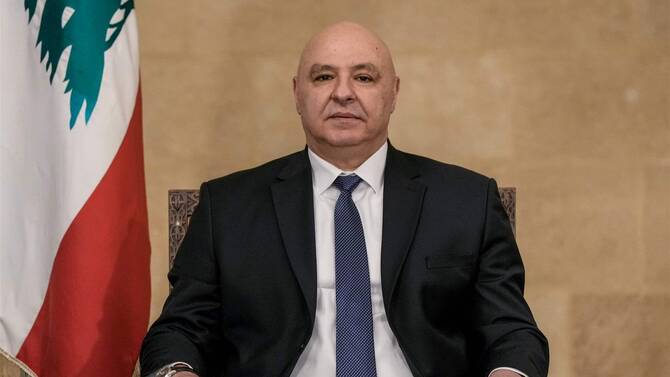
BEIRUT, Oct 9: Lebanese President Joseph Aoun on Thursday hailed the initial ceasefire agreement between Israel and Hamas, describing it as a vital step toward ending the war in Gaza and restoring regional peace.
In a statement from the presidential office, Aoun expressed hope that the truce would pave the way for a permanent ceasefire and alleviate the humanitarian suffering of Palestinians in Gaza. He emphasized the need for collective Arab and international efforts to achieve a “comprehensive and just peace” aligned with the 2002 Arab Peace Initiative adopted in Beirut.
The Lebanese president also urged Israel to exercise restraint, particularly along the Lebanese and Syrian borders, and to end hostilities that threaten to widen the conflict. “Peace in Gaza must not come at the expense of Lebanon or regional stability,” he said.
Amid ongoing tensions, the Lebanese government has intensified its push to assert full state control over arms within its borders. Earlier in September, the Cabinet approved a confidential army plan to monopolize weapons, retrain forces, and redeploy them across the country.
Minister Kamal Chehade, who oversees displaced persons and technology affairs, said the initiative represents “a cornerstone of national stability.” He confirmed that the first phase of the army’s plan to transfer unauthorized weapons under state control is already one-third complete and expected to finish within three months.
According to Chehade, the army has significantly increased its operational presence in southern Lebanon, completing over 4,200 missions south of the Litani River, double the previous average. The military has sealed seven tunnels and is working to close four more, part of efforts to implement UN Security Council Resolution 1701, which calls for the disarmament of all non-state actors.
The United States recently released $230 million in aid to strengthen Lebanon’s security institutions, including $195 million for the Lebanese Army, twice its previous contribution. Chehade credited the success to US diplomacy, particularly the efforts of envoy Morgan Ortagus, and noted parallel French, Saudi, and Arab efforts to hold an international conference backing the Lebanese Armed Forces.
Meanwhile, EU officials reaffirmed their commitment to Lebanon’s stability during meetings with Foreign Minister Youssef Rajji. The discussions centered on military training, humanitarian assistance, and political reforms. EU Deputy Secretary-General Charles Fries underscored that the bloc is ready to expand military and economic cooperation as Lebanon prepares for the eventual withdrawal of UNIFIL forces in 2026.
Despite progress, Chehade admitted that Hezbollah’s refusal to disclose its weapons caches remains a major obstacle. “Only Hezbollah knows the locations of its stockpiles, and there has been no cooperation regarding tunnels and booby traps,” he said.
The government has vowed to continue the disarmament process and restrict weapons to official forces. “Lebanon’s sovereignty depends on one army, one command, and one flag,” Chehade asserted.
Officials say that Israeli airstrikes may continue until Hezbollah fully withdraws its weapons south of the Litani River. Once completed, the army intends to extend operations northward.
Prime Minister Nawaf Salam also met British political director Dr. Christian Turner and Ambassador Hamish Cowell, discussing UK support for the Lebanese Army and the potential appointment of a special envoy to engage Hezbollah in disarmament talks.
In economic matters, Minister Rajji met with Charles Arbid, president of Lebanon’s Economic and Social Council, to finalize plans for the “Beirut One” Investment Conference, set for November 18–19, 2025. The event aims to attract diaspora investment and revive the struggling economy under President Aoun’s patronage.
President Aoun concluded that Lebanon’s long-term stability depends on “national unity, institutional transparency, and a strong, professional army.”
He added, “Our goal is simple: to restore Lebanon’s sovereignty, rebuild the nation, and ensure that peace, not weapons, defines our future.”