

Powerful Quake Triggers Tsunami Along Japan’s Pacific Coast, No Major Damage Reported
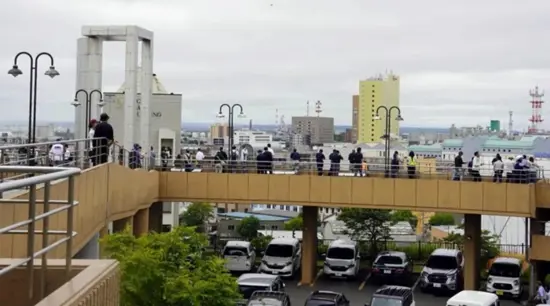
TOKYO: A strong undersea earthquake that struck off Russia’s far-eastern Kamchatka Peninsula late Tuesday night has triggered a tsunami along Japan’s Pacific coast, with waves exceeding one meter in height, local media and authorities confirmed.
A 1.3-meter wave was observed at a port in Iwate Prefecture in northeastern Japan, while tidal surges of up to 80 centimeters were reported in several other coastal regions. Japan’s Meteorological Agency warned of a potential tsunami up to three meters high and urged residents in affected areas to move to higher ground or seek shelter in designated evacuation buildings.

The earthquake, which struck at 11:24 p.m. GMT (8:24 a.m. local time Wednesday), was recorded about 136 kilometers southeast of the Kamchatka Peninsula at a depth of approximately 20 kilometers, according to the US Geological Survey (USGS). The quake was initially measured at a magnitude of 8.0, making it the strongest seismic event globally since the 2011 Fukushima disaster.
Despite the significant tremor and resulting tsunami warnings, there have been no reports of casualties, injuries, or major damage so far, Japanese government officials confirmed. Additionally, no abnormalities were detected at any nuclear power facilities.
The Meteorological Agency cautioned that tsunami activity may continue for an extended period and advised the public to remain vigilant, especially in coastal areas. Authorities also warned that tsunamis can be preceded by multiple smaller waves and that residents should not assume safety after the first wave subsides.
Complicating evacuation efforts is Japan’s current extreme heatwave. A record high temperature of 41.2°C was recorded in Tamba, located in the Hyogo region north of Kyoto, on Wednesday, intensifying concerns for those seeking refuge outdoors or in crowded shelters.
Officials continue to monitor the situation closely, with emergency services on standby across affected regions. The tsunami advisory may remain in effect for at least another day.