

Political Stability No Guarantee of Reforms, Says Expert
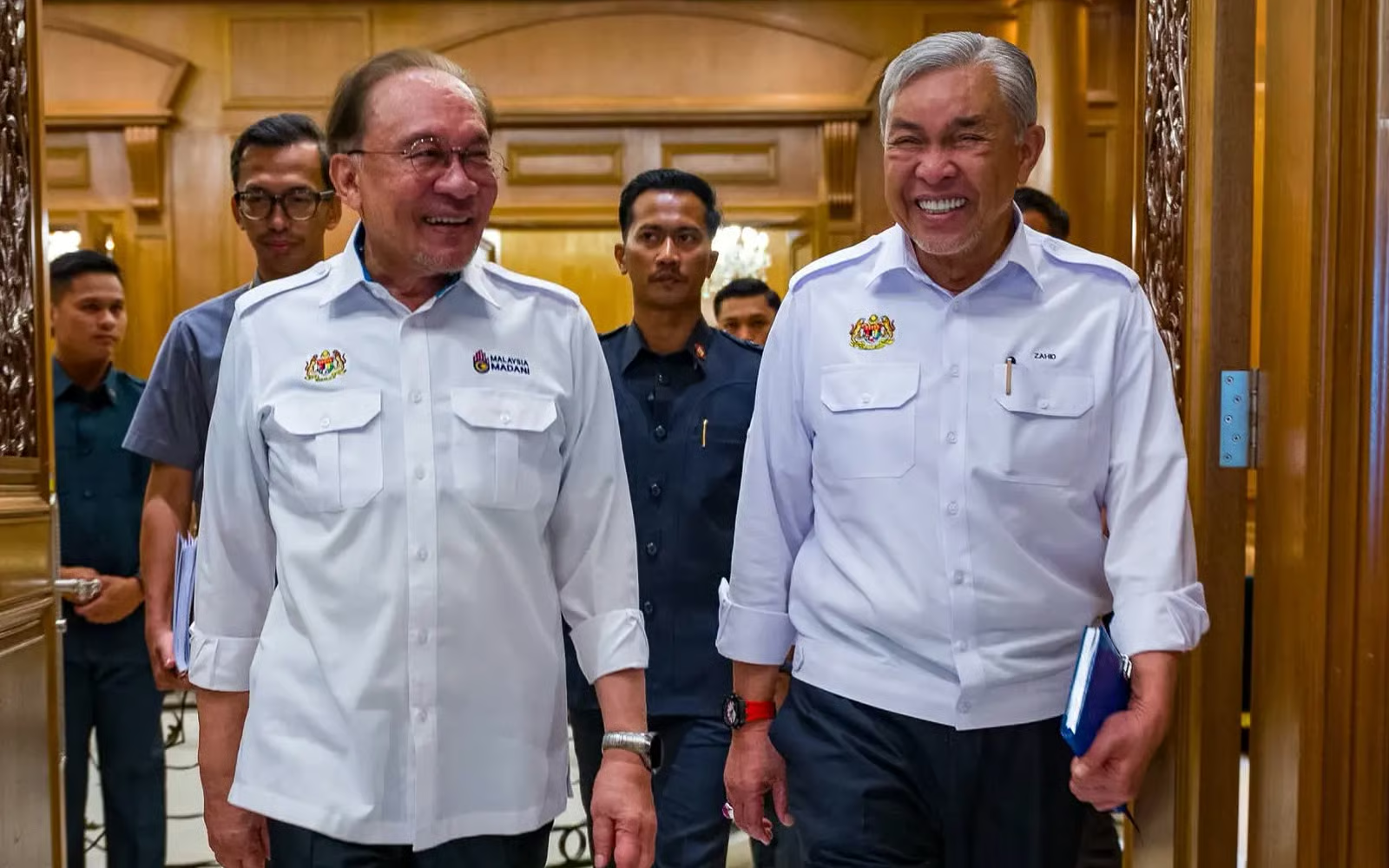
PETALING JAYA: While Barisan Nasional (BN) and Pakatan Harapan (PH) have governed together for almost a full term, restoring a measure of political stability and policy predictability, an analyst cautions that this alone is no guarantee of meaningful institutional reform.
University of Nottingham Malaysia associate professor Tricia Yeoh said political pressure and instability could sometimes push governments to undertake reforms they might otherwise avoid.
She cited the administration of former prime minister Ismail Sabri Yaakob, which lacked a strong parliamentary majority and signed a memorandum of understanding (MoU) in 2021 with PH, which was in the opposition at the time.
“When governments find themselves too secure and stable, they tend to believe they do not need to undertake these reforms to placate or satisfy any particular section of society, and instead pursue what they may think are their own priorities,” she told FMT.
Under the MoU, the government agreed not to dissolve Parliament before July 31, 2022, while PH agreed to support or abstain on the 2022 budget and supply bills and not to support motions that would amount to a vote of no confidence.
The MoU paved the way for the constitutional amendment prohibiting MPs from switching parties, and separate amendments that redefined Sabah and Sarawak as “Borneo states”.
While the BN-PH-led unity government has pursued economic and subsidy reforms, key institutional reforms, including a two-term limit for the prime minister, separating the powers of the attorney-general and public prosecutor, and the Freedom of Information Bill, remain unfinished.
The stalled reform agenda has also become a political issue for DAP, which considered quitting the unity government although its delegates subsequently voted to remain.
Political analyst Asrul Hadi said the stability provided by BN-PH had clear benefits, particularly after years of political uncertainty and change of governments.
“The strength of the model is, therefore, not simply that it keeps a government together, but that political stability can provide the policy predictability and investor confidence needed for longer-term economic growth,” he said.
Asrul said the BN-PH arrangement also provided greater checks and balances because no single component could dominate the government as BN once did.
“PH, BN and the East Malaysian parties (providing confidence and supply) each have their own political weight, constituencies and interests,” he said.
“That can make decision-making more complicated, but it also forces greater negotiation and consensus.”
BN and PH spent decades as fierce political rivals before becoming federal partners after the 2022 general election, in which neither side secured enough seats to form the government on its own.
Despite their historical and ideological differences, the two blocs have managed to govern together for a full term.
However, BN appears to be moving away from PH and exploring closer cooperation with the PAS-led Perikatan Nasional (PN), after an informal electoral alliance in Negeri Sembilan which helped the blocs secure a two-thirds majority in the 36-seat state assembly. BN won 18 seats while PN took seven.
For Yeoh, the advantage of BN-PH is not simply that it is ideologically diverse, but that its diversity could force the coalition to build a more inclusive national agenda.
“BN-PN might find it easier to sell themselves to their electorate, as it is a simpler and less sophisticated argument of Malay unity,” she said.
“However, this coalition may find itself unable to articulate a national vision that sufficiently represents all ethnic communities equally.”
Yeoh added that any coalition in government would still have to uphold the spirit of the Federal Constitution and represent the interests of Malaysians regardless of race or religion.
FMT