

Government Does Not Rule Out Employing Registered Refugees to Meet Labour Demand
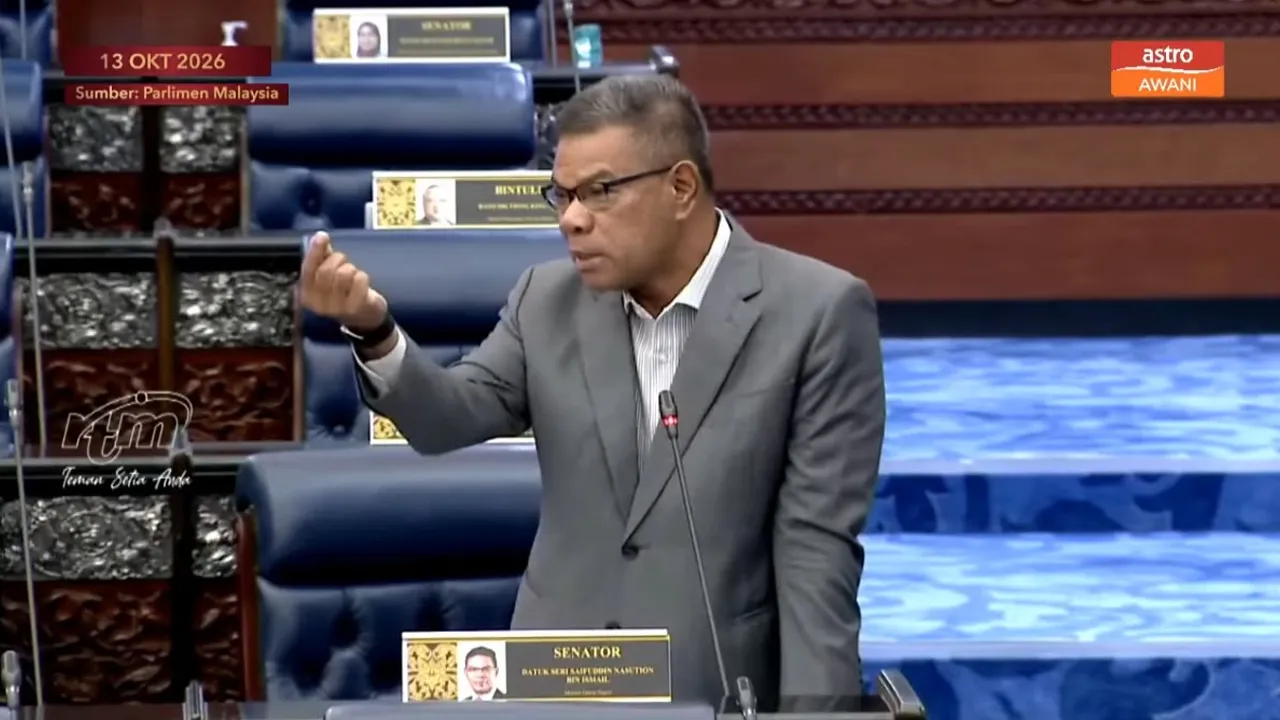
KUALA LUMPUR: The government has not ruled out the possibility of employing registered refugees to meet labour demands in certain economic sectors, subject to established data collection and security screening procedures.
Home Minister Datuk Seri Saifuddin Nasution Ismail said the proposal was among the options that could be considered once the government obtained comprehensive data on refugees residing in the country.
He said the information was crucial to identifying refugees who were still of working age, enabling the government to assess their potential based on the country’s actual workforce requirements.
According to him, Malaysia requires foreign workers in five key economic sectors, namely manufacturing, services, agriculture, construction and plantations.
“If we can collect data on these 225,000 individuals, identify those who are still of working age and have undergone screening, we will have the information needed to make informed decisions.
“We do not necessarily have to recruit workers from overseas to meet labour demand. We can refer to the existing refugee registration database,” he said when responding to a question from Jimmy Puah Wee Tse (PH-Tebrau) in the Dewan Rakyat today.
Saifuddin Nasution said the ceiling for foreign workers had been set at 10 per cent of the country’s total workforce, with labour requirements in the five sectors to be managed in accordance with government policies.
However, he stressed that employing registered refugees remained an option under consideration and was not a final government decision.
Meanwhile, he said the government was conducting a refugee registration and data collection exercise to obtain more detailed information than the existing figures provided by the United Nations High Commissioner for Refugees (UNHCR).
“UNHCR estimates that approximately 225,000 individuals with refugee status are currently in Malaysia. However, the government requires information such as their names, ages, locations and genders, in addition to conducting police and immigration screenings and collecting biometric data.
“This process is essential to enable the government to formulate more appropriate public policies and address refugee-related issues more comprehensively,” he added.
Saifuddin Nasution also explained that the government had identified three possible outcomes for refugees in Malaysia: resettlement in third countries such as Australia, New Zealand and Canada; voluntary repatriation; or remaining in Malaysia subject to the country’s laws.
For refugees held at immigration detention depots, the government aims to carry out data collection and screening involving approximately 4,000 individuals, while repatriation exercises are also being conducted in accordance with established procedures.
He also urged members of the public to report any misconduct or violations of the law to the authorities, particularly the police, rather than taking matters into their own hands.
Commenting on the repatriation of Myanmar nationals, Saifuddin Nasution said the matter had also been discussed during bilateral meetings with Myanmar’s leadership through ASEAN mechanisms.
“The Myanmar government has agreed to accept the voluntary repatriation of its nationals and to cooperate in screening procedures to identify Myanmar citizens currently residing in Malaysia.
“Diplomatic engagement and cooperation between the authorities of both countries are essential in finding solutions to the longstanding refugee issue,” he said.
AWANI