

Over 500 Academic Leaders Convene in Jeddah to Shape the Future of University Education
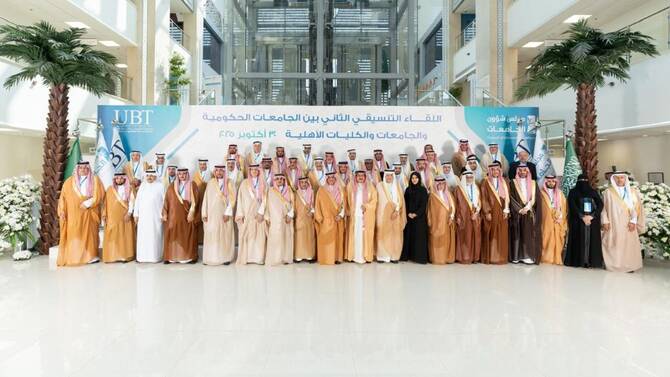
JEDDAH, Oct 31: More than 500 academic leaders from across Saudi Arabia gathered in Jeddah on Thursday for a high-level consultative meeting to discuss the future direction of higher education in the Kingdom and its alignment with Vision 2030.
The meeting, organized by the Council of Universities’ Affairs and chaired by Minister of Education Yousef Al-Benyan, brought together heads of public and private universities to address the challenges facing the higher education sector and explore innovative solutions.
Held at the University of Business and Technology (UBT), the discussions focused on strengthening collaboration between institutions, enhancing educational quality, and aligning academic outcomes with the needs of the national labor market.
“This meeting reflects our commitment to improving the higher education system and addressing the pressing challenges faced by our universities,” said Al-Benyan. “It is essential that we work together to ensure that our graduates are well-equipped to meet the demands of the future economy.”
He underscored the importance of partnership and integration between public and private universities, noting that such collaboration plays a crucial role in achieving the Kingdom’s educational reform goals under Vision 2030.
“Higher education is the cornerstone of human development and societal progress,” Al-Benyan said. “Universities have a responsibility to prepare qualified national talent capable of driving innovation and sustainable development across all sectors.”
The minister also emphasized that ongoing coordination meetings are vital to enhancing institutional efficiency, improving academic standards, and supporting the Kingdom’s broader transformation agenda.
Meanwhile, Dr. Abdullah Dahlan, Chairman of UBT’s Board of Trustees, highlighted the significant transformation currently underway in Saudi Arabia’s higher education landscape.
“Higher education in the Kingdom is undergoing a qualitative leap. Both government and private universities have become a fundamental pillar for realizing the goals of Vision 2030,” he said.
According to Dahlan, Saudi Arabia now hosts 30 government universities, 12 private universities, and over 34 private colleges, collectively serving more than two million students across diverse disciplines.
He added that these institutions employ over 100,000 faculty members, representing a national reservoir of expertise and talent that continues to drive innovation and competitiveness in education.
The meeting concluded with a shared commitment among participants to continue advancing university education in line with the Kingdom’s strategic vision ensuring that Saudi institutions remain globally competitive and responsive to the evolving needs of society and the economy.