

Malaysia Hands Over ASEAN Baton After a Landmark Year of Sustainable Diplomacy
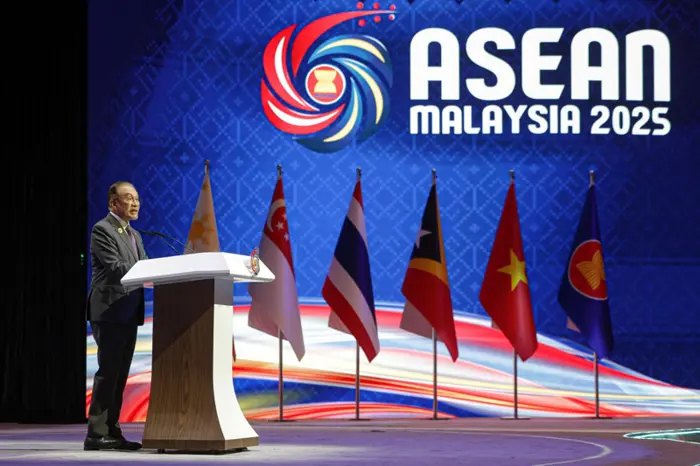
PUTRAJAYA (VoM News): Malaysia has once again left a defining mark on ASEAN history, concluding its 2025 chairmanship with a legacy of sustainable diplomacy, inclusive leadership, and global confidence in its role as a regional convener.
Throughout history, every time Malaysia has chaired ASEAN once every decade, it has reshaped the region’s trajectory. From advancing the Zone of Peace, Freedom, and Neutrality (ZOPFAN) in 1977 and steering ASEAN through the Asian Financial Crisis in 1997 to hosting the inaugural East Asia Summit in 2005 and witnessing the ASEAN Community’s birth in 2015, Malaysia’s fingerprints have been indelible.
In 2025, that legacy deepened. Under Prime Minister Datuk Seri Anwar Ibrahim, Malaysia guided ASEAN through a year marked by economic uncertainty, climate urgency, and global realignments yet managed to strengthen unity through calm, principled diplomacy.
The 2025 ASEAN Summit in Kuala Lumpur drew an unprecedented roster of global leaders, including U.S. President Donald Trump, Chinese Premier Li Qiang, Brazilian President Luiz Inácio Lula da Silva, South African President Cyril Ramaphosa, Japanese Prime Minister Sanae Takaichi, Australian Prime Minister Anthony Albanese, and Canadian Prime Minister Mark Carney. Their participation, analysts said, underscored worldwide trust in Malaysia’s leadership and its ability to foster dialogue amid turbulence.
Political analyst Zainal Abidin said Anwar’s handling of Trump’s surprise “Liberation Day” tariff announcement an unexpected move that rattled Asian markets—was a textbook display of Malaysia’s diplomatic maturity.
“Instead of reacting emotionally, Anwar redirected the debate toward mutual respect, shared prosperity, and a rules-based order. It was composure, not confrontation, that carried the day,” Zainal told VoM News.
Among Malaysia’s proudest achievements this year was the formal admission of Timor-Leste as ASEAN’s 11th member, a process carefully guided under Malaysia’s stewardship.
“It wasn’t just symbolic. It was a moral commitment that no nation in our region should be left behind. Inclusion, for Malaysia, is not a slogan it is the foundation of sustainable stability,” Zainal said.
Beyond ASEAN borders, Malaysia also played a quiet but crucial role in mediating the Cambodia-Thailand Joint Declaration on Peace and Security, also known as the KL Peace Accord, an agreement witnessed by Anwar and Trump that ended the deadliest border conflict in decades.
“The accord reaffirmed Malaysia’s role as a trusted mediator persuasive, principled, and pressure-free,” he added.
Zainal noted that Malaysia reframed sustainability from a policy niche into the core of its diplomatic strategy, linking environmental, digital, and social goals under one vision.
“From green-economy cooperation and energy security to digital inclusion and social sustainability, Malaysia proved that true peace depends on balanced growth and shared responsibility,” he said.
As Malaysia now passes the ASEAN chairmanship to the Philippines for 2026, the challenge ahead is clear.
“Manila inherits not just Malaysia’s momentum but also its moral mandate—to turn ASEAN’s vision into delivery, ensuring green growth, digital inclusion, and social equity across the region,” Zainal said.
From Kuala Lumpur to Manila, the baton passes not merely as a ceremony but as a call to uphold ASEAN’s shared values, sustainability, and purpose in a changing world.
— Voice of Malaysia News