

Hamas Quietly Expands Control in Gaza as Uncertainty Over Post-War Future Grows
CAIRO: As diplomatic negotiations over Gaza’s post-war future drag on, Hamas has been steadily tightening its grip over daily life in the enclave, Gazan residents say, raising questions about whether the group will relinquish authority despite international pressure.
Following the ceasefire last month, Hamas rapidly re-established its presence in areas vacated by Israeli forces, reportedly executing dozens of Palestinians accused of collaboration, theft, or other crimes. While foreign powers insist Hamas must disarm and step aside for a new governing body, no consensus has emerged on who will take over.
Now, residents say Hamas influence is expanding beyond security matters. According to interviews with a dozen Gazans, including three merchants, authorities are inspecting incoming goods, imposing informal fees on items like fuel and cigarettes, and fining businesses accused of price-gouging.
Ismail Al-Thawabta, head of the Hamas government media office, denied reports of new taxes, saying the administration is focused solely on “urgent humanitarian and administrative tasks” and working to “control prices.” He reiterated that Hamas is ready to hand power to a technocratic transitional administration once one is agreed upon.
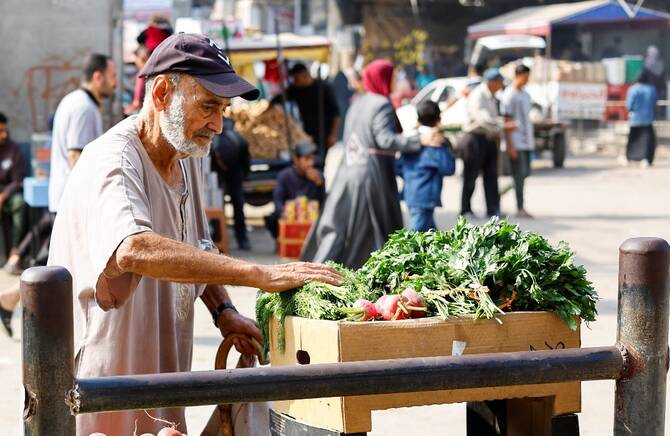
But many Gazans say prices remain unstable. Mohammed Khalifa, shopping in Nuseirat, described the market as “like a stock exchange,” with costs constantly shifting. “There’s no income, circumstances are difficult, life is hard, and winter is coming,” he said.
Analysts warn that Hamas’ actions, including efforts to regulate the economy and replace officials killed during the war, signal a deeper entrenchment of its authority.
Ghaith Al-Omari of the Washington Institute said the group is sending a message that it remains indispensable: “The longer the international community waits, the more entrenched Hamas becomes.”
Despite a ceasefire brokered under President Donald Trump’s Gaza plan, which includes Hamas’ disarmament, the implementation of a transitional authority and a multinational security force has faltered. Reuters reported that Gaza’s de facto partition appears increasingly likely, with Israeli forces still controlling large sections of the territory.
Nearly all of Gaza’s 2 million residents live in Hamas-run areas. The group seized control from the Palestinian Authority (PA) in 2007, and Fatah leaders now accuse Hamas of maneuvering to cling to power.
Munther Al-Hayek, a Fatah spokesperson, said, “Hamas’ actions give a clear indication that it wants to continue governing.”
Responding to reports of Hamas levying fees on imports and otherwise exercising governance, a US State Department spokesperson stated, “This is why Hamas cannot and will not govern in Gaza.”
The spokesperson added that progress has been made toward forming the multinational security force envisioned under the Trump plan, and a new Gaza government could be established once the UN endorses the proposal.
However, political divides remain sharp. The PA is pushing for a role in Gaza’s future administration, but Israel opposes its return.
A senior Gazan food importer said Hamas was not fully reinstating pre-war taxation but was closely monitoring all incoming goods. “They see and record everything,” he said.
Checkpoints, questioning of truck drivers, and fines for price manipulation have helped stabilize some prices, but goods remain far more expensive than before the war, and widespread poverty limits purchasing power.
Before the war, Hamas’ government employed around 50,000 workers, including police. Thousands were killed in the conflict, but salaries continued at a standardized 1,500 shekels ($470) per month, likely funded by stockpiled cash, diplomats say.
Hamas has also replaced four regional governors and multiple politburo members killed in Israeli strikes.
Mustafa Ibrahim, a Gaza City activist, said Hamas is using delays in the international plan to strengthen its control. “Will it be allowed to continue doing so? I think it will continue until an alternative government is in place,” he said.
For now, with negotiations stalled and humanitarian needs rising, many Gazans fear Hamas’ authority far from receding may be becoming more entrenched than ever.