

Government to Strengthen TVET and STEM from Early Education, Says Deputy Prime Minister
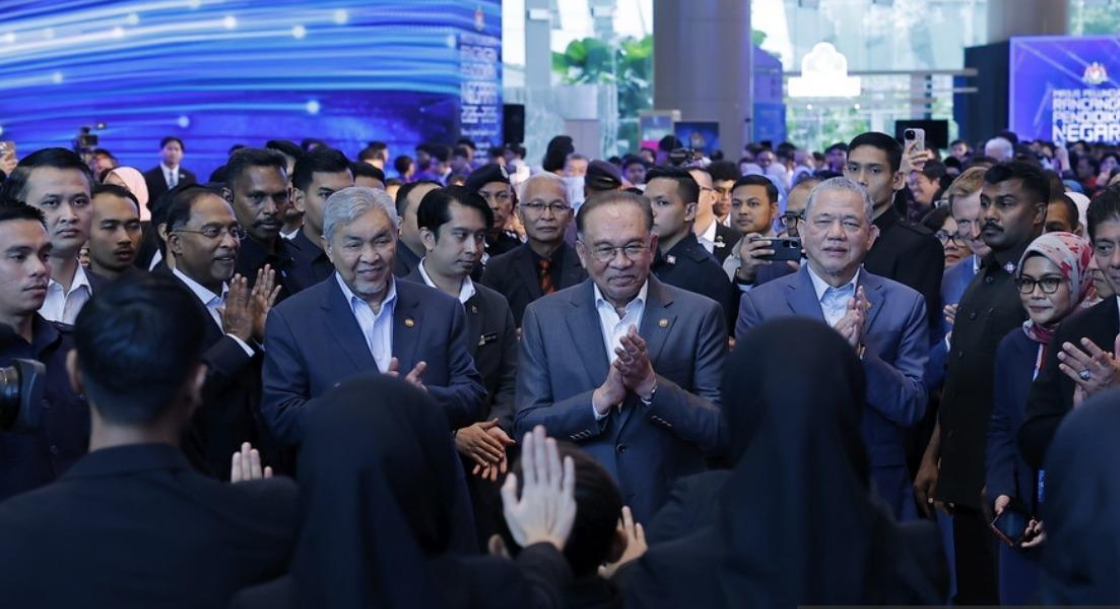
PUTRAJAYA, Jan 20: The government is mainstreaming Technical and Vocational Education and Training (TVET) through the National Education Plan (RPN) 2026–2035 as part of a strategic effort to strengthen the development of a highly skilled workforce to meet future industry demands, Deputy Prime Minister Datuk Seri Dr Ahmad Zahid Hamidi said today.
Ahmad Zahid, who is also Chairman of the National TVET Council, said the early introduction of TVET as well as Science, Technology, Engineering, and Mathematics (STEM) subjects from Form One is a key initiative under the new plan. He said the move is expected to build a stronger technical foundation among students at an earlier stage while increasing interest in technology-based fields.
He noted that encouraging progress has already been recorded, with the employability rate of TVET graduates rising sharply from 91.5 percent to 99.5 percent, reinforcing confidence that the new approach is on the right track to meet labor market needs.
“This is a very positive leap. It shows that TVET will be truly mainstreamed through the RPN,” he said when responding to the launch of the plan by Prime Minister Datuk Seri Anwar Ibrahim here today.
Ahmad Zahid said the RPN represents a major reform of the national education system, particularly through the reintroduction of structured testing and assessments. At the primary level, assessments will begin in Year Four, while at the secondary level, testing will start in Form Three.
For higher education, he said the main focus is to ensure there is no mismatch between fields of study and future employment, in line with current labor market requirements.
“In this regard, we see that alignment has been carried out carefully. Emphasis is also given to language and history, including the requirement to take Bahasa Melayu and history subjects in religious and tahfiz schools,” he said, adding that the plan is also expected to involve traditional religious schools such as pondok institutions.
The RPN 2026–2035 is a comprehensive education reform initiative aimed at building a fair, competitive, and values-based future generation. The new plan involves both the Ministry of Education and the Ministry of Higher Education and serves as a national strategic framework covering the entire education ecosystem, from schools to tertiary education.