

Europe’s rights defender attacks Italy for migrant detention facilities
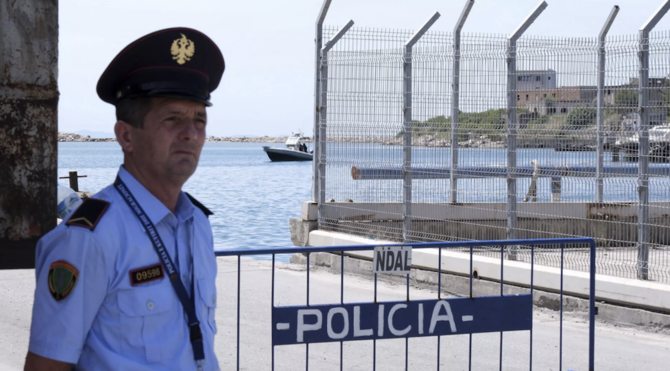
Citing police aggression and the use of psychotropic medicines on detainees, the Council of Europe rights group on Friday attacked Italy’s handling of migrants in detention facilities.
The COE’s anti-torture committee conducted observations after visiting four repatriation facilities on mainland Italy, housing migrants awaiting expulsion. In its defense, Italy claimed that it was developing new facilities, while also stating that some “prison elements” were required at the centers to prevent escapes.
The European Committee for the Prevention of Torture and Inhuman or Degrading Treatment or Punishment noted in the report multiple instances of physical ill-treatment and disproportionate use of force against detained persons by police staff members visited.
“The committee is also critical of the widespread practice of the administration of unpressed psychotropic drugs diluted in water,” said the summary.
It demanded a review of the policy of moving people “handcuffed in a police vehicle without being offered food and water during journeys of several hours.”
It was observed that injuries suffered by the detainees were not precisely recorded and that there was insufficient monitoring of the officers working there.
The committee toured sites in Milan, Gradisca, Potenza, and Rome.
It attacked “the widespread practice of the administration of unprocessed psychotropic drugs diluted in water to foreign nationals” at Potenza.
The study recognized that police actions typically accompany disturbances.
But it said this was “a direct consequence of the disproportionate security restrictions, the lack of individual risk assessments of foreign nationals, and the fact that detained persons were in effect provided with nothing to occupy their time.”
People can spend up to eighteen months in such centers while the court works on expulsion.
The group recommended changing the jail-like design and layout of the centers, which included triple-metal mesh screens and cage-like outdoor facilities.
Furthermore, there were deficiencies in the amenities and the meager food provided for the inmates.
The committee also questioned Italy’s controversial project, which its courts referred to the European Court of Justice last month: the detention of foreigners at Italian-run centers in Albania.
Said the committee, Rome should make sure any detainees the institutions acquired received appropriate treatment and lived in respectable surroundings.
Italy responded that removing the prison components would only lead to “increased escapes from the centers and episodes of vandalism.”
However, the focus was on developing new buildings that comply with European norms.
Police gave the “utmost attention” to personnel training at such facilities, it claimed.