

Do Not Slander Public Universities as Having ‘Back Doors’
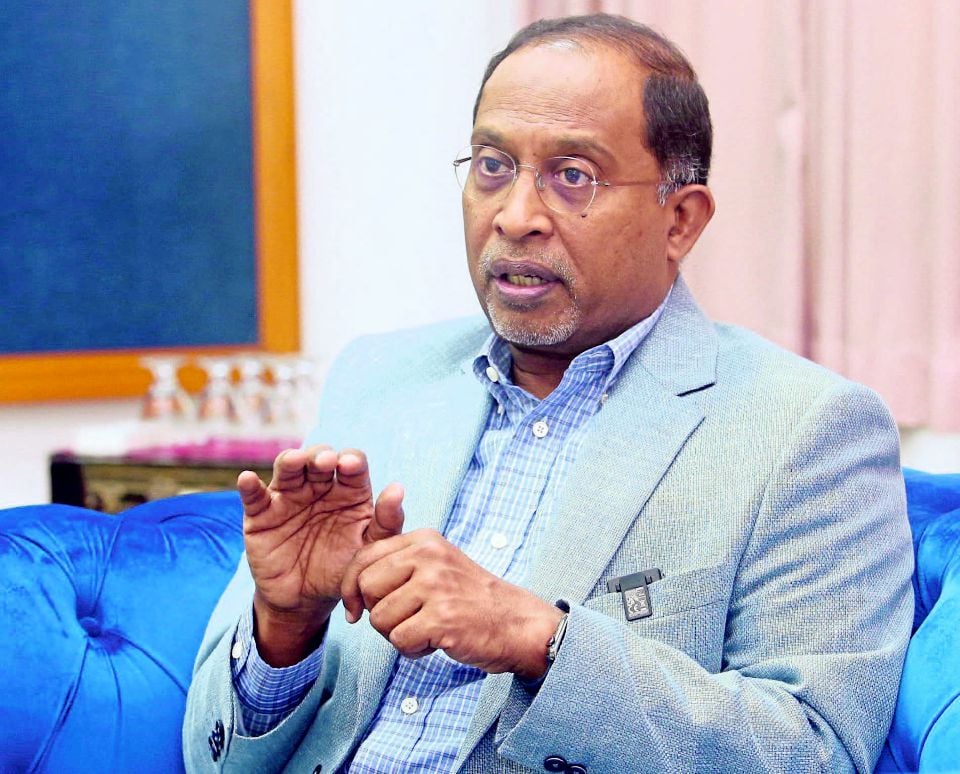
The issue of higher education has heated up again following allegations by Kedah State Executive Councillor for Higher Education, Haim Hilman, regarding statements related to ‘back doors’ and also the ‘greatest disaster in the nation’s education’. Is this allegation true or is it merely political rhetoric on the ceramah stage to gain support? Does this allegation have a good or adverse effect on the nation’s higher education system? BH gets the views of the Minister of Higher Education, Datuk Seri Dr Zambry Abdul Kadir.
Question (Q): Is it true that public universities (UAs) sell study places?
Answer (A): There is no such term as ‘selling places’ in the country’s UA admission system. Admissions are subject to general requirements, programme-specific requirements, academic merit, programme capacity, accreditation standards and the requirements of professional bodies.
UPU Online and e-Panduan are the official channels for mainstream admission to UAs. However, UPU is not the only channel, as many people assume that admission to UAs can only happen through UPU. This is also inaccurate.
UPU was established in 1972 as a coordination mechanism for mainstream student admissions for study programmes at UAs, polytechnics and community colleges within the country.
The fact is, universities have several other channels, including open channels that have been permitted and practised for decades. Among them are international programmes, lifelong learning programmes, professional programmes, industry collaboration programmes, special programmes approved by the university senate and market-fee-based programmes, in addition to admission pathways for international students as well as working adults and flexible learning.
All these channels are subject to academic requirements and approval processes set by the university senate.
Q: What about the claim that a ‘back door’ exists?
A: Giving the term ‘back door’ is inaccurate and very negative towards society and damages higher education institutions (IPTs) that have long functioned as repositories of knowledge for scholars and produced the country’s best graduates. The term gives the impression that there are individuals who are not eligible for admission and go through illegitimate processes.
Every UA has a clear governance structure such as a Board of Directors, university senate, academic committees, admissions committees, internal audit and external audit.
No single individual can determine student admissions alone. All decisions are made through processes that have strict checks and balances.
Q: Do wealthy students snatch places from excellent or poor students?
A: No. This allegation is very serious and should not be made without facts and data. Places through UPU cannot be ‘snatched’ simply because someone can afford to pay. The merit system and admission requirements remain the foundation.
In fact, the government continuously expands opportunities for those in need through various initiatives such as pioneer programmes, scholarships and loans from the National Higher Education Fund Corporation (PTPTN), initial registration assistance, university zakat assistance, support for B40 students, assistance for students with disabilities (OKU) and various student welfare schemes.
This year too, the government announced that 10,000 poor and B40 students will benefit through the Program Biasiswa Anak eKasih (BAeK) initiative via PTPTN. The BAeK programme is awarded in the form of full scholarships to poor and hardcore poor students registered in the eKasih database, whether pursuing diploma or bachelor’s degree studies full-time at public higher education institutions (IPTAs) effective 1 January 2026.
Q: Why does the offer letter not state fee exemptions for needy groups?
A: The offer letter issued by UAs and polytechnics is a standard document used for all students receiving offers. It contains conditions, registration information and basic requirements that apply generally.
Therefore, do not use the fact that certain matters are not specifically stated in the offer letter as a reason to attack the government or create the perception that students from poor families are not being assisted.
I have repeatedly reminded all UAs, polytechnics, community colleges and institutions under the Ministry of Higher Education (KPT) that I do not want to hear of any children from poor or low-income families failing to continue their studies solely due to financial problems.
In fact, I often emphasise that institutions should not merely wait for students to come and ask for help. They need to be proactive in identifying students in need and seek out, contact and assist them in registering.
Throughout my tenure leading this ministry, many cases have been brought directly to me. When informed of students facing financial difficulties, the university immediately takes action and helps them proceed with registration and studies.
That is why I always say: “Register first, fees later.”
No eligible and accepted student should be prevented from continuing their studies simply because they cannot afford to pay the registration fees on the first day.
If there are elected representatives, organisations, companies, government agencies, non-governmental organisations (NGOs) or individuals who wish to help these students, I welcome such efforts. Help them sincerely because education is a shared responsibility.
However, do not at the same time turn the assistance given into a platform to criticise, insult or accuse other parties of supposedly disregarding the plight of poor children. What is more important is ensuring that students receive help, rather than seeking popularity, attention or the number of ‘likes’ on social media.
Q: What about the claim that between 30,000 and 60,000 places are given through the ‘back door’?
A: I would like to ask where these figures came from? If someone claims that 5 to 10 per cent of admission places are involved, then the source and evidence of that data must be disclosed.
For example, for the 2025/2026 admission session through the UPUOnline system, a total of 109,866 candidates met the minimum requirements to be considered.
Of that number, a total of 78,883 candidates were offered places during the first announcement based on available programme capacity.
It cannot be assumed that the remainder who were not offered, that is 30,983 people, had their places sacrificed to the so-called ‘back door’ pathway. In fact, the remaining candidates who have not yet received offers are given room to make appeal applications.
Programme capacity, merit competition, accreditation requirements and resource constraints are factors that must be taken into account.
Q: What is your view on individuals making statements that this matter is the ‘greatest disaster in the nation’s education’?
A: That is an excessive and politically motivated statement. It is very unfortunate when it is uttered on the political stage with full emotion and uncivilised language. One should be more careful, especially coming from someone who has previously been in and administered a university.
Various criticisms have been levelled at IPTs and the government all this while. However, I rarely take a confrontational approach or entertain polemics that do not bring benefit to the people, especially if they are raised in the name of supposedly fighting for the underprivileged. To me, if every day I have to entertain and answer every allegation and propaganda raised, merely because of anger and emotion, then the focus on the real task of implementing the nation’s higher education transformation and reforms will be disrupted.
We are all aware that higher education challenges always exist due to changes in the advancement of knowledge and technology, but it is unfair to portray the entire system as broken.
Our higher education institutions continue to strengthen access, welfare, Technical and Vocational Education and Training (TVET), financing, marketability and university reform through the Malaysia Higher Education Plan (RPTM) 2026-2035.
I have never closed the door to good proposals to strengthen our higher education system, including from any party with differing views. For example, when we planned the RPTM 2026-2035, we involved more than 8,000 people from various backgrounds, whether directly or indirectly involved in the higher education world.
Q: Is it true that the government has failed to provide sufficient funding to universities?
A: That is not true. Since 2017, it is well known that universities no longer receive 100 per cent government assistance. However, the government always remains concerned about the education sector when the Ministry of Education (KPM) and KPT continue to receive among the highest allocations in every Budget presentation. This proves that education remains the government’s priority.
Regarding the claim that the higher education allocation was cut by RM2.39 billion, what needs to be understood is that the measure was part of the optimisation and restructuring process of government expenditure for a temporary period, as proposed by the Ministry of Finance when the country faced economic challenges and the need to manage fiscal position more prudently.
It does not mean the government is neglecting higher education or withdrawing its commitment to this sector. Part of that allocation was temporarily placed and restructured according to current priorities, while the government’s commitment to strengthening higher education continues.
At the KPT level, the Chief Secretary together with the Committee of Vice-Chancellors and Rectors of Public Universities (JKNCR UA) and the UA Treasurers’ Council held strategic discussions with the National Budget Office, Ministry of Finance on 15 June 2026.
Alhamdulillah, the National Budget Office showed great openness to re-examine the amount of the budget restrictions for the excellence of the nation’s higher education.
At the same time, the proposals submitted do not disrupt the operations and management of universities. The government continues to provide various forms of support including PTPTN, scholarships, financial assistance and initiatives for B40 students. PTPTN itself provides educational loan facilities to students at IPTAs and local private higher education institutions (IPTs).
Q: Is it true that the government has failed to increase university capacity?
A: Increasing university capacity cannot be done arbitrarily. It needs to take into account the number of lecturers, laboratory facilities, teaching hospitals; clinical training placements, accreditation standards and the requirements of professional bodies.
In fields such as medicine, pharmacy, dentistry and engineering, quality cannot be sacrificed merely to increase student numbers.
However, the government remains concerned about the needs of important fields as announced. In this regard, for 2026, the government added 3,000 new study places at IPTAs for critical courses such as artificial intelligence (AI), law and accounting. This addition is part of the government’s ongoing efforts to ensure that educational institutions can produce highly skilled workers in line with the National Education Plan.
Q: What is your view on the tendency of certain parties to politicise higher education issues and turn them into political campaign material?
A: Any political party has the right to voice opinions and offer criticism. However, higher education does not belong to any individual or political party to the extent that it can be turned into polemical material that ultimately sacrifices the integrity and reputation of the nation’s higher education system.
If there are weaknesses, submit proposals. If there are problems, submit solutions. If there are allegations, submit evidence.
What cannot be done is to create anxiety among parents and students through baseless accusations, using extreme language as if to portray the nation’s higher education as being in a very bad state, and presenting data and claims without valid proof.
KPT is always open to receiving criticism and constructive views. However, allegations that UAs sell places, that a ‘back door’ exists, that wealthy students snatch the rights of poor students, and the claim that tens of thousands of places are given illegally are very serious allegations and must be supported by facts and authentic evidence.
The nation’s higher education needs to be strengthened through mature, fact-based and responsible debate.
We can have differing views, but never undermine the people’s confidence in the nation’s higher education institutions based solely on assumptions and sentiment.
Berita Harian