

China Purges Three Senior Generals as Military Anti-Corruption Drive Intensifies
BEIJING: China’s sweeping anti-corruption campaign has claimed three more senior military figures, underscoring President Xi Jinping’s continued push to tighten discipline and control within the armed forces.
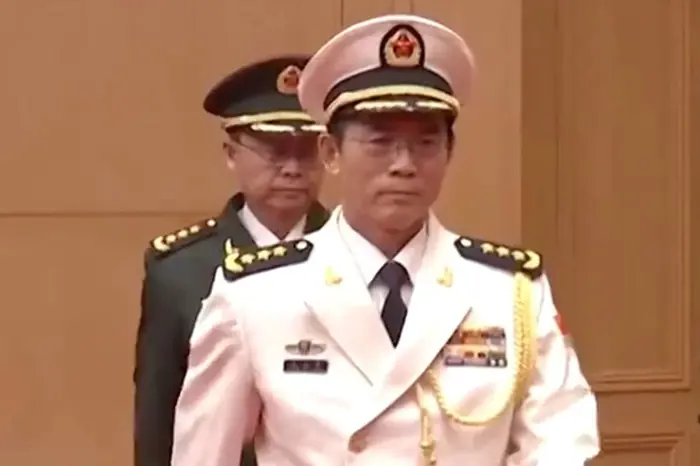
China’s national legislature, the Standing Committee of the National People’s Congress (NPC), announced on Saturday that three high-ranking officers have been expelled from the body. The officers are Wang Renhua, head of the Central Military Commission’s (CMC) Political and Legal Affairs Committee; Zhang Hongbing, political commissar of the People’s Armed Police (PAP); and Wang Peng, director of the CMC’s training department.
Despite their removal from the NPC, all three remain full members of the Communist Party’s Central Committee, the party’s top decision-making organ, according to reports.
The expulsions follow months of speculation over the status of the officers, who have been noticeably absent from major military and political events. They did not attend key ceremonies marking the anniversary of the People’s Liberation Army (PLA) in late July, nor were they seen at preparations linked to the Communist Party’s fourth plenum scheduled for October.
Wang Renhua, 63, had risen rapidly through the ranks and was promoted to the rank of admiral by President Xi Jinping less than a year ago. As head of the CMC’s Political and Legal Affairs Committee, he oversaw sensitive institutions such as military courts, procuratorates, and prisons. His appointment was previously highlighted by state media as part of sweeping military reforms launched in 2015, which reshaped the PLA’s command and security structures.
The sudden fall of Wang, along with Zhang Hongbing and Wang Peng, highlights the volatile nature of senior leadership roles in China’s military amid an uncompromising anti-graft campaign. Under Xi’s leadership, corruption has been treated as a critical threat to combat readiness, loyalty, and political control within the armed forces.
Analysts say the latest purge signals that no rank is immune and that the campaign may continue to reshape the military’s leadership landscape ahead of key political milestones.
The developments come as international scrutiny of China’s military intensifies. The United States Department of Defense recently released its annual report on China’s military and security developments, noting ongoing corruption-related purges, advances in emerging technologies such as artificial intelligence, and Beijing’s expanding definition of “core interests,” including Taiwan, Arunachal Pradesh, and claims in the South China Sea.
The report also reviewed China’s military ties with countries such as Pakistan and Russia and assessed the impact of the 2020 India-China standoff along the Line of Actual Control (LAC).
China’s Defence Ministry has rejected the US report, with a spokesperson stating that it “misrepresents” China’s national defense policy and military development and is intended to mislead the international community.
As China’s anti-corruption drive continues, observers say the latest expulsions could have lasting consequences for the structure, command culture, and future leadership of the world’s largest armed forces.