

Calls Grow to Expand B40 Health Schemes to Include M40 Families
Voice of Malaysia News
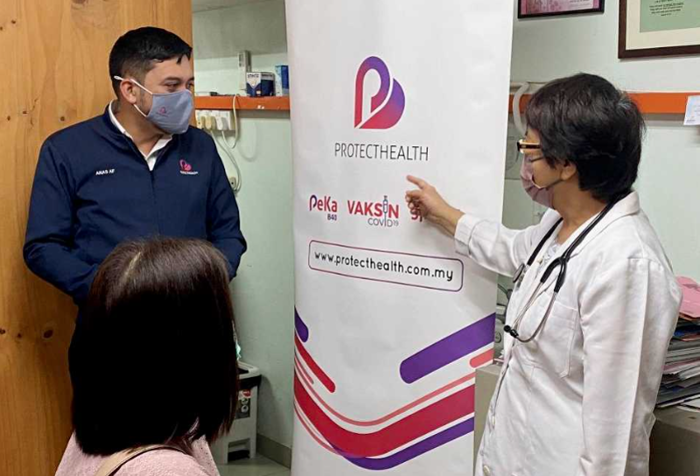
PETALING JAYA, Nov 8: Stakeholders are urging the government to widen existing health protection schemes for the B40 group to include middle-income (M40) households, who are increasingly struggling with the rising cost of medical care and stagnant wages.
Federation of Malaysian Consumers Associations (FOMCA) chief executive officer Saravanan Thambirajah said that many M40 families now face similar financial pressures as the B40 group, especially with healthcare costs climbing faster than income growth.
“They are the ‘missing middle’ who fall through the cracks of social protection,” he said. “By widening coverage through a shared-subsidy or co-payment model, the government can ensure more Malaysians are protected from unexpected medical bills while keeping the schemes sustainable.”
Saravanan’s remarks follow Aon’s 2026 Global Medical Trend Rates Report, which forecasts Malaysia’s medical inflation to reach 16% in 2026, far higher than the Asia-Pacific average of 11.3%.
Currently, health schemes like PeKa B40 and mySalam cater exclusively to the lower-income group. PeKa B40 provides free health screenings, medical device aid, and incentives for early detection of diseases, while mySalam offers cash assistance for those diagnosed with critical illnesses or hospitalized.
Saravanan proposed extending such initiatives to the M40 group while simultaneously improving the capacity of government hospitals, community clinics, and chronic disease care services.
Malaysian Medical Association president Datuk Dr. Thirunavukarasu Rajoo echoed this view, noting that medical inflation is outpacing wage growth, putting M40 households in a vulnerable position.
“It’s time to revise outdated B40 and M40 definitions and expand schemes like PeKa B40 and Perlindungan Tenang to include lower-M40 families,” he said. “This isn’t charity—it’s protection for working families struggling to afford basic healthcare.”
Financial planner Felix Neoh added that expansion efforts should go hand in hand with increasing awareness and utilization of existing programs.
Data from the Health Ministry’s KKMNow portal shows that PeKa B40 screening participation remains low in urban areas. Kelantan recorded the highest screening rate at 48.5%, followed by Kedah (40.1%) and Perlis (38.7%). The lowest rates were observed in Kuala Lumpur (14.4%), Labuan (15.1%), and Selangor (22%).
Neoh noted that some states, including Selangor (Skim Peduli Sihat), Penang (i-Sejahtera), and Sarawak (Health Assistance Scheme), already have their own complementary health support initiatives.
“These, combined with federal programs, can form a comprehensive safety net for both low- and middle-income families,” he said.
Financial planner Gunaseelan Kannan agreed, highlighting that schemes like mySalam and Perlindungan Tenang, which offer stamp duty exemptions for affordable insurance plans, could ease the financial strain for both groups.
“With continued investments in public hospitals and clinics, preventive and non-urgent care can often be managed effectively through public facilities,” he said.
Saravanan also urged Malaysians to take a proactive approach to managing healthcare costs.
“Consumers should participate in health screenings, use public healthcare facilities, and request itemized bills for transparency,” he said.
He stressed that the government must ensure affordability and transparency in private healthcare pricing to prevent excessive profit margins.
“Without proper oversight, medical inflation will keep burdening ordinary Malaysians and deepen inequality between those who can afford care and those who cannot,” he warned.