

Budget 2027 Expected to Reach RM450 Billion
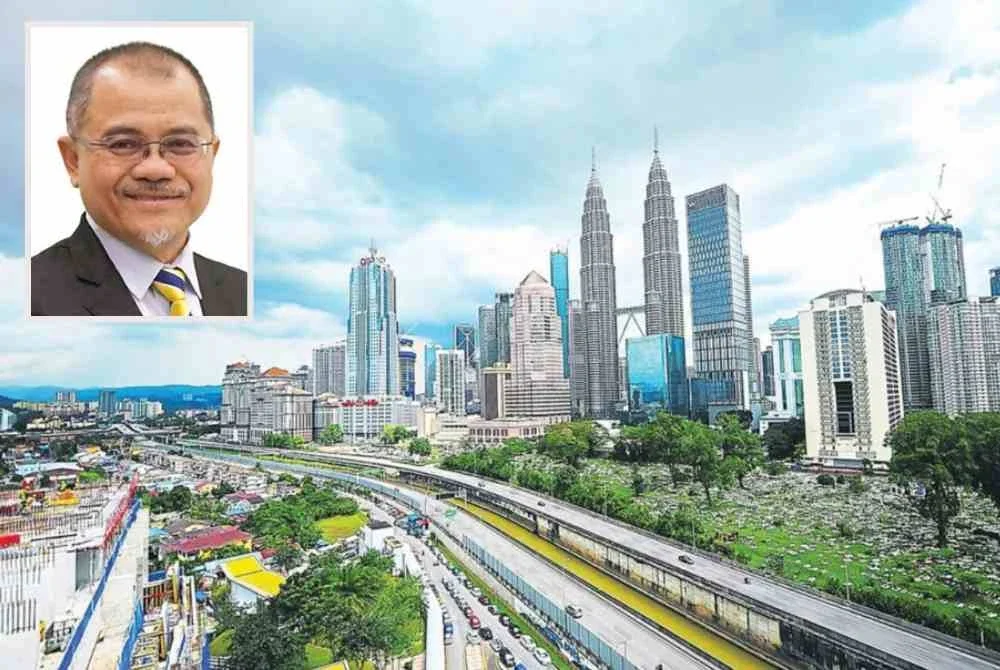
Budget 2027 is expected to increase, with total expenditure projected at between RM430 billion and RM450 billion.
If the projection materialises, Budget 2027 would be higher than the RM419.2 billion allocated under Budget 2026, representing an increase of between RM10.8 billion and RM30.8 billion, or about 2.6 to 7.3 per cent.
UniKL Business School economic analyst Associate Professor Dr Aimi Zulhazmi Abdul Rashid said the range was reasonable, taking into account government spending trends, economic growth and inflation, as well as the need to continue the country’s development agenda, including infrastructure, digitalisation, healthcare and education.
According to him, about RM421 billion was allocated under Budget 2025, while for 2026, he expects total government expenditure to be around RM440 billion.
He said government revenue remains at about 15 per cent of gross domestic product (GDP), and with Malaysia’s GDP in 2027 projected at around RM2.2 trillion, revenue could reach between RM330 billion and RM340 billion, with the remainder financed through a deficit of about 3.5 per cent of GDP.
He said a figure below RM430 billion would be difficult to achieve as expenditure on emoluments, pensions and debt servicing alone already exceeds RM200 billion, while a figure above RM450 billion could signal that the deficit is not being kept under control.
Aimi Zulhazmi said four factors would determine the actual size of Budget 2027 — oil prices and Petronas revenue, new tax revenue, the effectiveness of targeted subsidies and global economic conditions.
“Every US$10 increase in oil prices translates into about RM4 billion in additional revenue. If oil prices fall below US$70, it means the government would have to rein in spending,” he said.
He also sees the possible implementation of GST 2.0 or a carbon tax in 2027 as a source of additional fiscal space, potentially contributing between RM15 billion and RM20 billion.
In terms of subsidies, savings generated through targeted RON95 fuel and electricity subsidies could be redirected towards development expenditure.
He said RM10 billion in savings from such measures could be used for development purposes.
At the same time, if the United States or European economies enter a recession, the government may need to provide a larger budget as a stimulus to safeguard domestic economic growth.
In efforts to reduce expenditure, Aimi Zulhazmi identified three main areas — blanket subsidies, government procurement and leakages, as well as grants and assistance to government-linked companies (GLCs).
“Blanket fuel subsidies of around RM20 billion can be gradually shifted towards targeted subsidy mechanisms and assistance such as STR. This could immediately generate savings of between 30 and 40 per cent.
“For government procurement, auditing, open tenders and the use of e-procurement can be strengthened,” he said.
Wastage
He explained that based on studies and findings by the Public Accounts Committee (PAC) and the Auditor-General’s Reports, wastage of around 10 to 15 per cent has been identified in projects, potentially creating room for annual savings of between RM8 billion and RM12 billion.
As for GLCs, he said operating grants should be reduced for mature companies that are capable of operating independently, with government assistance instead focused on strategic investments.
However, he stressed that cost-cutting measures should not affect essential sectors.
“Emoluments for teachers, doctors and police personnel, as well as allocations for basic healthcare and technical and vocational education and training (TVET), should not be touched. Cuts in these areas would have a direct impact on the people,” he stressed.
He added that if the government succeeds in reducing expenditure, he proposes that 70 per cent of the savings be used to reduce the deficit, while the remaining 30 per cent should be channelled back to the people.
“Fiscal credibility is the government’s most important asset right now. If we demonstrate that we are serious about reducing the deficit to three per cent of GDP, investors and rating agencies will reward us through lower borrowing costs.
“However, 30 per cent should be returned to the people through targeted cash assistance and programmes aimed at increasing incomes and skills.
“If the government manages to save RM10 billion, RM7 billion could be used to reduce the debt burden, while RM3 billion could be channelled to the people through STR and SARA, as well as skills training,” he explained.
With the cost of living and food inflation continuing to exert pressure, he proposed that 60 per cent of assistance allocations in 2027 be directed towards direct aid and 40 per cent towards productivity programmes.
This would mean allocating around RM18 billion to RM20 billion for STR, SARA and school assistance, while RM12 billion to RM14 billion should be allocated for worker reskilling, SME automation grants, TVET scholarships and high-wage incentives.
He said that over the next five years, the ratio should be reversed to 40 per cent for assistance and 60 per cent for productivity measures to reduce the public’s dependence on government aid.
“Budget 2027 must become a ‘Transition Budget’ — shifting from blanket subsidies towards investment in human capital. Discipline on one hand, compassion on the other,” he said.
He therefore believes the success of Budget 2027 should not be measured solely by the size of its allocation, but by how effectively every ringgit strengthens the country’s finances, protects the people and enhances economic productivity.
Sinar Harian