

ASEAN’s ZOPFAN Vision Gains Momentum as China, Russia Back SEANWFZ Protocol
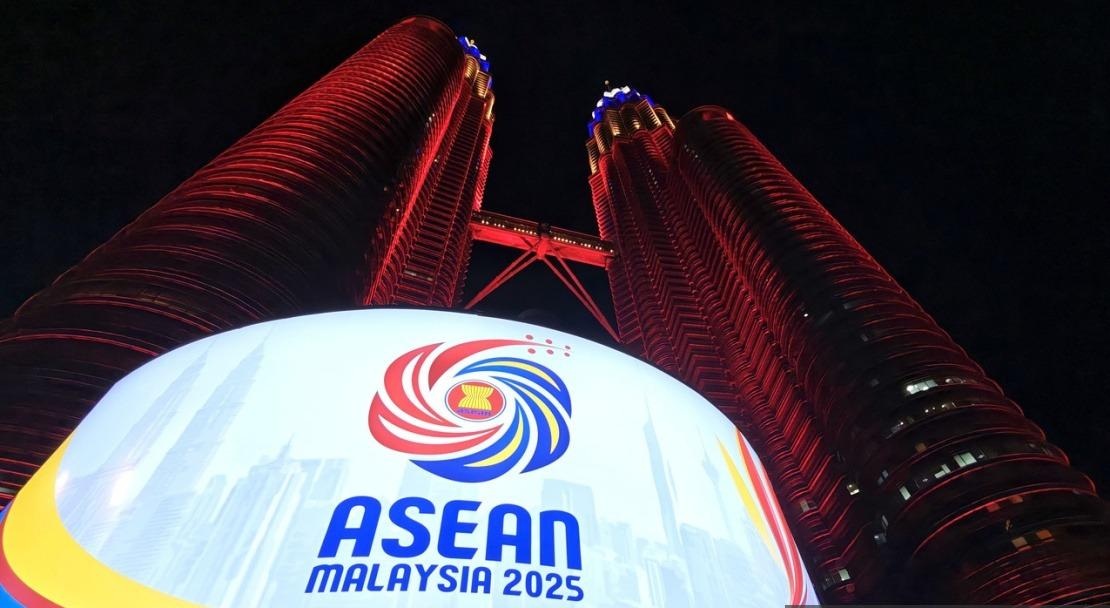
KUALA LUMPUR, July 8 (Voice of Malaysia) – ASEAN’s decades-old aspiration for a Zone of Peace, Freedom, and Neutrality (ZOPFAN) has received renewed global attention following the announcement that China and Russia are prepared to sign the Protocol to the Treaty on the Southeast Asia Nuclear Weapon-Free Zone (SEANWFZ).
This major diplomatic shift comes as foreign ministers and delegates from across the region and beyond gather in Kuala Lumpur for the 58th ASEAN Foreign Ministers’ Meeting (AMM) and related sessions from July 8 to 11.
Professor Dr. Zainal Abidin Sanusi of the International Islamic University Malaysia (IIUM) hailed the development as a critical boost to ASEAN’s long-term security vision. He said the move marks a return to ZOPFAN’s original goals—maintaining Southeast Asia as a neutral, demilitarized region free from external interference.
“The support from China and Russia underscores that ZOPFAN is not merely a Cold War relic but a living framework suited to today’s complex strategic realities,” he told Bernama. “It reduces the threat of nuclear escalation in a region increasingly caught in great-power competition, particularly in the South China Sea.”
ZOPFAN was first signed by ASEAN’s founding members in Kuala Lumpur on November 27, 1971, as a pledge to preserve Southeast Asia’s independence and regional autonomy. The SEANWFZ Treaty, adopted in 1995, further operationalized that vision by prohibiting nuclear weapons in the region.
Zainal Abidin noted that China and Russia’s commitment to the SEANWFZ Protocol puts pressure on other Nuclear Weapon States (NWS)—notably the United States, the United Kingdom, and France—to reconsider their longstanding reservations and engage with ASEAN on the treaty.
“Malaysia’s non-aligned and principled foreign policy enhances its credibility as a neutral mediator in such complex negotiations,” he said. “This is also a clear indication of ASEAN’s evolving diplomatic posture.”
The renewed attention to ZOPFAN and SEANWFZ aligns closely with Malaysia’s 2025 ASEAN Chairmanship theme of “Inclusivity and Sustainability,” reflecting a broader rethinking of peace and security through the lens of environmental protection, equitable development, and long-term cooperation.
“This is what we call ‘sustainability diplomacy’—an emerging framework that links disarmament with sustainable growth and social justice,” said Zainal Abidin.
He further suggested that ASEAN consider establishing a regional compliance and monitoring body—similar to the African Nuclear-Weapon-Free Zone Commission—in partnership with the International Atomic Energy Agency (IAEA), to boost transparency and confidence among stakeholders.
The SEANWFZ Treaty also contains strong environmental provisions, including bans on the dumping of radioactive waste and restrictions on nuclear energy activities—further embedding sustainability into the region’s security architecture.
Zainal Abidin praised Malaysia’s behind-the-scenes efforts in coordinating ASEAN committees and diplomatic channels to facilitate focused discussions on sensitive matters, including monitoring and enforcement of SEANWFZ commitments.
“Malaysia’s leadership in green technology and clean energy allows it to model how diplomacy rooted in sustainability can advance regional peace in more holistic and forward-thinking ways,” he said. “Unlike past ASEAN meetings that separated security and development, this year’s AMM is merging both into a unified strategic vision.”
The 58th AMM is expected to bring together approximately 1,500 delegates, including foreign ministers from ASEAN, Timor-Leste, ASEAN dialogue partners, ASEAN Regional Forum (ARF) participants, and sectoral dialogue partners. Senior officials from the ASEAN Secretariat are also in attendance.
This marks Malaysia’s fifth time chairing ASEAN, following previous terms in 1977, 1997, 2005, and 2015. — BERNAMA