

Haze Poses Greater Health Risk Than High UV Index, Say Malaysian Climate Experts
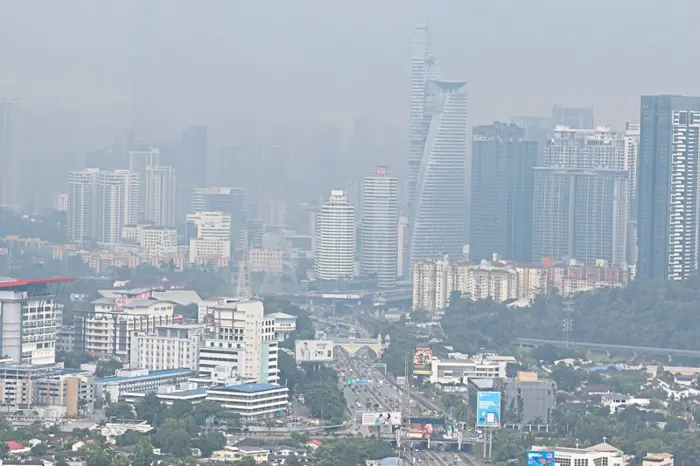
KUALA LUMPUR, 23 July (Voice of Malaysia): As Malaysia faces a dual environmental threat of increasing haze and rising Ultraviolet Radiation Index (UVI) levels, climate experts are warning that the haze presents a far more significant danger to public health.
Senior lecturer Dr. Chung Jing Xiang from the Faculty of Marine Sciences and Environment at Universiti Malaysia Terengganu (UMT) emphasized that although both UV radiation and haze can negatively affect human health, the latter poses a more immediate and serious risk.
“Our region’s proximity to the equator naturally results in high UVI levels due to nearly year-round direct sunlight,” Dr. Chung explained. “However, the haze contains pollutant particles—known as Particulate Matter (PM)—which can cause respiratory issues and other health problems.”
He noted that while haze particles can scatter UV light and reduce the amount reaching the Earth’s surface, this doesn’t eliminate the underlying danger. “Think of it like diving in murky water,” he said. “If the water isn’t clear, less light reaches the ocean floor. Similarly, with haze, less sunlight—and therefore less UV radiation—makes it to ground level.”
Dr. Chung pointed out that although the reduced UV levels during hazy periods may lessen the risk of sunburn, people should not mistake this for improved environmental safety. “Low UV doesn’t mean the air is safe—it often means it’s filled with harmful particles,” he added.
He also highlighted an inverse relationship between UV levels and air quality: “A high UVI often indicates clean air, whereas a low UVI typically coincides with heavy haze and poor air quality.”
Supporting this concern, climatologist Prof. Datuk Dr. Azizan Abu Samah from the National Antarctica Research Centre warned that haze containing PM2.5 pollutants poses a more critical health threat. These microscopic particles can be inhaled deep into the lungs and have been linked to various respiratory and cardiovascular conditions.
He added that the UV index tends to peak around midday, but its intensity can be significantly reduced by thick cloud cover. “Thick clouds reflect much of the sun’s radiation, offering a natural barrier against UV exposure,” he said.
Nonetheless, being situated in the tropics means Malaysians are regularly exposed to higher UV levels than populations in temperate regions such as Europe. Kota Kinabalu, Sabah, for instance, recorded an extreme UV index of 13 yesterday between noon and 1pm, according to data from the Malaysian Meteorological Department (MetMalaysia).
MetMalaysia Director-General Dr. Mohd Hisham Mohd Anip stated that UV intensity in Malaysia generally reaches its peak during the months of December through February.
As Malaysia continues to grapple with climate-related challenges, experts urge the public to remain vigilant about air quality and take necessary precautions—such as wearing masks and limiting outdoor activity during haze episodes—rather than only focusing on sun exposure.
📲 Read the full story and stay updated with Voice of Malaysia
🔗www.vom24.com/
👇 Follow us for more updates!
✅ Facebook: facebook.com/vomvoiceofmalaysia
✅Twitter: x.com/vomalaysia
✅ Instagram: instagram.com/voiceofmalaysia
✅ YouTube: youtube.com/@vomtv24