

China Urged to Stay Vigilant as US-Led Quad Deepens Strategic Unity Amid Trade Frictions
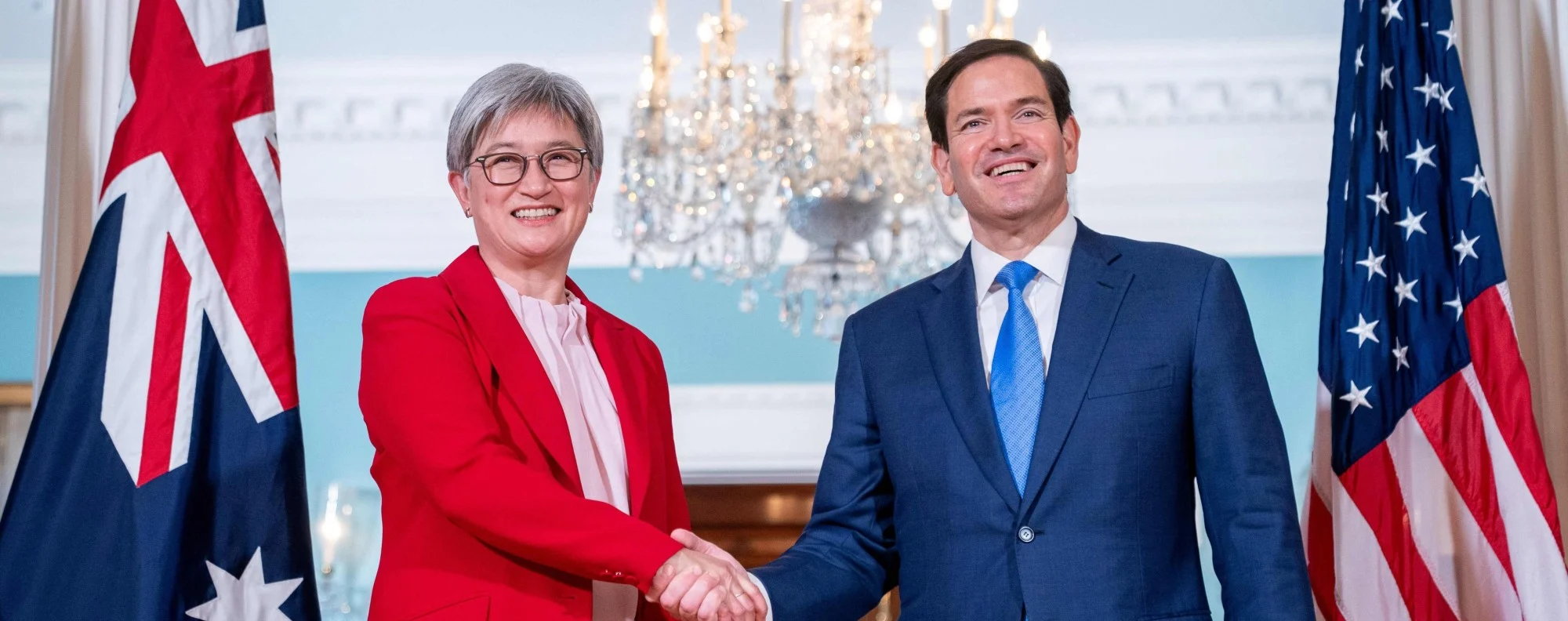
BEIJING|| July 2: Despite mounting trade tensions with Washington, the United States’ regional allies in the Indo-Pacific continue to demonstrate strong strategic alignment against China, prompting Chinese analysts to urge Beijing to remain alert to the growing unity under the US-led Quad alliance.
The latest meeting of the Quadrilateral Security Dialogue—comprising the United States, Japan, Australia, and India—was held Tuesday in Washington. The four foreign ministers reaffirmed their commitment to Indo-Pacific security and announced the launch of a new Quad Critical Minerals Initiative aimed at diversifying supply chains and reducing dependency on Chinese resources.
In a joint statement, the ministers expressed “serious concern” over tensions in the East and South China Seas, referencing territorial disputes and navigation rights issues involving China, though it was not named directly.
“We are deeply concerned about the abrupt constriction and future reliability of key supply chains, specifically for critical minerals,” the statement said, alluding to China’s global dominance in rare earth elements.
The meeting, led by U.S. Secretary of State Marco Rubio and attended by Japan’s Takeshi Iwaya, Australia’s Penny Wong, and India’s Subrahmanyam Jaishankar, comes amid internal strains within the Quad over Trump-era global tariffs. All three US allies face stiff import duties, and trade disagreements are intensifying, with Trump recently warning of increased tariffs on Japanese goods—possibly up to 35%.
Despite these frictions, analysts say the Quad’s strategic alignment remains intact. Zhu Feng, dean of the School of International Studies at Nanjing University, noted that the Trump administration continues to view China as the primary strategic rival, and the Indo-Pacific remains central to US security policy.
“Trade disputes are on the rise within the alliance, but there’s been no fundamental shift in their shared geopolitical stance against China,” Zhu said. “Beijing must stay highly vigilant.”
Rare Earths and Strategic Minerals in Focus
As countries like India, Australia, and Japan seek to reduce reliance on Chinese rare earths, the new Quad minerals initiative signals a concerted push for critical mineral independence. However, Chinese scholars argue that establishing fully independent supply chains without China is not feasible in the short term.
Fudan University professor Shen Dingli observed that while China’s control over rare earths has proven a powerful bargaining tool, Beijing should use this leverage “judiciously.”
“China should maintain partial dependency while avoiding total decoupling, ensuring strategic influence while preventing competitors from achieving full self-reliance,” Shen said.
Zhao Minghao, another expert from Fudan’s Institute of International Studies, said efforts like the new initiative mirror the earlier Minerals Security Partnership launched in 2022—which has made limited progress due to high costs and long timelines required to develop new infrastructure and technologies.
Maritime Cooperation Raises Concerns
The Quad’s statement also highlighted plans to expand cooperation in maritime law enforcement, including regional training, legal dialogues, and Coast Guard coordination. Wu Xinbo, director of the Center for American Studies at Fudan University, warned that any shift in focus toward the South China Sea would warrant a strong response from Beijing.
“If the Philippines becomes involved in joint enforcement or security actions in disputed areas, China must respond firmly,” Wu said.
The Quad further committed to collaborating on emerging technologies, such as AI, semiconductors, cybersecurity, biotechnology, and technical standards, while pledging support for humanitarian and emergency response efforts across the region.
Although some analysts characterized the latest meeting as a “routine exercise” with relatively muted enthusiasm compared to previous years, they warned that the core strategic intent to counter China remains strong.
“As long as the foundational consensus remains—to contain China’s rise—Quad members will maintain cooperation, regardless of their bilateral trade irritants with Washington,” Zhu added.