

IRGC Destroys Israeli Military Intelligence Headquarters in Tel Aviv in ‘True Promise III’ Retaliation
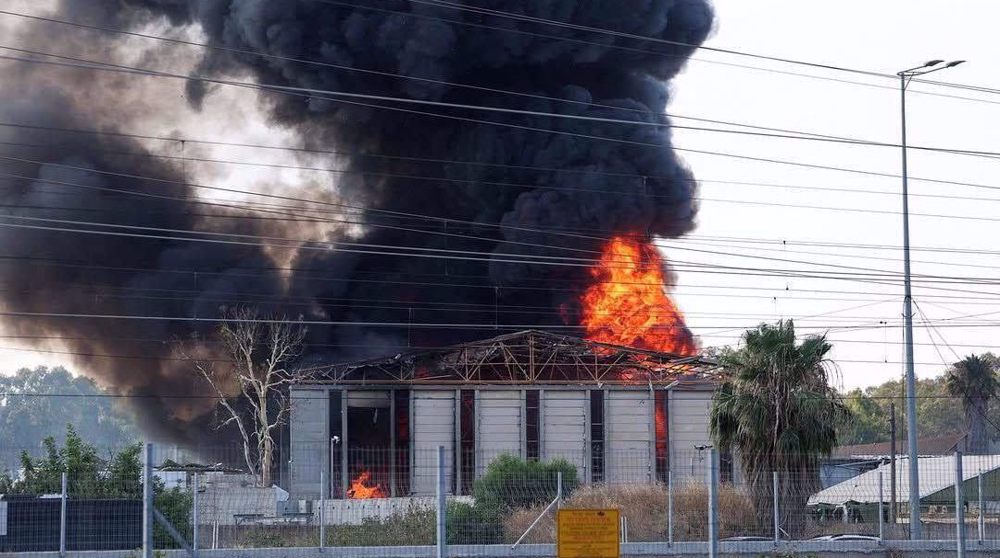
Tehran, 18 June 2025 – In a significant escalation of the ongoing conflict, Iran’s Islamic Revolution Guards Corps (IRGC) announced the destruction of a major Israeli military intelligence facility in Tel Aviv as part of its retaliatory campaign, Operation True Promise III.
According to an official IRGC statement released on Tuesday, the Iranian aerospace division successfully targeted and destroyed the logistical headquarters of Aman, the Israeli Military Intelligence Unit, along with a second facility linked to Unit 8200—a key signals intelligence division located at the Glilot base near Tel Aviv.
“In the early hours of Tuesday, June 17, despite the presence of advanced Zionist defense systems, the IRGC aerospace forces launched an impact-oriented operation that struck and set ablaze the Aman military intelligence center and the Zionist regime’s terror planning hub in Tel Aviv,” the statement declared.
Widely shared images on social media Tuesday showed flames engulfing parts of the Aman complex, which forms a central node in Israel’s military intelligence architecture. Due to strict censorship laws, Israeli media has not officially acknowledged the extent of the damage, but leaked videos confirmed massive fires at the site.
Targets: Aman and Unit 8200
The Aman Center, one of Israel’s oldest intelligence institutions, serves as the main coordination hub for intelligence sharing between the military, Mossad, and other Israeli security agencies. It includes critical subdivisions such as Unit 8200 (Signals Intelligence), Unit 504 (Human Intelligence), and Unit 9900 (Geospatial Intelligence).
Unit 8200, in particular, has long been involved in electronic surveillance and cyber operations and is believed to play a major role in foreign sabotage missions—many of which have targeted Iranian infrastructure recently.
The ninth phase of Operation True Promise III marks a sharp intensification in Iran’s retaliation for the assassination of senior Iranian commanders, nuclear scientists, and civilians—including women and children—by Israeli forces last Friday.
Israeli Aggression Continues
Since the launch of the operation on Friday night, Israeli forces have continued strikes on Iranian territory. Most recently, on Monday, Israeli missiles struck the Islamic Republic of Iran Broadcasting (IRIB) headquarters in northern Tehran during a live news broadcast. The attack resulted in the death of two journalists and several injuries among IRIB staff.
The Iranian government has called on the international community to condemn Israel’s acts of aggression and hold the regime accountable for its attacks on civilian targets. Tehran has emphasized that its responses are defensive in nature and fully in accordance with international law.
Iran warns of a stronger military response.
In a separate statement on Monday, Brigadier General Ahmad Vahidi, a senior advisor to the IRGC commander, dismissed reports suggesting Iran was running low on missile supplies.
“Our enemies should not be fooled. What we’ve used so far is only a portion of our capabilities,” said Vahidi. “We have not yet deployed our strategic arsenal. When the time comes, our advanced systems will demonstrate their capabilities.
Iran’s missile capabilities—developed over decades under heavy international sanctions—include hypersonic, cruise, and long-range ballistic missiles, with ranges capable of reaching deep into Israeli territory and beyond.
As the standoff deepens, the risk of wider regional conflict continues to grow. Analysts warn that further escalations could draw in other players from across the Middle East unless diplomatic intervention is urgently pursued.