

Safeguarding pilgrims is the top concern for Saudi Arabia as it gets ready for Hajj
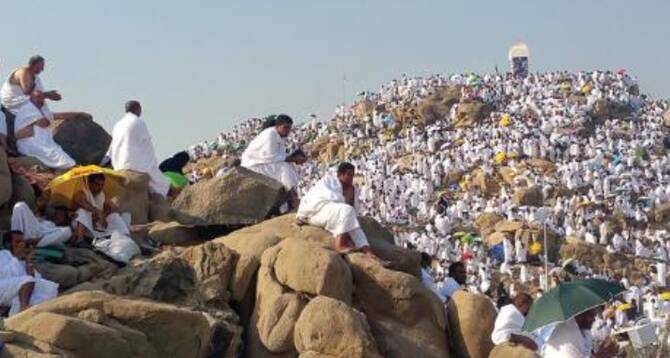
Safeguarding pilgrims is the top concern for Saudi Arabia as it gets ready for Hajj.
Since temperatures will be very high during Hajj, which starts on June 4, Saudi Arabia is putting the safety of the visitors first.
The government has taken several steps to prepare for the harsh desert weather, with high temperatures expected to reach 40 to 45°C. These include using AI and building more cooling facilities.
“One of the big problems we face is that the temperature is going up every year,” said Tawfiq Al-Rabiah, the Saudi minister in charge of Hajj and Umrah. This is a matter that we take very seriously.
The Saudi Ministry of Health revealed on Friday that five pilgrims had passed out from heat exhaustion while performing the Hajj rituals. The temperatures at the holy sites had been rising.
All the people who were affected got medical help right away and are now in stable condition, according to a statement made to Arab News.
As part of the kingdom’s larger plan to protect pilgrims’ health and safety, health teams are still on high watch and will act quickly in similar situations.
According to the ministry, pilgrims should drink plenty of water, stay hydrated, and avoid being in direct sunlight for long periods of time. They should also follow official health guidelines, such as using shaded paths, wearing the right safety gear, and getting help as soon as they feel worn out. There have been efforts in more than one language to spread the word.
The Ministry of Health has also started an advanced robotic surgery program at King Abdullah Medical City in Makkah. This is a big step toward better health care for tourists.
These steps are part of Saudi Arabia’s larger plan to make sure that the millions of visitors from all over the world have a safe and healthy time.
50,000 square meters of extra shade, more than 400 misting and cooling stations, repair and extension work around the Grand Mosque, and heat-reflective asphalt on major walkways are some of the main things that have been done to help people deal with the heat.
The Saudi Food and Drug Authority has also reviewed its plans for Hajj. CEO Dr. Hisham S. Al-Jadhey has visited the authority’s office in Makkah to see how operating plans are being carried out and to make sure that the services are ready to go.
He said it was an honor to ensure the pilgrims’ food and medicine were safe and that it was vital to work even harder.
He also discussed the SFDA’s plans to employ stringent regulations, cutting-edge technologies, and artificial intelligence to monitor factories and stores, ensuring the quality of goods sold during the Hajj.
During the tour, Al-Jadhey went to the SFDA’s Hajj Operations Center in Makkah. There, he learned about how the agency works with other government agencies, how to track success, and how to help field teams during inspection tours. Body cams and other high-tech tools used to record field inspection activities improve the tours.
In the regulatory zone inside the Holy Sites area, Al-Jadhey also went to the SFDA site and looked over field monitoring plans for food factories and warehouses. The place is where regulatory field teams are sent out from their main base.
He also went to the emergency room in Mina and met with Dr. Abdullah bin Rashoud Al-Algwizani, who is the CEO of the Saudi Public Health Authority (Weqaya). The meeting was mostly about how important it is for the two governments to continue working together to protect travelers’ health and safety.
A stop at the National Health Emergency and Crisis Management Center was also part of the trip.
The SFDA teams showcased their smart analytical tools and digital regulatory technologies for inspections and monitoring during the visits. These tools are part of an AI-powered, engaging system that is meant to make operations run more smoothly and help the authority reach its public health and safety goals during Hajj season.
As a high-tech upgrade, the kingdom is also using AI to track the movements of pilgrims in real time. Drones transmit real-time video to command centers, enabling prompt management of crowds and identification of medical issues.
Al-Rabiah emphasized how important technology is for stopping tragedies: “We use advanced AI technologies to do this monitoring and get fast feedback.”
The Ministry of Interior has also stepped up its war on illegal pilgrims. AI-powered systems are monitoring entry into the holy cities, as the majority of heat-related deaths during the Hajj last year occurred among individuals without official permission.