

40 percent of Syria’s important water supplies are taken by Israel, which continues to steal water
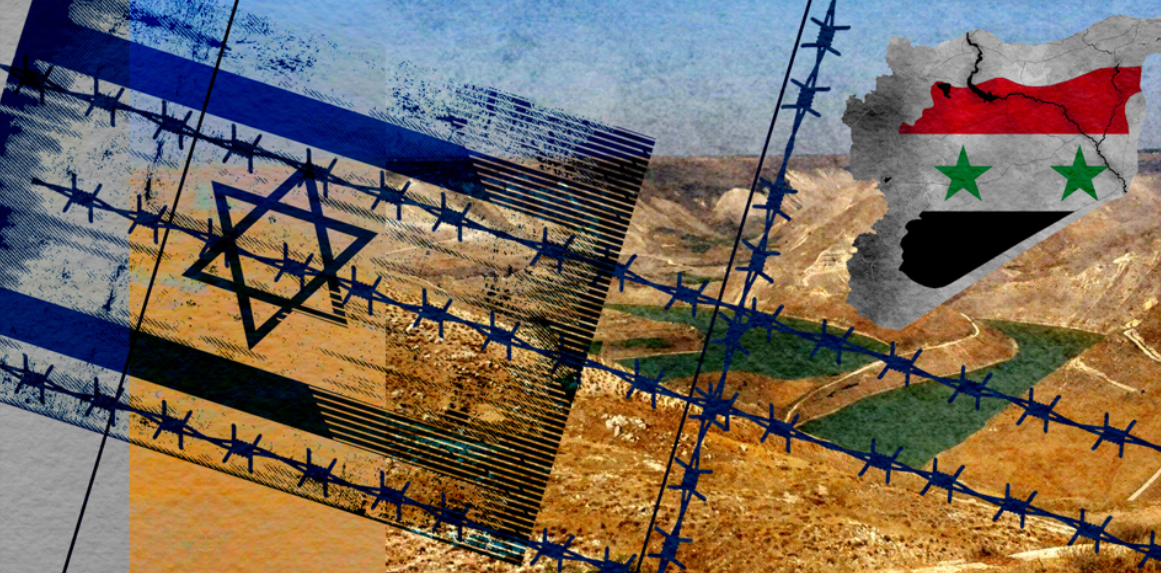
For years, the Israeli government wanted Syria’s large water supplies, especially in the south of the country, to help with its own chronic water shortages.
After the sudden fall of Bashar al-Assad’s government in Damascus last month, Israel launched a military attack on Syria with a number of different strategic goals.
Israeli troops quickly moved beyond the occupied Golan Heights and took over the buffer zone as well as Mount Hermon, a key mountain that forms the border between Syria, Lebanon, and Palestine.
But this invasion was just the start. Thursday, Syrian news outlets said that Israeli occupation troops took over the Al-Mantara Dam, which is important for Quneitra and the areas around it.
At the same time, they bombed the offices of the 90th Brigade of the Syrian Army in Sasa, near Damascus, to hide the fact that they had stolen something else.
Al-Mantara Dam is in the buffer zone set up on the Golan Heights in 1979. It is only a few hundred meters east of Quneitra and 50 kilometers southwest of the city of Syria.
This important water reserve has long been supporting not only Quneitra province, which is where the occupied Golan Heights are located, but also the dry southern part of Syria as a whole.
After taking over Al-Mantara Dam, which is the biggest dam in southern Syria, experts say that the Israeli government now has illegal control over about 40% of Syria’s water supplies.
Before taking over Al-Mantara, they took over five other important places that bring water to Syria from nearby countries.
In December, Israeli troops took over the city of Quneitra and the areas around it. This happened just days after Assad’s government fell and militants backed by the West, led by Hayat Tahrir al-Sham, took over.
The Tel Aviv government quickly took over 266 square kilometers of buffer zone land, which is clearly against the 1974 Agreement on Disengagement. Then, Israeli occupation troops moved farther east and illegally took over more Syrian land.
The control zone now goes from the eastern slopes of Mount Hermon, which are on the border with Lebanon, to the Yarmuk River valley, which is close to Jordan, in the south.
As Israeli troops moved into the area, they set up military posts, built earthen walls, and made it very hard for people to enter and leave, which messed up the daily lives of people who lived there.
People in occupied villages across Syria were upset about these problems and held large protests. Israeli forces reacted with live fire, which made things even worse and made people even more angry.
The story of the so-called “safe zone” brought back unpleasant memories of the Zionist regime’s past occupations of Palestine, Lebanon, and the Golan Heights, which it still wants to take over.
We used dams and rivers.
When you look more closely at the borders of the Israeli control zone in Syria, you can see that the main goal was to take over all the important rivers and lakes in the occupied Golan Heights.
Along with the 3.5 km long Al-Mantara embankment dam, which was caught inside the UN buffer zone, nine other dams outside the zone were also taken, all of them in Syria’s Quneitra and Dara’a provinces.
The Israeli occupation army also took over the smaller Rwihina Dam, which is 2.5 km downstream on the same Ruqqad River and would normally be the eastern border of the Golan Heights.
Ten kilometers further downstream on the same river is the Kudna Dam, which is three kilometers long. The nearby Bariqa Dam, which is shorter, serves as its counterpart.
The Ghadir al-Bustan Dam is near the towns of Zaghbi and Nasiriya, and the Jisr Ruqqad Dam is near Saida and Ain Zakar. These are two other, bigger, occupied dams on the Ruqqad River.
As one of the most important tributaries, the Ruqqad River runs into the Yarmuk River, which forms the natural border between Syria and Jordan. The Yarmuk River then flows into the strategically located and water-rich Jordan River.
To the east, on rivers that flow into the Ruqqad River, there are three more manned dams: Shabraq Dam, Sahim al-Golan Dam, and Abidin Dam.
The tenth-held reservoir is at the 110-meter-high Al-Wehda (Maqarin) Dam on the Yarmuk River, which is on the border between Syria and Jordan.
Plans for this dam between Jordan and Syria have been around since the early 1950s, but it didn’t open until 2011, the same year that foreign-backed terrorism broke out in Syria.
The Israeli government was the biggest opponent of building the dam. The reservoir would threaten the Jordan River, which they use for drinking water and have fought their neighbors over many times.
Along with these dams, the Israeli army took over the valley of the Awaj River, which flows next to Mount Hermon in the northern part of the occupied zone. This river, along with the Barada River, is one of the main sources of water for the area of Damascus province.
A place where there is no water
The fact that Israel has taken over the above-mentioned reservoirs and rivers is a big blow to the HTS officials, as it is the latest example of foreigners limiting access to water.
The Euphrates destroys nine low embankment dams with shallow basins and one high dam. This may not seem like a big deal, but the Euphrates brings over 150 dams across the country and over 15 cubic kilometers of water every year.
But the Euphrates has many problems. It is controlled by the US-backed Kurdish autonomy. Turkey often built dams to stop the river from flowing normally and to protect about 60% of the water that flows into Iraq from further downstream.
This century saw the start of plans for the multibillion-dollar project to transport water from the Euphrates to Damascus, but it never saw completion.
In 2021, the Euphrates’ water level hit a record low. The country gets 90% of its water and 70% of its energy from the Euphrates. This caused terrible problems all over the country, including power outages in the capital that lasted for hours.
Seven million people from Damascus and southern Syria have mostly relied on groundwater and smaller rivers like the Awaj, Barada, Ruqqad, and Yarmuk in recent years.
The first three rivers only release about 100 million cubic meters of water a year each, and the Yarmuk (which is shared with Jordan) about 500 million. However, the area needs more than a billion cubic meters of water a year.
The invading Israeli government now controls 90% of the supply in the capital area. This is because they took over the lower Yarmuk Valley, the upper Awaj Valley, and most of the Ruqqad River.
Zionist policy on water.
Occupying Syrian water resources is not only a beneficial way for Tel Aviv to get what it wants from the HTS government in Damascus politically, but it is also an important natural resource that they don’t have.
The Zionist government has been interested in water resources for a long time, even before they set up their own state in occupied Palestine and during their many wars against their Arab neighbors.
Chaim Weizmann, one of Zionism’s founders and the group’s first president, said at the Paris Peace Conference in 1919 that any future state should include the upper parts of the Litani River (Lebanon) and the source of the Jordan River (Mount Hermon).
As he wrote in a letter to the British Prime Minister, Weizmann said that controlling the Litani, Jordan, and Yarmuk rivers was crucial for the safety of the future Zionist state.
David Ben-Gurion, another important Zionist founder and the group’s first prime minister, said again in 1948 that their borders include the southern banks of the Litani River. However, the League of Nations did not accept these claims to Lebanese land.
After the war, most people agreed that Israel has attacked Lake Tiberias, the Jordan River, and the Litani River many times since 1948. This includes last year’s efforts to break out onto the banks of the Litani River, which is in Lebanon.
The Zionist entity today receives about 80 percent of its water supply through five key desalination plants, located next to coastal power plants.
However, the large surface area of these facilities makes them fragile in a potential conflict, particularly in the event of ballistic missile strikes, which could leave millions of settlers without water.
Therefore, as evidenced by the current situation in Syria, the Israeli regime continues to use outdated strategies to occupy foreign water-rich territories.
Abulmalik al-Houthi, leader of the Yemeni Ansarullah resistance movement, in his speech on Saturday, also pointed to the fact that Israeli aggression in Syria aims to seize control of water resources.