

What is the significance of Iran’s launch of the new satellites Kowsar and HodHod?
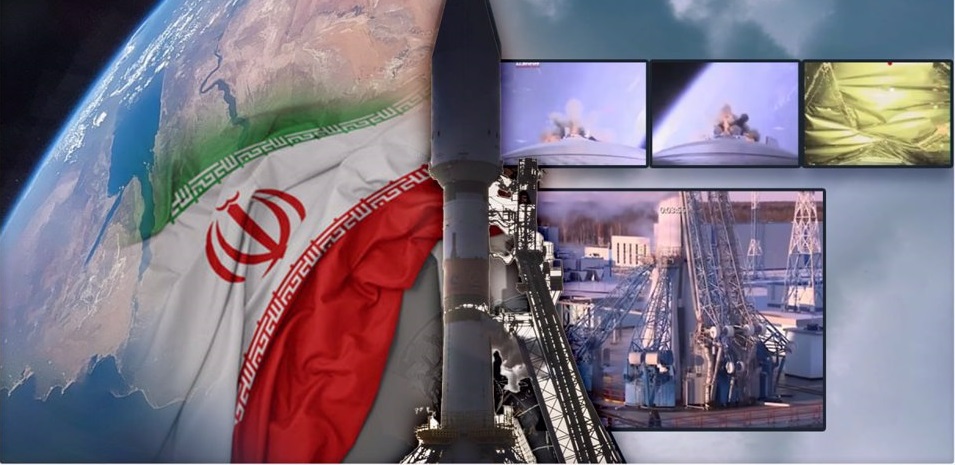
The two new Iranian satellites’ launch signifies the expansion of Iranian-Russian space collaboration as well as the entry of the private sector into the space industry.
On Tuesday, the Vostochny Cosmodrome in Russia launched two new Iranian satellites, Kowsar and HodHod, using a Soyuz rocket. Kazem Jalali, the ambassador of Iran to Russia, praised the successful debut in a post on his account on social media platform X (previously Twitter).
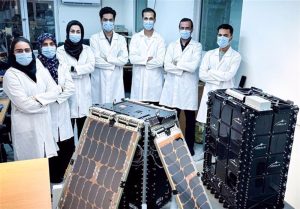
Over the course of the previous five years, Iranian engineers at the locally established knowledge-based enterprise SpaceOmid developed the two new satellites.
The two satellite launches, according to Hassan Salarieh, president of Iran’s Space Agency, were the second of their kind since last March, when the nation sent its Chamran satellite into orbit aboard its Qa’em space launch vehicle (SLV).
Salarieh stated that the nation would use Qa’em and Simorq, two more indigenous Iranian SLVs, to launch up to seven additional satellites into orbit over the course of the following five months. It coincides with decades of harsh and unlawful Western sanctions against the Islamic Republic.
Which company is SpaceOmid?
The Iranian Omid satellite project manager, Dr. Hossein Shahrabi Farahani, and other Amirkabir University of Technology students created the Space Omid Company in 2018.
They began developing and manufacturing the Kowsar satellite in 2019 to develop low-cost satellite systems for low Earth orbit (LEO).
The company focuses on training an elite generation for the country’s space industry to work alongside aerospace specialists and develop satellite system applications.
The cubic Hodhod satellite has been under development since 2022 to deliver narrowband Internet of Things (NB-IoT) services. The Iranian Vice Presidency for Science and Technology, the Iranian Space Agency (ISA), and the Iranian embassy in Moscow helped design and build the two satellites.
What is the Kowsar satellite?
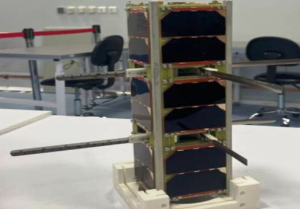
The Kowsar satellite is the inaugural space product of the Space Omid Company, which initiated its design in the summer of 2019. Classified as a cubic satellite, it expedites the manufacturing process and significantly reduces costs.
The solar-powered satellite, which orbits at a height of 500 kilometers and has a planned lifetime of 3.6 years, weighs 30 kilograms.
Cameras on the satellite operate in the near-infrared (NIR) and red, green, and blue (RGB) spectrums. It has a color imaging range of 15 kilometers and an imaging rate of 6 frames per second.
It is the most sophisticated satellite in Iran until 2021, due to its average resolution of 3.45 meters ground sample distance (GSD). The purpose of Kowsar is to streamline agricultural, land survey, and cadaster services.
What is the HodHod satellite?
Solar panels power HodHod, a cubic satellite that weighs 4 kilograms and serves as a lightweight telecommunication satellite.
Hodhod, like Kowsar, is designed to orbit at a height of 500 kilometers and has a slightly extended planned lifespan of four years.
Applications for it include environmental protection, land surveying, transportation, and agriculture.
The HodHod satellite’s most significant advantage is its capacity to offer international coverage, even in remote, forested, and mountainous regions, through the provision of Internet of Things (IoT) services.
What is the rationale behind the Soyuz launch?
Although Iran has successfully launched 15 satellites into orbit using domestic launch vehicles from its spaceports over the past 15 years, the Iranian Space Agency (ISA) or the Islamic Revolution Guards Corps (IRGC) currently exclusively use them for their satellite programs.
In this particular case, a private Iranian corporation owns the satellites and entered into a launch contract with the Russian company Glavkosmos in 2020.
We launched the two Iranian satellites from the Vostochny Cosmodrome using the Russian Soyuz-2.1b launch vehicle, which has a liftoff mass of 313 tons and can place up to 9,200 kg into low Earth orbit (LEO).
In addition to the two Iranian satellites, the Soyuz rocket family achieved a record by launching two larger and 51 smaller Russian satellites into orbit.
Kowsar and Hodhod received allocations of approximately $750,000 and $100,000, respectively, based on the estimated commercial price per kilogram of cargo, which ranges from $20,000 to $30,000.
The fact that Iran was the sole foreign participant in the most recent Soyuz launch is indicative of the ongoing expansion of Iranian-Russian space cooperation, which has been ongoing for nearly two decades.
On February 29, 2022, the same cosmodrome and launch vehicle launched the Iranian Pars-1 remote sensing satellite, and on August 9, 2022, the same rocket launched the Khayyam high-resolution imaging satellite from the Baikonur cosmodrome.
On October 28, 2005, Omsk-based Polyot launched a Russian Kosmos-3M rocket from the Plesetsk Cosmodrome to launch Sina-1, Iran’s first experimental satellite.