

Fitch Ratings says that Saudi Islamic banks are set up for strong growth during economic growth
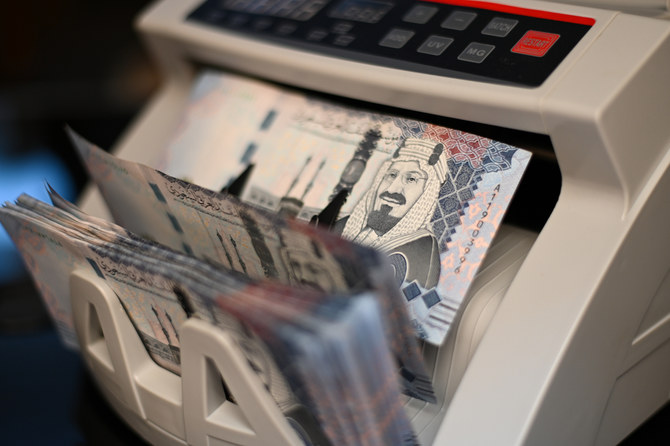
RIYADH: A new study says that Saudi Islamic banks will continue to do well this year and in 2025, thanks to strong non-oil economic growth and good operating conditions.
Fitch Ratings says that these banks use their large number of retail customers to make more money, get cheaper funds, and keep their high-quality, diverse assets.
All residential mortgages in the Kingdom must follow Islamic law. People looking for Shariah-compliant financial goods go to Islamic banks for mortgages and other services, which brings in more deposits.
“Over the past few years, financing has grown faster than lending. This is because all residential mortgages have to be Shariah-compliant.” According to the news agency, Islamic banking is very popular in Saudi Arabia, which has the highest percentage of Islamic financing (85%) of any country that lets regular banks work with Islamic banks.
Customers are more likely to put their money in banks that follow Islamic banking principles because they accept these principles. Also, the fact that mortgages must follow Shariah law makes Islamic banks the best choice for getting this kind of financing.
Quality of assets
The study says that Islamic banks have a better impaired financing ratio than regular banks. This is because they are less likely to lend money to risky businesses. A little more than two percent was the number for conventional banks, but only 1.5% for Islamic banks.
Also, Islamic banks lowered the percentage of loans that aren’t being paid back from 1.7% in 2022 to 1.5% in 2023, which shows that loans are performing better.
Strong growth in financing helped this progress by allowing portfolio diversification and lowering total risk. These gains were boosted by good economic and legal conditions, which led to better borrower performance and lower default rates.
This important financial measure, also known as the non-performing financing ratio, checks how good the loans are in banks and other financial institutions. It specifically figures out what percentage of loans are having trouble or are likely to go into default.
Making money
The agency says that Islamic banks are more profitable than conventional banks because their running profit relative to risk-weighted assets is higher than 3%. For conventional banks, that number is only 2.5%.
In 2023, the sector’s profits stayed high, even though funding costs went up, canceling out the benefits of rising credit and lower impairment charges.
Islamic banks stood out because they made more money than regular banks. This was mostly because they were able to keep their profit margins high because they had lower borrowing costs.
This was possible because they had strong retail businesses, which meant they could get more deposits that didn’t pay interest than regular banks. These reliable and low-cost funding sources helped Islamic banks keep their profits higher than their competitors, showing how strong they are in tough financial times.
Levels of capital
As of the end of 2023, the average common stock Tier 1 ratio for Islamic banks was 16.4%, which was very close to the 16.6% ratio for conventional banks. This meant that Islamic banks had a strong capitalization.
This number shows strong core equity capital compared to risk-weighted assets, which means the company is financially stable. Also, Islamic banks have a lower risk-weighted assets to total assets ratio of 70% compared to 84% for conventional banks. This is because they focus more on retail banking and do fewer activities that don’t show up on their balance sheets.
All of these things make Islamic banks stronger by lowering their risk exposure and helping them grow even when times are tough financially.
Similar to Islamic banks, conventional banks had a capital adequacy ratio of about 20%. This ratio compares capital, such as stock and reserves, to risk-weighted assets to make sure there is enough capital to cover possible losses.
Money and access to it
According to the agency’s study, as of the end of 2023, 80 percent of Islamic banks’ funding came from customer deposits. This was a little less than the 84 percent seen in conventional banks.
The average ratio of Islamic banks’ loans to deposits went up from 99 percent in 2022 to 102% in 2023. This means that their lending activities grew faster than their savings base.
A report from Fitch Ratings said that deposit concentration, which happens when most of a bank’s savings come from a few depositors or sources, is common among Islamic banks.
Al Rajhi Banking and Investment Corp., on the other hand, stands out because it has a more diverse store account base.
Even though the economy has been bad, Islamic banks have been able to keep their cash flow in check thanks to the central bank’s tools for managing cash flow and the greater availability of government sukuk.
These steps make sure that Islamic banks always have enough cash on hand to meet their financial responsibilities and keep running smoothly even when market conditions change.
Another report from June from the body that studies emerging market debt says that Saudi Arabia is working hard to grow and improve its sukuk and debt markets.
The main reason for this strategic effort is that the Kingdom needs to deal with budget deficits more effectively. By making these markets bigger, Saudi Arabia hopes to get the money it needs to fix its budget problems and also make its financial sector more flexible and diverse.
This method not only helps the government reach its goals for building and financial planning, but it also makes the Kingdom’s capital markets more stable and appealing to investors around the world.
The Capital Markets Authority revealed in the same month that Saudi Arabia’s sukuk and debt capital markets have grown strongly, with 7.99 percent annual growth overall and 9.6 percent growth for unlisted issuances.
In 2019, the market for private sukuk and debt was worth SR72 billion ($19 billion). By 2023, it would be worth about SR105 billion. In 2023, corporate sukuk and debt were worth SR125 billion, up from SR95 billion in 2019. This was due to three times as many companies issuing debt.
Seventy percent of the market, or SR529.8 billion by 2023, was made up of government donations. The market was very busy; SR2.5 billion worth of goods were sold, and 36,961 deals were made.
The Capital Market Authority wants to make the market more appealing by making rules better and building more infrastructure. This will help the economy grow and draw investors from around the world.
GCC countries, Malaysia, Indonesia, and Turkey will issue a lot more US dollar-denominated debt in emerging markets in 2024, according to Fitch Ratings. These five countries now account for 51% of all EM dollar debt, up from 43.7% in 2023 and 32.8% in 2020.
This rise is because the government is trying to build debt capital markets, find new ways to get money, cover budget gaps, and keep track of debts that are coming due. A key Islamic way to get money is through sukuk, which made up 12.4% of all EM dollar loans issued during this time.
Their inclusion in global bond indices has increased demand from investors around the world. As a result, Fitch has raised the ratings of several countries because their economic outlooks have improved and their policies are more investor-friendly.
Look ahead
Fitch Ratings thinks that Saudi Islamic banks will continue to have strong credit profiles on their own in 2024 and 2025.
High oil prices and good working conditions make this strength even stronger. However, banks’ capital, funding, and liquidity situations are likely to be strained by strong credit growth.
To ease these stresses, Islamic banks are likely to find other ways to get money besides standard deposits. As they diversify, they are relying more on wholesale funding options like issuing sukuk, which are expected to play a bigger part in their funding mix.
Even with this change, deposits are still likely to be Islamic banks’ major and most stable source of funding. Overall, Saudi Islamic banks are able to keep their strong credit profiles thanks to good economic conditions and strategic attempts to diversify their funding, even though they face problems with capital, funding, and liquidity.