

Budget 2027: Waad – A Pledge to Ensure No One Is Left Behind
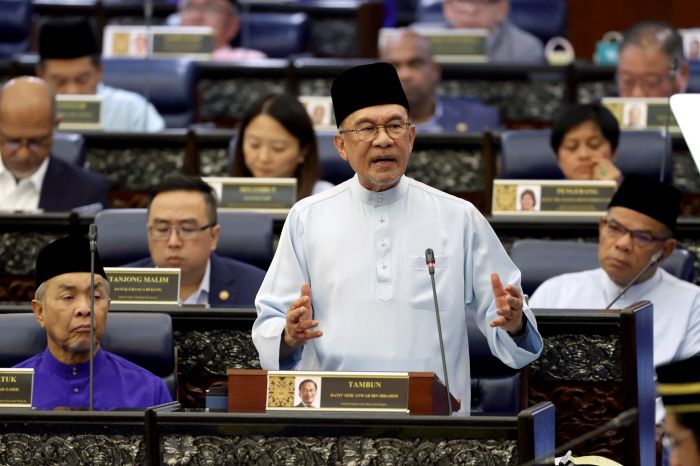
The concept of waad emphasised in Budget 2027 represents a binding pledge between the people and the government, founded on shared responsibilities.
The people place their trust and loyalty in the government, while those in power are expected to uphold justice, safeguard public welfare and fulfil their responsibilities. This relationship forms the foundation of mutual trust between both parties.
In Malay history, the waad between Demang Lebar Daun and Sang Sapurba established the principle that the people should remain loyal to their rulers, while rulers bear responsibility for protecting the safety and welfare of their subjects.
This principle remains relevant to relations between the government and the people today.
In this spirit, Budget 2027 can be viewed as an effort to ensure that economic development also prioritises social well-being.
The concept of re-embedding society within the market means that economic activities must take human needs into account rather than focusing solely on profits and growth.
This pledge must be assessed through the everyday lives of ordinary Malaysians, whether they live in People’s Residency Programme (PRR) housing, work in rubber-tapping sheds or operate small roadside stalls.
Are their lives improving? Do their children have opportunities to enjoy a better standard of living than their parents? Or are many still struggling with the cost of living and uncertainties in the global economy?
There are three reasons why waad is important in the budget.
First, the budget must represent a government commitment that can be evaluated by the people, rather than merely a list of financial allocations.
Second, the government must provide opportunities, while the people must make efforts to benefit from them.
Third, this responsibility extends to future generations and relations between regions, including the Malaysia Agreement 1963 (MA63), as part of the National Pledge.
However, people can only seize opportunities if facilities and assistance genuinely reach rural communities, public housing areas and remote regions.
If implementation is ineffective, those most in need will continue to bear the consequences of policy shortcomings.
Budget 2027, themed Reaching for the Sky, Rooted in the Earth, allocates RM510 billion.
A total of RM3.3 billion has been allocated for basic rural infrastructure, including RM2.3 billion for rural roads, while the Department of Orang Asli Development (JAKOA) receives RM445 million.
These allocations are important for improving basic facilities and narrowing development gaps between regions.
Although the Middle East crisis has pushed fuel subsidy costs to RM40 billion, the country’s fiscal deficit is projected to decline to 3.3 per cent in 2027, while national debt is expected to reach 63.7 per cent of gross domestic product (GDP).
The government must balance efforts to assist the people with the need to ensure that national finances remain sustainable in the future.
GOVERNMENT’S SOCIAL RESPONSIBILITY
The cost of living remains one of the main issues requiring attention.
Urban middle-income households may appear financially comfortable, but many are actually experiencing financial pressure.
Salaries received at the end of the month can be exhausted before the middle of the following month because of high daily expenses.
These households are also often considered too financially secure to qualify for assistance, even though their incomes are insufficient to meet family needs.
Some breadwinners are forced to take on two or three jobs to cover household expenses.
Budget 2027 seeks to ease these burdens through three approaches.
First, cash assistance under the Rahmah Cash Contribution (STR) and Rahmah Basic Contribution (SARA) programmes has been increased to RM16 billion.
Second, efforts to reduce daily expenses include Rahmah Sales programmes and protection against higher electricity bills.
Third, tax measures include raising the individual tax relief limit to RM12,000, reducing the tax rate by one percentage point and imposing a 30 per cent rate on income exceeding RM1 million.
These measures could help ease financial pressure, but financial assistance alone does not guarantee lower prices in the long term.
Their effectiveness also depends on the accuracy of data, how assistance is distributed and the availability of social facilities.
A major challenge is ensuring that informal workers and financially struggling M40 households are not excluded from assistance.
In this regard, imams, village heads, teachers, neighbours, Rukun Tetangga neighbourhood associations and non-governmental organisations (NGOs) can help identify families requiring attention.
The MADANI Adopted Community Programme in PRR housing areas can also strengthen cooperation between communities and the government.
These efforts are consistent with the ideas of Karl Polanyi in The Great Transformation (1944), which explains that the economy is closely connected to social life, culture and community values.
When labour, land and money are treated merely as commodities, human interests can easily be sidelined.
Therefore, economic development must progress alongside social protection.
Financial assistance must also be accompanied by efforts to increase incomes.
Employee compensation accounting for only 33.9 per cent of GDP highlights the importance of addressing the share of economic output received by workers.
The budget raises the minimum wage to RM2,000 beginning June 2027, sets RM2,500 for semi-skilled jobs and graduates, and targets a living wage of RM3,400 in government-linked investment companies (GLICs) and government-linked companies (GLCs).
At the same time, micro, small and medium enterprises (MSMEs) with sales below RM50 million are granted temporary exemptions from the new rates.
Gig workers also require protection because they often work from early morning until late at night without the guarantees enjoyed by permanent employees.
Protection through the Social Security Organisation (SOCSO), Employees Provident Fund (EPF) and minimum income provisions is important to reduce the uncertainty they face.
Income-related issues also influence confidence in education.
When graduates earn salaries almost equivalent to those of unskilled workers, confidence in education as a means of improving living standards can be undermined.
This situation encourages some young people to seek opportunities in cities or overseas.
Therefore, policy effectiveness must be evaluated based on actual employment opportunities and income improvements experienced by the people.
Household finances, education and healthcare are three essential foundations for improving living standards.
Families need sufficient income, schools must provide learning opportunities, and hospitals must be capable of delivering medical treatment.
If any one of these foundations is weak, escaping poverty becomes more difficult.
The allocation of nearly RM69 billion to the Ministry of Education (MOE), along with offers of permanent positions to more than 9,000 contract doctors, demonstrates attention to education and healthcare.
However, financial allocations must be followed by effective and accessible services.
Malaysia is also moving towards becoming an ageing nation, making elderly care increasingly important so that families do not have to shoulder the responsibility alone.
The success of Budget 2027 should not be measured solely by GDP growth but must also encompass changes in income, the cost of living, the quality of public services and the country’s ability to maintain sound public finances.
Intergenerational social mobility, trust in institutions and community participation also deserve attention because economic growth figures alone do not reveal who continues to be left behind.
Among the risks that must be addressed are fluctuations in oil prices caused by geopolitical tensions, private-sector compliance levels and weaknesses in governance.
There is also a gap between policies formulated in Putrajaya and the realities of life in rural villages, PRR housing areas and longhouses.
Bureaucratic obstacles and interference by middlemen can delay the distribution of assistance and prevent policies from achieving their intended objectives.
Therefore, waad, as a pledge between the government and the people, becomes meaningful only when communities are not merely recipients of assistance but are also given opportunities to express their needs and influence decisions.
Their role must be recognised through participation in the planning, monitoring and evaluation of policy implementation.
The government, in turn, must ensure that the economic system and facilities provided genuinely meet the needs of society.
UTUSAN
Dr Muhamad Azwan Abd Rahman is a Research Fellow and Head of Quality Assurance at the Institute of Malaysian and International Studies (IKMAS), Universiti Kebangsaan Malaysia (UKM).