

New Law to Replace AUKU With Restrictive, Suppressive Elements Will Be Rejected – Anwar
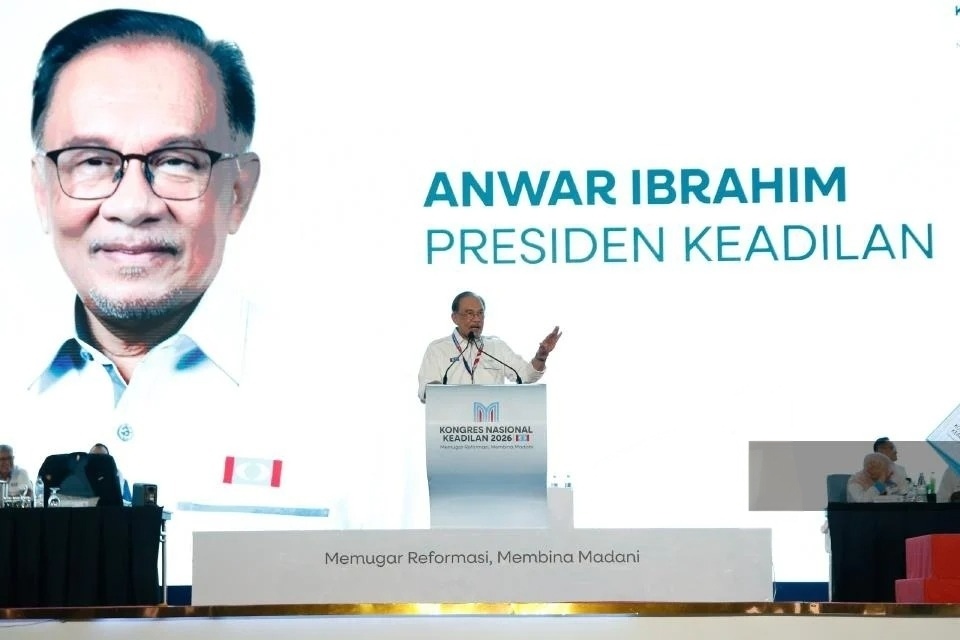
AYER KEROH: Datuk Seri Anwar Ibrahim wants the new act to be drafted to replace the Universities and University Colleges Act 1971 (Act 30) to not have any elements that can restrict and suppress students.
The Prime Minister stressed, if such elements exist in the draft law to be presented to the Cabinet later, it will be rejected.
“I do not want amendments. AUKU must be abolished entirely. There are concerns that sometimes AUKU is repealed, a new law is introduced, which also restricts and suppresses. I will not allow any such regulations.
“If he (a student) hits someone, causes injury, if he cheats in exams, that (can be acted upon through) existing laws.
I do not intend to be lenient.
“But special laws for students like AUKU, I will remind in the Cabinet meeting this Wednesday, I do not agree with any amendments or replacement act that restricts and curbs student activities,” he said.
He said this in his speech at the closing session of the Keadilan National Congress 2026 at the Melaka International Trade Centre (MITC) here, today.
Anwar said, the history of AUKU was created to restrict the freedom of himself, who at that time was a student leader.
“The law was made to restrict Anwar’s freedom, so I had already submitted several amendments when I was Deputy Prime Minister. There were some amendments,” he said.
Yesterday, Anwar announced the abolition of AUKU with the proposal to be brought to the Cabinet this Wednesday.
Higher Education Minister, Datuk Seri Dr Zambry Abd Kadir in a statement after that informed that a more comprehensive national higher education legal framework to replace AUKU has been outlined in the Malaysia Higher Education Plan (RPTM) 2026-2035.
Zambry said the effort is part of the agenda for the formation of the One Higher Education Act, which was launched in January 2026.
AUKU had previously gone through seven series of amendments since it was introduced in 1971, including amendments in 2012 that allowed students to participate in political party activities outside campus.
The latest amendment in 2024 saw that disciplinary action against students at public universities is no longer subject to the Vice-Chancellor’s powers, but instead decided by the Student Disciplinary Committee through the amendment to Section 16B of AUKU.
In addition, improvements to Section 15A of AUKU allow Student Representative Councils and student bodies to collect money and receive contributions in any manner, subject to the regulations and written laws currently in force.
Berita Harian