

Lives Always at Stake
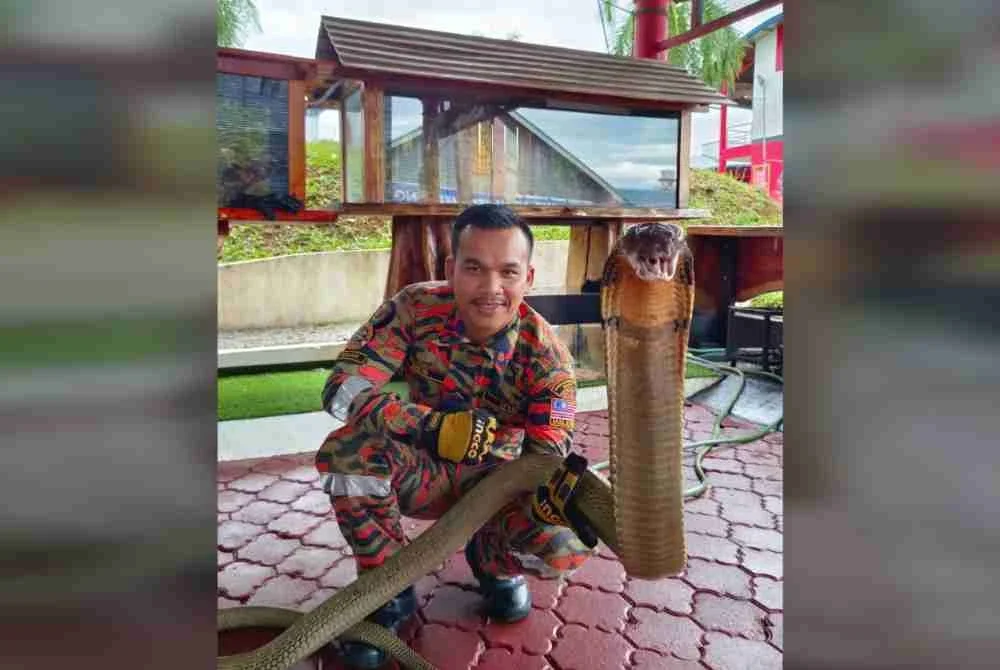
PUTRAJAYA : The passing of the late Senior Fire Officer II (PBK II), Abu Zarin Hussin, who was bitten by a king cobra during an operation in 2018, is proof that rescue duties involving venomous animals are not merely routine tasks.
Behind every emergency call received, members of the Malaysian Fire and Rescue Department’s (JBPM) King Cobra Squad are willing to face the risk of losing their lives to ensure public safety.
King Cobra Squad Chief Trainer, Senior Fire Officer I (PBK I), Safiq Mohamad said the tragedy that claimed the life of his close friend serves as a reminder of the level of preparedness, skills and discipline required in every operation.
Safiq, 33, acknowledged that Abu Zarin’s passing did not dampen his spirit to continue being involved in snake capture operations.
“The effort to share knowledge and save lives is a responsibility that must be continued,” he told Sinar Harian recently.
Recalling his journey, Safiq’s interest in snake handling began in 2014 when he kept several exotic snake species as a hobby before joining the Basic Venomous Animal Handling Course organised by the Malaysian Fire and Rescue Academy, Eastern Region.
“A year later, I became a trainer and provided snake capture services outside of working hours,” he said.
According to him, among the venomous snake species frequently handled include the king cobra, Malayan pit viper, black spitting cobra, banded krait and cane viper.
“All these species are venomous and can potentially cause death if bitten,” he said.
He said that in addition, the King Cobra Squad, which was established in 2015, had once handled a reticulated python weighing over 100 kilogrammes.
“Most cases occur due to the presence of food sources such as monitor lizards, rats and frogs around homes.
“Many cases involve king cobras found hunting monitor lizards on rooftops. This situation is very challenging because members face the risk of falling, ceiling collapse and limited working space,” he said.
He said although the average duration of an operation is between 10 to 30 minutes, there are cases that take up to three hours.
“To ensure safety, every member involved must undergo a venomous animal handling course.
“Participants are exposed to snake species, initial treatment for bite victims and proper handling techniques,” he said.
Snake Capture Operational Procedures
According to Safiq, upon receiving an emergency call, members will obtain initial information regarding the location, type and size of the snake to determine the equipment needed as well as the number of personnel.
“Callers are advised not to provoke the snake, to always maintain a safe distance and to secure the surrounding area until the fire department arrives.
“Members of the public are also advised not to take matters into their own hands to capture or chase away the animal as such actions could increase the risk of injury,” he said.
He said operations are carried out according to the standard operating procedures (SOP) set by JBPM, using specialised equipment such as snares, tongs, hooks and snake feeding loops.
“After capture, the snake will be handed over to the Department of Wildlife and National Parks (Perhilitan) or released back into a suitable habitat, far from human settlements,” he said.
Commenting on public misconceptions, Safiq said many still believe in the myth that all venomous snakes are afraid of bamboo.
“This inaccurate perception causes many individuals to have an extreme fear of these reptiles,” he said.
Meanwhile, he acknowledged that some fire personnel have sustained injuries during operations, including being sprayed with venom by black spitting cobras and being bitten by reticulated pythons.
“Members of the public are advised to always ensure that residential areas are kept clean and well-maintained to avoid the presence of food sources that could attract snakes,” he said.
Sinar Harian