

US Signals Pressure on Venezuela to Limit Ties with China, Russia Amid Strategic Oil Moves
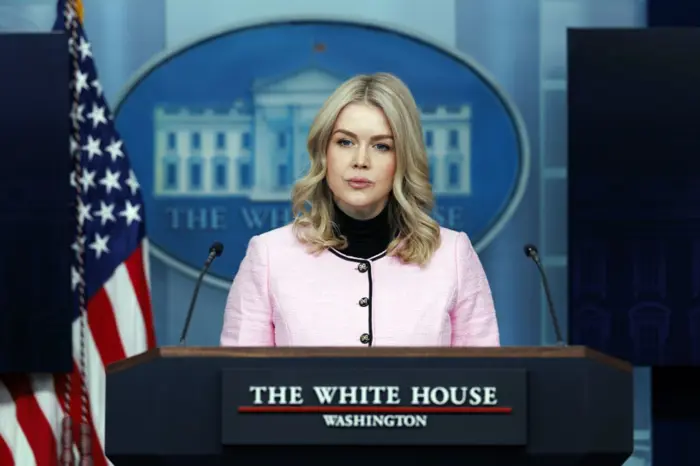
WASHINGTON, Jan 12: The White House has stopped short of denying reports that the United States is urging Venezuela to cut ties with adversaries such as China, Russia, and Iran, while stressing that Washington intends to maintain “American dominance” in the Western Hemisphere.
During a press briefing on Wednesday, White House Press Secretary Karoline Leavitt declined to confirm details from classified briefings but said the administration has made it “quite clear” to Venezuela’s interim authorities that U.S. influence will guide key decisions.
Hours later, former President Donald Trump announced on social media that Venezuela had agreed to allocate revenue from a new oil arrangement exclusively to purchase American-made goods, including agricultural and medical products, treating the U.S. as its “principal partner.” Trump described the decision as a “wise choice” and a “very good thing” for both countries.
Leavitt emphasized that the U.S. currently holds “maximum leverage” over Venezuela’s interim government led by Delcy Rodriguez and that all major decisions would continue to be “dictated” by the United States.
The announcement follows reports of a high-level classified briefing earlier this week with select lawmakers, led by Secretary of State and acting National Security Adviser Marco Rubio, Defense Secretary Pete Hegseth, and other senior administration officials. Subsequent briefings were provided to all members of Congress.
In response, China’s embassy in Washington condemned U.S. actions, warning that attempts to carve out spheres of influence or pressure Venezuela violate international law and infringe on Venezuelan sovereignty. “China strongly condemns this bullying,” said embassy spokesman Liu Pengyu.
Leavitt also noted that President Trump maintains “very open, honest, and good” personal relationships with Chinese President Xi Jinping and Russian President Vladimir Putin, even as the U.S. enforces sanctions and maritime operations, including the seizure of two sanctioned vessels in recent days.
Senator Marco Rubio outlined a three-step U.S. plan for Venezuela, aimed at “stability, recovery, and transition.” Rubio explained that Venezuelan crude would now be sold at market rates, with proceeds managed to benefit the Venezuelan people rather than the Maduro regime. Subsequent phases would focus on reopening markets to Western companies and national reconciliation, with the final phase aimed at a political transition.
The briefings sparked partisan divisions among lawmakers. Republican senators largely praised the operation as a success and a means to curb Chinese influence in the country. “Having an illegitimate communist dictator supporting adversaries like China was dangerous,” said Senator Eric Schmitt of Missouri.
Democratic senators criticized the strategy as unworkable. “Everything Maduro created his drug operations, repression, and anti-American policies ,remains intact,” said Senator Peter Welch of Vermont. Senator Chris Murphy of Connecticut described the plan to control Venezuelan oil revenues as “stunning in scope and insanity.”
Analysts, however, suggest the situation is unlikely to significantly affect broader U.S.-China relations. Ian Bremmer, president of the Eurasia Group, noted that Venezuela is not a “high priority” for Beijing, whose influence in the region is largely commercial rather than military. Bremmer added that U.S.-China relations will remain dominated by key strategic issues such as trade, critical minerals, and semiconductors ahead of the Xi-Trump summit in April.