

ILO Hails Malaysia’s Labour Leadership as ‘Most Dynamic in ASEAN’
Malaysia’s strong commitment to skills development earns global recognition
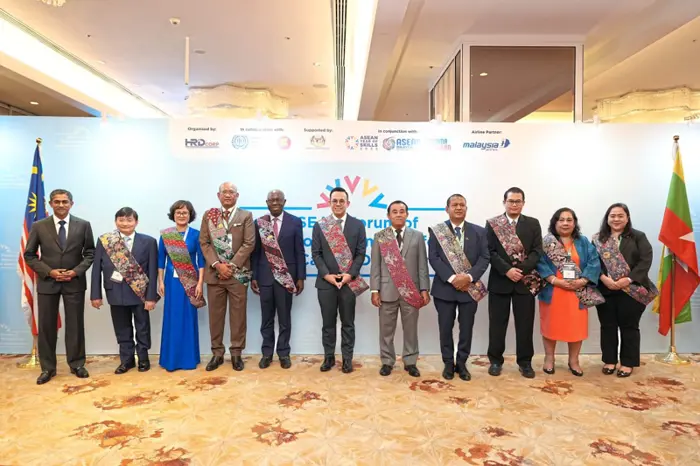
KUALA LUMPUR, Oct 25: Malaysia’s leadership in driving skills development and labor market reform has gained international acclaim, with the International Labour Organization (ILO) commending Human Resources Minister Steven Sim Chee Keong as one of the most dynamic and visionary labor leaders in ASEAN.
The praise came from ILO Director-General Gilbert F. Houngbo during his visit to Malaysia and his opening address at the Global Skills Forum (GSF) 2025 in Kuala Lumpur on Oct 22, marking a milestone in Malaysia’s labor history since joining the ILO in 1957.
“I wish to express my heartfelt appreciation to the Ministry of Human Resources under the leadership of Minister Steven Sim, whom I regard as one of the region’s most dynamic and visionary labour ministers,” Houngbo said. “His leadership in championing the ASEAN Year of Skills 2025 truly reflects Malaysia’s commitment to empowering the region’s workforce for the future.”
Houngbo highlighted Malaysia as a model for implementing effective skills and lifelong learning policies, aligning closely with the ILO’s global mission to promote social justice and a human-centered future of work.
He stressed that investment in skills remains the most powerful tool for national progress, driving innovation, productivity, and inclusion when governments, employers, and workers collaborate.
The Global Skills Forum 2025 brought together stakeholders from over 50 countries, including policymakers, employers, and labor representatives, for in-depth discussions on preparing a highly skilled and adaptive global workforce.
This year’s forum focuses on transforming skills development by redefining the role of the private sector in building an agile and inclusive labor market.
In his response, Minister Steven Sim emphasized that while economic progress remains vital, human development must remain central to policy priorities.
“A worker’s dignity comes not only from protection but also from competence and opportunity,” Sim said. “Education and training must enable learning while working, learning through practice, and lifelong learning.”
He announced that the Human Resources Ministry (KESUMA) is developing a national training platform to consolidate high-quality skills courses from both local and international providers. The courses will be verified by industry experts and accessible to all Malaysians.
The initiative builds upon the success of HRD Corp, under which employers contribute a 1% training levy. From 2023 to August 2025, RM5.77 billion, or 94% of the total RM6.17 billion collected, has been used to train nearly four million Malaysian workers.
Sim added that Malaysia envisions ASEAN evolving into one of the world’s most highly skilled regions, supported by shared cultures, languages, and traditions that make regional labor integration more achievable.
“The goal of hosting the Global Skills Forum is to build a regional workforce that is skilled, resilient, and globally competitive,” he said.
Following the forum, Houngbo wrote on X (formerly Twitter) that he held “excellent discussions” with Minister Sim, adding that the ILO is “grateful for Malaysia’s strong partnership in advancing social justice and inclusive growth both nationally and within ASEAN.”
In his officiating speech, Deputy Prime Minister Datuk Seri Ahmad Zahid Hamidi underscored the growing importance of human skills in the face of rapid technological and environmental shifts, including artificial intelligence (AI) and the green transition.
“The rise of AI compels us to re-evaluate the role of human beings in the modern economy,” Zahid said. “Our economy is built first and foremost by our people and their skills. If we bridge opportunity gaps and strengthen human capital, we will create a future defined by progress — not greed.”
He stressed that the success of skills development depends on tripartite collaboration among governments, employers, and workers the very spirit underpinning the 2025 GSF theme, “The Role of the Private Sector in Skills Development: Driving Innovation and Impact.”
The recognition from the ILO cements Malaysia’s position as a regional leader in labor innovation and workforce transformation, setting a strong precedent for ASEAN’s collective journey toward a future-ready, human-centered economy.