

Xi, Putin, and Kim Attend Grand Military Parade in Beijing Marking WWII Anniversary
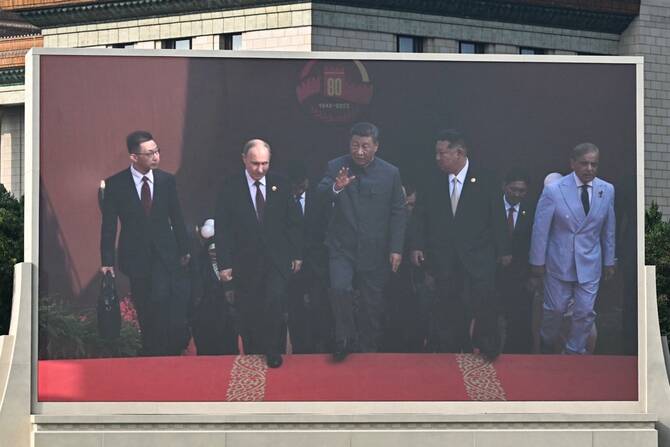
BEIJING: Chinese President Xi Jinping, joined by Russian President Vladimir Putin and North Korean leader Kim Jong Un, presided over a grand military parade at Beijing’s Tiananmen Square on Wednesday to commemorate the 80th anniversary of the end of World War II.
Xi welcomed his high-profile guests on a red carpet before escorting them up to the viewing platform atop Tiananmen Gate, overlooking the vast square. Putin and Kim flanked the Chinese leader as they proceeded to their seats, pausing to shake hands with five World War II veterans—some more than a century old—while foreign dignitaries applauded.
The audience included around two dozen world leaders, many from countries aiming to strengthen or preserve ties with Beijing.
The parade featured an extensive display of China’s military power, including advanced missiles, modern fighter jets, and other cutting-edge weaponry, with several systems unveiled publicly for the first time. The show of force underscored China’s ambition to assert greater influence in global security and geopolitics.
Domestically, the commemoration highlighted China’s sacrifices during WWII—when millions of Chinese perished under Japanese invasion and subsequent fighting. Beijing emphasized the country’s pivotal, though often overlooked, role in the global conflict, contrasting it with Western accounts that tend to focus on Europe and the Pacific.
Analysts say the display was not only a tribute to history but also a political message: reinforcing the Communist Party’s legitimacy, rallying domestic support behind Xi, and presenting China as a rising alternative to the U.S.-led postwar order.