

Timor-Leste’s “Diplomacy of Sweets”: A Small Nation’s Big Message to ASEAN
By Abdullah Bugis
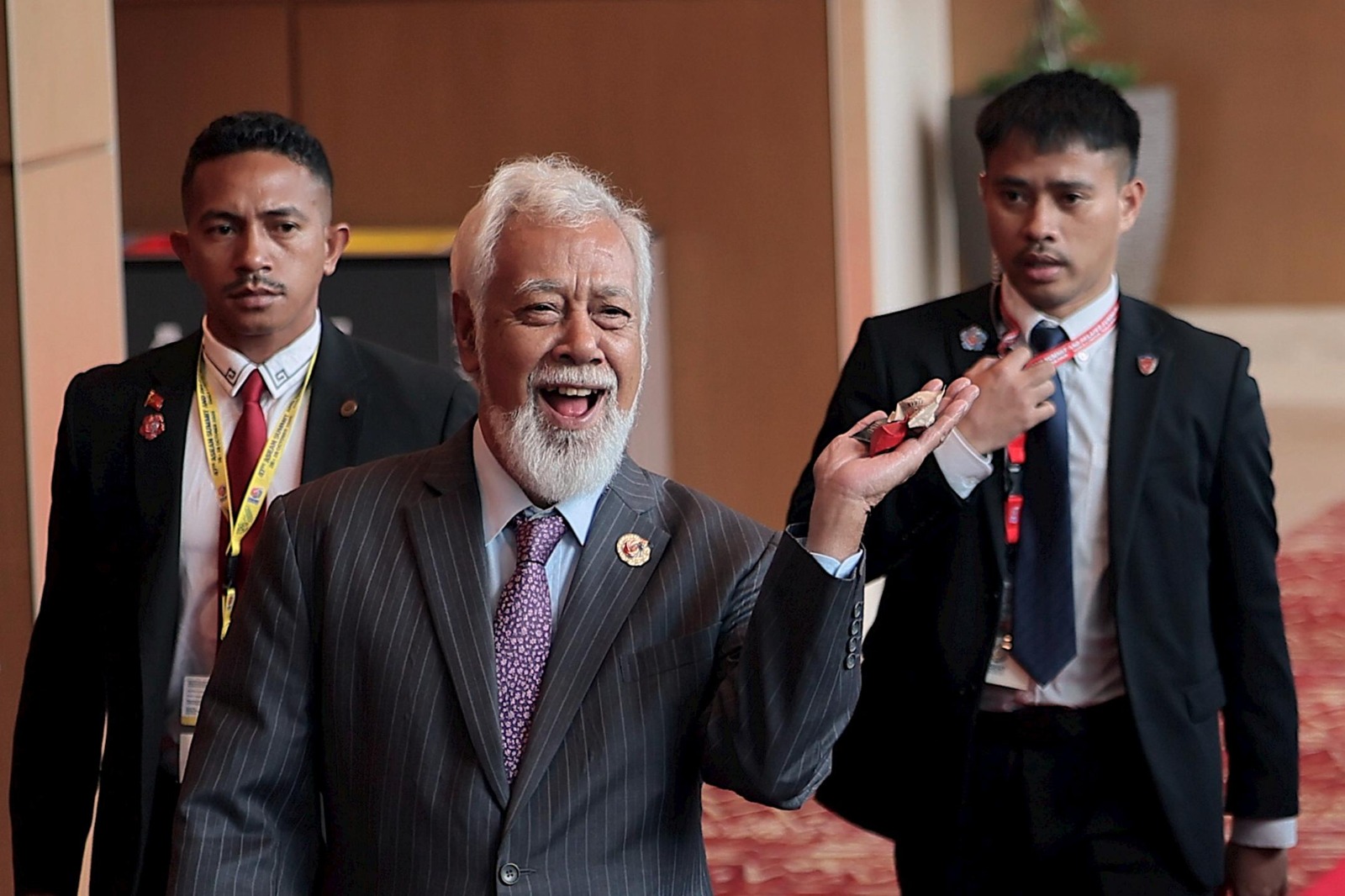
Kuala Lumpur, Nov 4: In a world often dominated by power politics and strategic rivalries, the smallest gestures can sometimes carry the greatest meaning. During the 47th ASEAN Summit held in Kuala Lumpur in late October 2025, Timor-Leste’s Prime Minister Xanana Gusmão offered sweets to journalists covering the event, a simple act that resonated deeply across diplomatic circles.
What appeared as a light-hearted gesture became a metaphor for a new style of statesmanship, a “diplomacy of sweets,” where warmth, humility, and humanity bridge the gaps that politics often cannot.
Officially known as the Democratic Republic of Timor-Leste, the young nation of just 1.4 million people sits between Indonesia and Australia. More than 20 years after gaining independence in 2002, Timor-Leste’s journey has been one of resilience, reconciliation, and rebuilding.
Prime Minister Gusmão, once a guerrilla commander and freedom poet, embodies that spirit. From the mountains of resistance to the presidential palace, his leadership has been shaped by struggle but guided by compassion.
In his 1999 memoir, To Resist is to Win, he wrote:
“An occupation can take your land, but it cannot take away your capacity to dream.”
That same dream has now lifted his country into the heart of Southeast Asia’s regional family.
On October 26, 2025, Timor-Leste’s flag was raised for the first time at the ASEAN Summit in Kuala Lumpur, marking the country’s formal admission as ASEAN’s 11th member and the bloc’s first expansion since Cambodia joined in 1999.
Visibly emotional, Gusmão declared the moment “a day when history is made.”
“For the people of Timor-Leste, this is not just a dream fulfilled, but a powerful affirmation of our journey one marked by resilience, determination, and hope.”
Malaysian Prime Minister Datuk Seri Anwar Ibrahim described the moment as completing the ASEAN family, saying, “Timor-Leste’s development and strategic autonomy will find solid and lasting support within this community.”
The milestone capped a 14-year wait since Timor-Leste first applied for membership in 2011 and symbolized the nation’s re-entry into the Asian geopolitical landscape after decades of isolation.
Timor-Leste’s economy remains modest, with a GDP of about USD 2 billion (World Bank, 2024), heavily reliant on offshore oil and gas revenues that account for 80 percent of national income. Yet the nation manages a sovereign wealth fund exceeding USD 18 billion, investing returns in education, healthcare, and human capital development.
Gusmão envisions ASEAN membership as a platform for diversification, promoting organic agriculture, ecotourism, renewable energy, and technical education to reduce dependence on oil.
The World Bank projects Timor-Leste’s economy to grow 4.1 percent in 2024–2025, driven by infrastructure projects and stronger regional ties, particularly with Indonesia and Australia, which have signed new investment agreements in clean energy, telecommunications, and maritime transport.
By 2030, the government hopes to reduce poverty to below 25 percent and raise education rates to 90 percent, a goal centered on empowering youth and women in rural areas.
Timor-Leste’s moral voice in regional affairs is rooted in its own struggle for freedom. Its leaders have consistently spoken out on human rights issues, including the ongoing crisis in Myanmar.
While President José Ramos-Horta has welcomed Myanmar’s opposition representatives to open a liaison office in Dili, the government also reaffirmed its commitment to ASEAN’s non-interference principle, seeking balance between idealism and regional unity.
Foreign Minister Bendito dos Santos Freitas recently clarified that Dili “will not allow illegal organizations to operate on Timorese soil,” underscoring a pragmatic approach to diplomacy within ASEAN’s consensus-based framework.
Timor-Leste’s inclusion, while historic, adds new layers of complexity to ASEAN’s integration goals. With the smallest economy and one of the lowest per capita incomes in the bloc, its entry widens the region’s economic disparities.
Analysts caution that this could make consensus-building more difficult on contentious issues like the South China Sea and Myanmar’s political crisis. Still, many view Timor-Leste’s membership as a necessary step toward a more inclusive and representative ASEAN, one that finally unites all of mainland and maritime Southeast Asia.
In the end, the image of Xanana Gusmão handing out sweets remains a powerful metaphor. It tells the story of a nation that survived oppression yet chooses generosity and a leader who waged war but now practices kindness as diplomacy.
As regional powers vie for influence, Timor-Leste’s soft-spoken confidence reminds the world that greatness is not measured in size or wealth, but in the ability to lead with humanity.
Sometimes, the most profound message in politics comes not from a podium but from a simple, shared sweetness that bridges hearts before minds.