

Syria’s moment calls for justice and responsibility
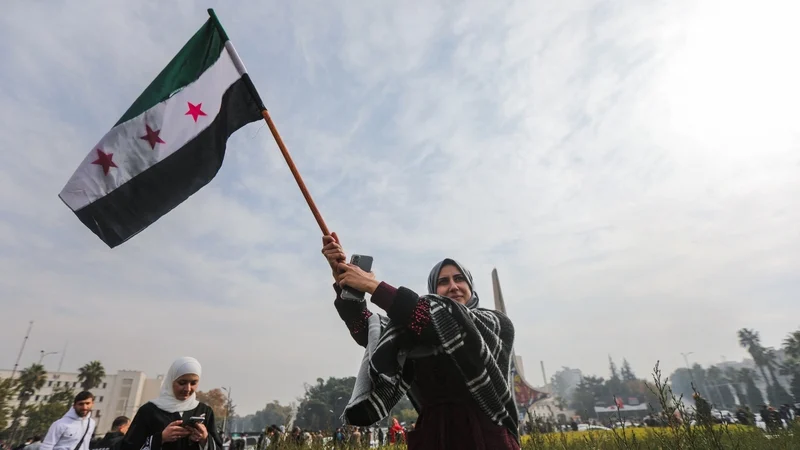
The Syrians’ government has fallen apart. Syrians are celebrating as President Bashar al-Assad fled his nation. Freed from the agonizing jails that caused years of terror, many Syrians are optimistic that their nation is finally free from injustice.
Syrians have envisioned their nation’s image following the government’s collapse for an extended period. That day has arrived, and now Syria’s future is a fresh ground of dispute, hopefully a fruitful one.
It is far too early to make any declarations about what will happen next in Syria. The next weeks and months allow space for both hope and pessimism. Syrians will be adjusting to the catastrophe of 54 years of al-Assad’s family rule and 13 years of conflict. Simultaneously, they will establish a transition mechanism that will serve as the foundation for a new political structure.
By doing this, Syrians and their transition leaders will be confronting challenging issues concerning the direction their nation will take. There are no issues more crucial than the search for reparation, justice, and responsibility. Future Syrian political leaders’ handling of issues will inevitably shape the portrayal of the conflict and determine the feasibility of actual Syrian reconciliation.
Syria will most likely avoid adopting the Lebanese model, even if it is early to decide on the course of action. Following the civil war in Lebanon, the country’s leaders engaged in an official amnesia project, explaining the war as the outcome of outside powers intervening in Lebanese affairs. Apart from Samir Geagea’s detention, all the militia leaders of the civil war evaded any responsibility for their activities throughout the war. Many of them, like Nabih Berri and Walid Jumblatt, actually still serve in parliament today.
Official amnesia exonerated the militia leaders of responsibility for the war. The expectation was for the Lebanese people to continue their lives without seeking closure or justice.
Syria will undoubtedly change as its new leaders are not mere relics from the past. Strong demand exists to punish former leaders of Syria responsible for the violence via some kind of court procedure. The difficulty will be juggling, on the one hand, the unavoidable demands for revenge and, on the other, justice and responsibility. Any reconciliation movement in Syria must take into account this delicate balance to ensure that the justice systems align with the principles of reconciliation.
Hayat Tahrir al-Sham’s recent amnesty to conscripted soldiers implies that the transition authorities will solely target high-ranking military and political figures for prosecution. This is beneficial for any domestically driven reconciliation effort since it separates the decision-makers of the government from common people who were army members and bureaucratic employees.
Many Syrians seeking justice for the harm they inflicted on their country, families, and themselves have found closure through the trials of former Syrian jail officials in Germany. Syrian political and legal systems now allow for the pursuit of these kinds of responsibilities within the nation. This would call for national tribunals to be established and new domestic legislation to be passed.
At the same time, Syria’s transition leaders will face significant pressure to seek foreign support for the removal of sanctions. This will come at a significant cost, potentially involving international control over the reconciliation process.
As witnessed in the post-Cold War era, internationally led reconciliation efforts can call for nations in transition to adopt UN terminology and conventions. In locations like the former Yugoslavia or Rwanda, where outside influence shaped the course of the healing process, this has generated all kinds of issues.
Involvement internationally could reduce the emotional commitment of Syrian people toward peace. Therefore, Syria should strive to integrate reconciliation mechanisms into the transition process, thereby establishing a transition and reconciliation process that is not subject to the influence of the UN or other foreign entities.
This procedure needs to likewise aim to answer the restitution issue. Robbing people of their belongings and passing ownership to supporters was one component of the regime’s conflict-avoidance tactics. Many of the returning refugees and internally displaced persons will probably discover that others have claimed or occupied their houses or properties.
To prevent conflicts, the new government will thus have to create transparent procedures for proving ownership. This would entail figuring out solutions for situations when documentation is lacking and deciding which past authorities’ choices ought to be accepted and which ought not to be.
Furthermore, many Syrian refugees were deprived of their rights and unable to convey citizenship to their children since the former government did not accept any papers not produced by its own authority. Addressing this issue is also necessary.
Restitution also includes payment for losses experienced by citizens during the war. Many houses have been demolished and stolen; basic amenities like electricity are not always available. Many regions now feature completely destroyed infrastructure. Particularly as the Israeli occupation in the south intensifies and Israeli shelling persists, the extent of the damage is such that addressing compensation and restoration will prove to be a challenging task.
The way Syria’s new leaders handle the bureaucratic tangle and reconstruction issues will mostly influence public perception of the change process.
In many past post-conflict or post-authoritarian examples, we are aware that conflicts linger in individuals’ memories and narratives. Syria will be just the same. Some Syrians will find frustration in any path of reconciliation and responsibility. This is unquestionable. Any system of responsibility will thus have to be inclusive and broad, mirroring the variety of the Syrian experience of conflict since 2011.
The process will be difficult to be sure, and a problem Syrians will be dealing with for years to come.