

Singapore–Malaysia to Launch Joint Study on Air Traffic Management Amid Broader Push to Resolve Key Bilateral Issues
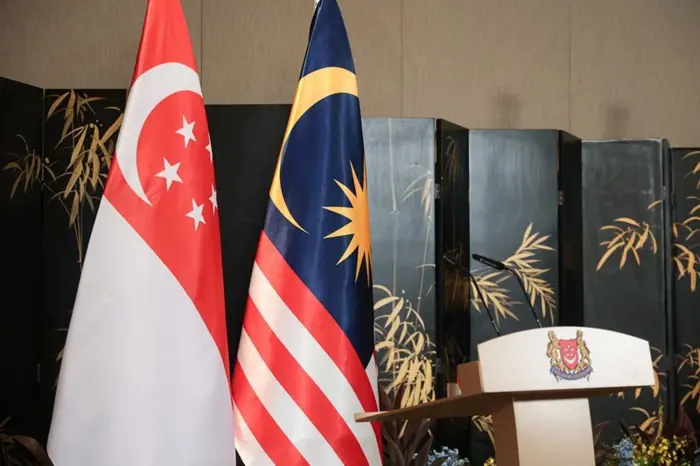
SINGAPORE, Dec 5: Singapore and Malaysia will jointly conduct a comprehensive study to optimize air traffic management, Prime Minister Lawrence Wong announced following the 12th Singapore–Malaysia Leaders’ Retreat.
The initiative marks a significant step forward as both countries work to address long-standing bilateral issues involving water, airspace, and maritime boundaries. PM Wong said Singapore and Malaysia may hold differing views on these complex matters but will continue to engage “in good faith and in the spirit of close neighbors.”
During the Dec 4 meeting in Singapore, PM Wong and Malaysian Prime Minister Datuk Seri Anwar Ibrahim reaffirmed their commitment to pursue constructive dialogue and ensure that unresolved issues do not overshadow broader cooperation.
Both leaders agreed to sustain discussions on raw and treated water pricing through an existing joint technical committee, without prejudice to the rights under the 1962 Water Agreement.
PM Wong emphasized that both countries share a strong interest in preserving the Johor River’s water quality and increasing its yield, especially in the face of rising water demand and extreme weather events.
A newly formed technical working group will support the committee on matters relating to water resilience, quality, and long-term sustainability.
Although Singapore pays three sen per thousand gallons of raw water and sells treated water back to Johor at 50 sen, Anwar indicated that pricing discussions would be “complex” and could negatively affect Johor consumers. However, he welcomed discussions on future investments in water infrastructure to ensure supply stability and pollution management.
In their joint statement, the two leaders announced a collaborative study to enhance East-West Malaysia air traffic flow and review Singapore’s proposed instrument flight procedures. Transport ministers from both countries have been tasked to guide their aviation authorities in this process.
PM Wong clarified that the issue is not about sovereignty but about improving air traffic management to handle increasing aviation volumes involving major airports such as Kuala Lumpur, Senai, Changi, and Seletar.
Anwar added that talks could progress more smoothly if both sides uphold the principle of “free movements” in airspace management.
Both leaders also reiterated their commitment to review air traffic service delegation arrangements over southern Peninsular Malaysia, as approved by the International Civil Aviation Organization (ICAO) in 1973.
On maritime boundaries, PM Wong said officials have held multiple discussions and now better understand each other’s positions, although more time is needed to resolve the contentious boundaries on both the eastern and western fronts.
Anwar acknowledged the complexity of the issue but stressed the need for “amicable progress,” even if only partial resolutions can be reached at this stage.
Both leaders welcomed the ongoing technical work under the 1995 agreement to determine the actual international boundary in the Johor Strait and encouraged continued rigorous cooperation.
Despite the unresolved issues, both PM Wong and Anwar reiterated that overall bilateral relations remain positive, and both sides are committed to achieving “durable outcomes” that benefit the two nations.
They emphasized that sensitive matters should not be allowed to undermine the broader partnership between Singapore and Malaysia, which continues to deepen across economic, social, and infrastructure sectors.