

Sabah among top 6 contributors to Malaysia’s GDP for 2023, said Hajiji
KOTA KINABALU: Sabah’s achievement of generating RM7 billion in revenue last year has enabled the state to become one of the top six contributors to Malaysia’s Gross Domestic Product (GDP) for 2023, according to Chief Minister Datuk Seri Hajiji Noor.
According to Bernama, he said the figures announced by the Department of Statistics Malaysia in July showed that Sabah contributed 5.5 percent to the 2023 GDP, placing it alongside Selangor, Kuala Lumpur, Johor, Sarawak, and Penang, which together contribute 73 percent to the national economy.
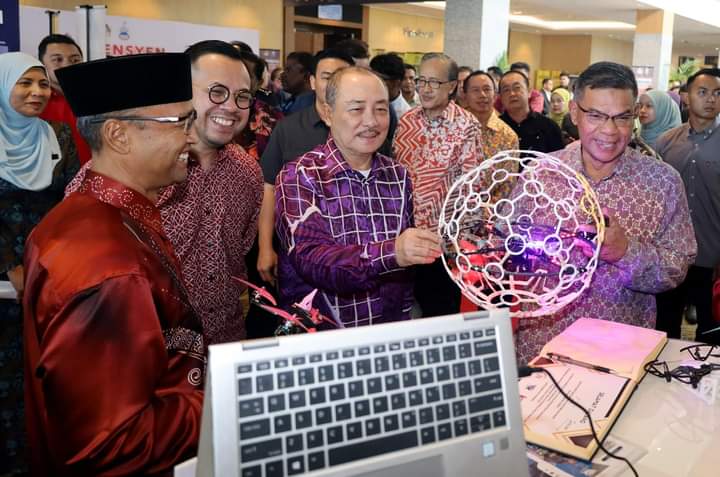
“For instance, last year we recorded an investment of RM11.34 billion, which is among the seventh highest in Malaysia, with 13.3 percent coming from the manufacturing sector,” he said at the Eighth World Engineering, Science, and Technology Congress (ESTCON) at the Sabah International Convention Centre here yesterday.
This marks the first time Sabah is hosting the event organized by Universiti Teknologi Petronas (UTP) and Petronas, which saw participation from over 1,000 people from 25 countries.
In addition, Hajiji emphasized the importance of Sabah having high-quality higher education institutions to provide an excellent platform for qualifications in science, technology, engineering, and mathematics (STEM) for Sabah’s students.
This aligns with the state government’s goal of having at least 40 percent of school students enroll in science streams by next year.
“It is crucial for a significant portion of students in Sabah to be involved in STEM education.
“The Sabah Ministry of Science, Technology, and Innovation has implemented the 2022-2025 Strategic Plan, which serves as a guide for the execution of various programs and initiatives to empower the science, technology, innovation, and economic ecosystem in the state,” he said.
Regarding digitalization initiatives, he stated that Sabah is working to accelerate digital transformation in the state.
“In November last year, we signed an agreement with Huawei Technologies Malaysia at Huawei’s headquarters in Shenzhen, China, to benefit from technological innovation, foster economic growth, and enhance public services,” he said.
At the same time, Hajiji mentioned that this collaborative effort will also include the implementation of digital services with artificial intelligence (AI) and data-driven solutions.
Under the Sabah Maju Jaya initiative, the state government has launched the 2022 Digital Internet of Things Pilot Program, which is part of the development roadmap and provides a conducive environment for entrepreneurs and digital innovators to develop and test their products.
He noted that the state government is also recognizing the transformative power of digital technology in sectors such as agriculture, mining, and tourism, and Sabah has made significant investments in the energy sector.
“While oil and gas provide a vital revenue stream for the state, there is also a focus on renewable energy such as solar technology and storage, hydro, geothermal, and opportunities related to the carbon market in Sabah,” he said.
Hajiji also assured that Sabah will continue to develop essential energy infrastructure while managing resources to sustain growth.
“The Sabah Energy Roadmap and the 2040 Master Plan that I launched last year will serve as guidelines for the future.
“However, its success requires full support from both public and private stakeholders to steer Sabah toward a greener and more sustainable future,” he said.