

Najib wins his petition to have his house arrest case heard
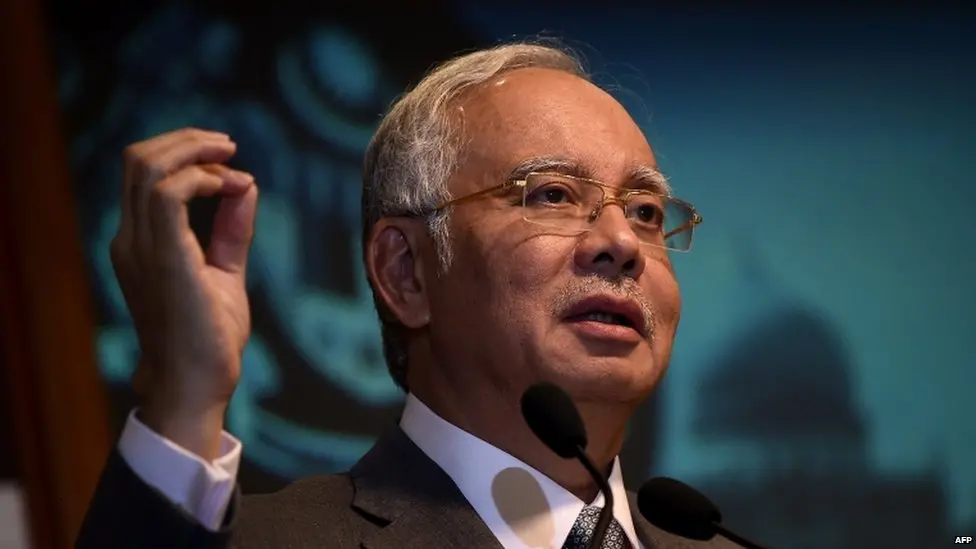
Former Prime Minister Najib Razak has gained permission to initiate judicial review proceedings to compel the government to carry out a supplementary order granted by the former king, which allows him to serve the remainder of his jail sentence under house arrest.
In a split decision, a three-member Court of Appeal bench also granted Najib’s request to present new evidence when the case’s merits are heard in the High Court.
Justice Firuz Jaffril stated that Najib met the conditions established in the famous decision of Ladd v. Marshall for the inclusion of fresh evidence.
He further stated that Najib had written to six of the seven respondents identified in the appeal to confirm the existence of the alleged amendment but received no response from any of them.
The six respondents included the home minister, the prisons commissioner general, the attorney general, the Federal Territories Pardons Board, the law and institutional reform minister, and the director-general of the Prime Minister’s Department’s legal affairs division.
The appeal named the federal government as the eighth respondent.
According to Firuz, Najib acquired a copy of the addendum from Pahang’s monarch, the 16th Yang di-Pertuan Agong, during the July High Court hearing.
He also stated that the government had not produced a persuasive counter to the evidence presented by Najib.
Justice Azhahari Kamal Ramli agreed with Firuz.
Justice Azizah Nawawi, who presided over the Court of Appeal bench, dissented.
Firuz stated that the High Court judge’s rulings that Najib’s affidavits were based on hearsay evidence were no longer valid in light of the fresh information presented by Najib, the former Pekan MP.
“Based on the additional evidence, we believe the problem of hearsay is no longer valid. In a judicial review application, the applicant just needs to demonstrate that they have a case to plead based on the fact that their interests or rights have been violated.
“Here, the judicial review is not frivolous or vexatious,” he stated in ordering the matter remanded to the High Court for the substantive hearing.
The bench also granted lawyer Shafee Abdullah’s request for the judicial review to be considered by a new judge in the High Court.
In her dissenting opinion, Azizah argued that Najib had failed to meet the conditions outlined in Ladd v. Marshall for the inclusion of fresh evidence.
She asserted that Najib’s son, Nizar, regularly meets with the Pahang king, as evidenced by the declaration he signed on December 2 of last year.
“In view of the admission that he meets the sultan frequently, it cannot be said that the fresh evidence could not have been obtained with reasonable diligence at the hearing before the High Court judge,” according to her.
She also mentioned that there had been a delay because Nizar only received the addendum many months after the High Court’s decision on July 3.
“Therefore, I am of the considered opinion that there is no merit to this application for fresh evidence.”
On the main appeal, Azizah stated that the High Court dismissed the leave application because the evidence presented was hearsay, as Najib failed to produce an affidavit affirmed by Tengku Zafrul Aziz.
Tengku Zafrul sought to the High Court to file an affidavit to “correct certain errors” in affidavits filed in the proceedings.
However, on May 2, the High Court denied Tengku Zafrul’s request, stating that there was no legal provision allowing a non-party to file an affidavit in any hearing.
Azizah also said that the High Court did not make a mistake that could be appealed when it decided that the affidavits signed by Ahmad Zahid Hamidi and Wan Rosdy Wan Ismail were not valid because they were based on hearsay.
She stated that the High Court was correct in deciding that a mandamus order could not be issued against the pardons board.
“There is no provision in the written law or the Federal Constitution that could make the board confirm or disclose the existence of a pardon order, including the addendum,” she claimed.
The High Court will hear the judicial review application on January 13.