

Middle East on Edge as US–Israel Strikes on Iran Trigger Regional Escalation
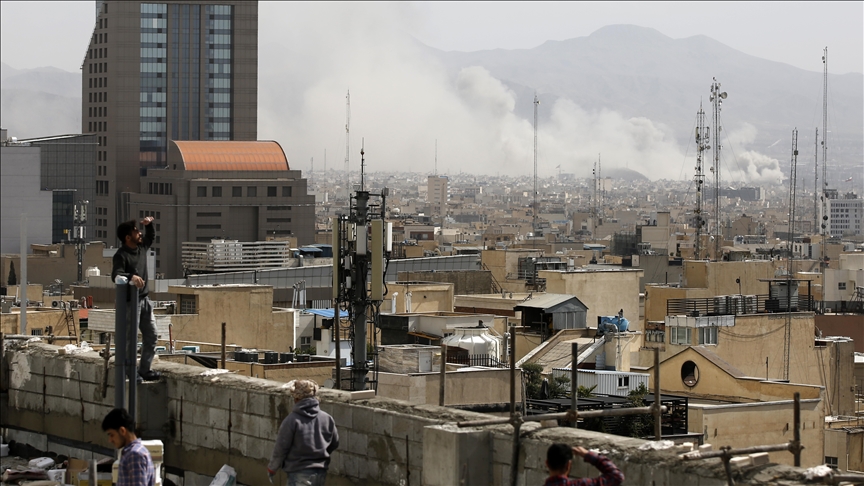
ISTANBUL: The United States and Israel launched coordinated military strikes on Iran early Saturday, igniting one of the most serious escalations in the region in recent years and prompting threats of retaliation from Tehran.
Explosions were reported across Tehran after Israel described its actions as a “preemptive strike.” Shortly afterward, US President Donald Trump confirmed that American forces had initiated what he called “major combat operations” aimed at eliminating what he described as imminent threats from Iran.
“Our objective is to defend the American people,” Trump said in a video statement, pledging to dismantle Iran’s missile capabilities and prevent it from acquiring nuclear weapons.
Israeli media reported that senior Iranian political and military leaders were among the intended targets. These reportedly included Supreme Leader Ali Khamenei and President Masoud Pezeshkian, though Iranian authorities have not confirmed any fatalities at the highest levels.
Iranian Foreign Minister Abbas Araghchi said in an interview that most top officials were “safe and sound,” dismissing speculation about leadership losses. He condemned the joint strikes as “wholly unprovoked, illegal, and illegitimate” and vowed a decisive response.
State television later announced that Iran is preparing a “harsh response” to the attacks.
The conflict rapidly spilled beyond Iran’s borders:
Missiles struck a US-linked facility in Bahrain near the US Fifth Fleet headquarters.
A drone targeted Kuwait International Airport, causing minor injuries and limited structural damage.
Explosions were reported in Dubai after debris from intercepted missiles fell over parts of the city.
Airspace closures were announced in the UAE, Kuwait, Syria, and Jordan as a precaution.
In northern Israel, explosions were heard near Haifa following missile launches from Iran.
Hospitals in Tehran activated emergency protocols after multiple strikes hit various parts of the capital and other cities, including Qom, Isfahan, and Kermanshah.
Iranian state media reported that an Israeli strike hit a girls’ primary school in Minab in Hormozgan province, killing at least 40 people and injuring dozens more. Independent verification of the reported casualties was not immediately available.
Cyberattacks also disrupted several Iranian news outlets, including the state-run IRNA agency. Internet monitoring groups reported a near-total national connectivity blackout.
International reaction was swift and divided. Gulf states, including Saudi Arabia, the UAE, Qatar, and Kuwait, condemned attacks that affected their territories. Australia and Canada expressed support for US and Israeli actions, while Spain criticized what it called unilateral military action. The UK, France, and European Union officials urged restraint, and Russia denounced the strikes as an “unprovoked armed attack.”
Tehran accused Washington and Tel Aviv of violating Article 2(4) of the UN Charter and asserted its right to self-defense under Article 51. Iranian officials said the attacks occurred despite ongoing diplomatic efforts over the country’s nuclear program, which had been mediated by Oman. Recent talks in Geneva ended without progress.
US officials later referred to the campaign by its reported code name, “Operation Epic Fury,” signaling that further military activity may follow. Israeli media indicated preparations for several days of sustained joint operations.
As missile exchanges intensify and regional airspace restrictions expand, the Middle East faces a volatile and uncertain phase, with fears mounting that the confrontation could widen further in the coming days.