

Malaysia Reaffirms Commitment to ASEAN Haze-Free Roadmap by 2030
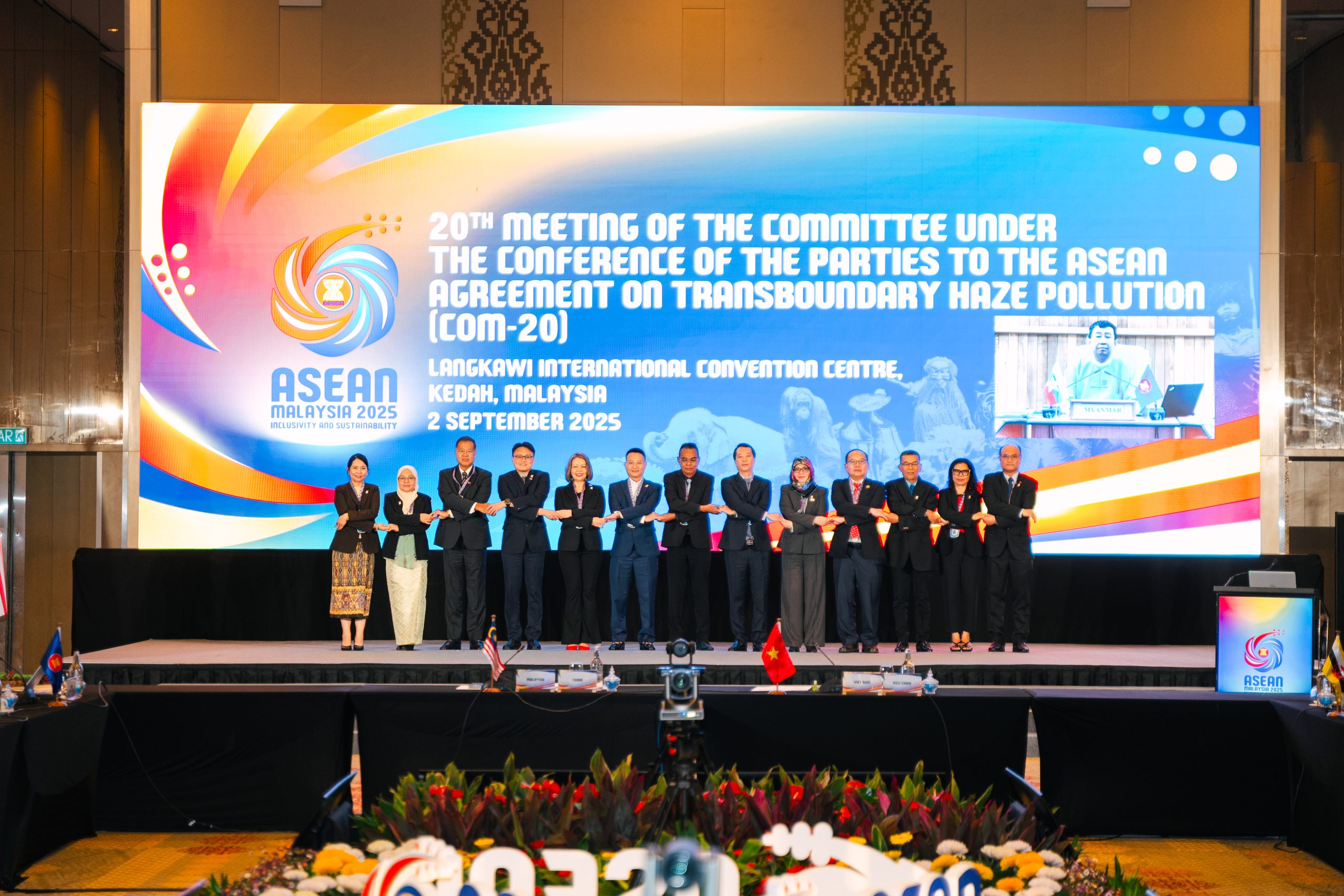
Putrajaya: Malaysia has reaffirmed its commitment to achieving a haze-free ASEAN by 2030, in line with the ASEAN Roadmap on a Haze-Free Region 2023–2030.

The pledge was highlighted during the 20th Meeting of the Committee (COM-20) under the Conference of the Parties to the ASEAN Agreement on Transboundary Haze Pollution (AATHP), chaired by Malaysia through the Ministry of Natural Resources and Environmental Sustainability (NRES). The meeting coincided with Malaysia’s ASEAN chairmanship this year.
Officials emphasized that the roadmap is critical in ensuring member states’ actions are more targeted, coordinated, and impactful. Key strategies include strengthening enforcement against open burning, improving monitoring of fire-prone areas, and adopting sustainable land-use practices.
Enhanced early warning systems are also being deployed, using satellite technology, weather modeling, and real-time data sharing to detect hotspots and mitigate risks. Regional coordination is being boosted through joint training, technical meetings, and cross-border policy alignment.
The meeting also reviewed the status of the ASEAN Transboundary Haze Pollution Control Fund, updates on the Second Haze-Free Roadmap, and the establishment of the ASEAN Coordinating Centre for Transboundary Haze Pollution Control. In addition, discussions covered the ASEAN Investment Framework for Haze-Free Sustainable Land Management.
Participants prepared key outcome documents for the upcoming 18th ASEAN Ministerial Meeting on the Environment (AMME-18). These included the draft ASEAN Joint Statement on Climate Change for the 30th Session of the United Nations Climate Change Conference (COP30), new nominations for ASEAN Heritage Parks, and highlights from the ASEAN Centre for Biodiversity’s Governing Board Report.
The meeting reaffirmed ASEAN’s collective resolve to strengthen cooperation on environmental protection, climate change, and transboundary haze pollution. Officials expressed confidence that these efforts will contribute to a more sustainable, resilient, and haze-free region by 2030.