

Israel tells its troops in Syria to “get ready to stay” all winter
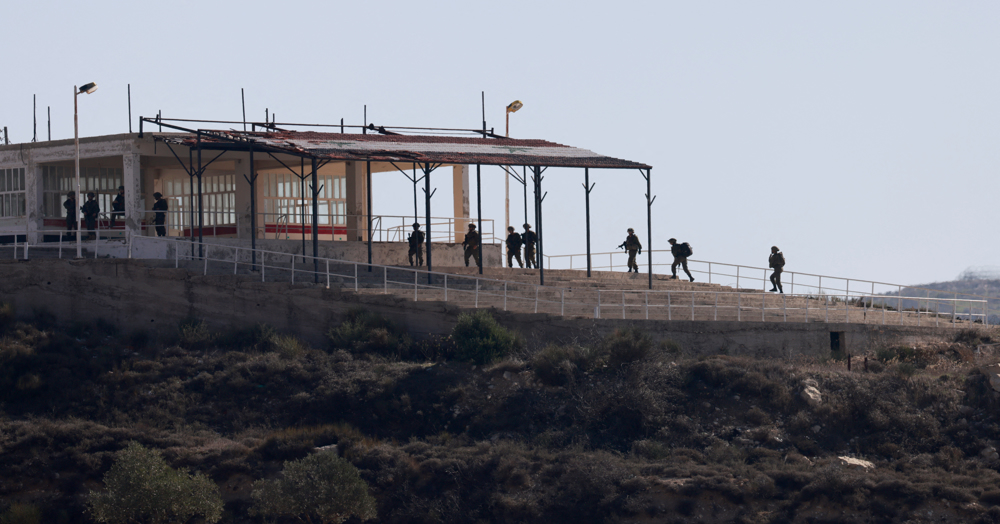
The minister of military affairs, Israel Katz, instructed Israeli troops to “prepare to remain” in Syria throughout the winter, including on the crucial Jabal al-Shaykh mountain, which they seized after the removal of President Bashar al-Assad.
Katz said in a statement on Friday that he had given the order during an evaluation the day before with Herzi Halevi, the chief of staff of the Israeli army, and other soldiers.
He stated, “Due to the situation in Syria, it is of critical security importance to maintain our presence at the summit of Mount Hermon [Jabal al-Shaykh], and we must do everything to ensure the (army’s) readiness on-site to enable the troops to stay there despite the challenging weather conditions.”
Israel began its move to take over more land in Syria on Sunday after rebels backed by other countries and led by Hay’at Tahrir al-Sham (HTS) said that President Assad’s government had fallen after a quick two-week attack.
In spite of a 1974 agreement to pull out, Israeli troops took over the so-called buffer zone that separates the occupied Golan Heights from the rest of Syria. The occupation troops have gone into several towns in Quneitra and are forcing people to leave.
They took over the top of Jabal al-Shaykh, which is a lookout point for parts of Syria and Lebanon. It is the tallest point on the eastern side of the Mediterranean Sea, at 9,232 feet (2,814 meters).
Israeli troops have moved past the so-called buffer zone and are now heading toward Damascus. Israeli airplanes are simultaneously launching hundreds of air attacks on Syria.
Katz had said before that the government was trying to build a “sterile defense zone” in the south of Syria. The chaos in Syria has led some countries to accuse Israel of taking over more of the Arab state.
On Thursday, Israeli troops went into the town of al-Hurriya in the province of Quneitra. According to people in the area, Israeli troops also forced the people who lived in the village of Rasem al-Ruwadi to leave their homes.
Israeli troops also attacked the towns of Ruwaihinah and Umm Batna in the central countryside of Quneitra on Wednesday evening.
Residents of the town reported that the occupying regime forces instructed them to vacate their homes in order to include them in the buffer zones. The raid used tanks and infantry units and searched several homes.
Many Syrians and those observing the rapid changes in their country believe that Netanyahu is exploiting these changes to permanently seize more land.
Despite their promises, they still live on the Golan Heights and haven’t returned it.
What makes you believe that they will return this? Haid Haid, a senior advising associate fellow at Chatham House, provided this information to Middle East Eye.
In strikes on at least five air bases, Israel has destroyed Syrian ships, helicopters, planes, sea-to-sea missiles, and even the whole fleet of MiG-29 fighter jets and their ammunition stores.
Reports say that Israel and militant groups in Syria have made deals in the past that worked out well. Under these deals, Israel gave militant groups emergency aid and medical care as long as the groups didn’t attack the Zionist government.
Secretary-General Antonio Guterres of the UN said in a note to reporters on Thursday that he is “deeply concerned” about “extensive violations” of Syrian sovereignty.
The head of the UN also said that he is “particularly worried about the hundreds of Israeli airstrikes on several places in Syria.”
The 1974 Disengagement of Forces Agreement between Israel and Syria “remains in force,” he added, and we must respect it by “ending all unauthorized presence in the area of separation and refraining from any action that would undermine the ceasefire and stability in Golan.”