

Israel Says It Killed Veteran Quds Force Commander Saeed Izadi in Airstrike on Qom Apartment
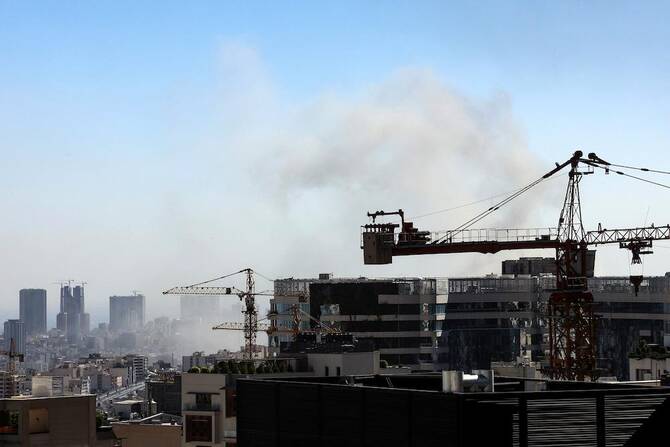
JERUSALEM / QOM – Israel’s Defense Minister, Israel Katz, announced on Saturday that the Israel Defense Forces (IDF) had carried out a precision airstrike on an apartment in Iran’s holy city of Qom, killing Saeed Izadi, the longtime head of the “Palestine Corps” within the Islamic Revolutionary Guard Corps’ (IRGC) elite Quds Force.
Izadi, described by Katz as a “veteran commander,” is accused of financing and arming Hamas and other Palestinian militant groups. “This operation represents a major achievement for Israeli intelligence and our Air Force,” Katz said in a televised statement. “Izadi was personally involved in planning and supporting the October 7 attacks on Israeli civilians.”
No official confirmation has been issued by Tehran or the IRGC; however, Iran’s state media briefly acknowledged an “incident” in Qom without specifying the target. If confirmed, Izadi would be the highest-ranking IRGC overseas operative killed since the Hamas offensive in October 2023 triggered a broader regional confrontation.
A Shadowy Architect of the “Axis of Resistance”
Since the Quds Force’s founding in the early 1980s, its commanders have quietly built what they call the “Axis of Resistance”—an array of allied militias stretching from Lebanon’s Hezbollah to Palestinian factions in Gaza and the West Bank. Izadi himself was sanctioned by both the United States and the United Kingdom for his alleged ties to Hamas and Palestinian Islamic Jihad, both of which participated in the October 7 attacks.
In private interviews with regional experts, Izadi was portrayed as a meticulous organizer rather than a frontline fighter. “He operated from the shadows, ensuring the flow of money, weapons, and training to proxy groups,” says Dr. Leila Mansouri, a Middle East security analyst. “His death may disrupt certain channels, but the infrastructure he helped build is extensive.”
Uncertain Impact and Risk of Escalation
The strike in Qom—a city revered by many Shiite Muslims as a center of theological learning—risks inflaming public opinion inside Iran and across the region. Last year’s killing of IRGC General Mohammad Reza Zahedi near the Iraq border triggered days of reciprocal missile exchanges.
“The challenge for Israel is to neutralize key threats while avoiding a full-scale war,” says Colonel (res.) Jonathan Barak, a former IDF strategic planner. “Removing Izadi could slow down operational support to Hamas, but it also raises the stakes for further retaliation.”
Human Cost and the Cycle of Violence
While the targeting of senior commanders is framed as a legitimate act of self-defense by Israeli authorities, it carries a heavy human toll. Iranian media has reported that Izadi’s wife and three children survive him, but details are still scarce due to strict state censorship.
For ordinary citizens on both sides of the conflict, each strike deepens trauma and distrust. “Families live in constant fear,” says Samar Khalil, a Palestinian aid worker in Gaza. “When one side feels like there is no safe shelter, the cycle of violence continues.”
Looking Ahead
As of Sunday morning, the IDF had not reported further strikes, nor had Iran announced any immediate reprisals. Western governments, such as the United States and key European partners, have urged restraint to prevent the latest exchange from sparking a wider regional conflict.
Israel Katz vowed that the IDF would “continue to protect our citizens by all necessary means,” while Iran’s Supreme Leader, Ayatollah Ali Khamenei, is expected to address the nation in the coming days—likely denouncing the strike as “an act of terrorism.”
The killing of Saeed Izadi underscores the shadow war playing out between Israel and Iran’s most daring operatives. It remains to be seen whether this latest blow will erode the Quds Force’s capabilities or simply harden positions on both sides, prolonging an already bitter cycle of retaliation.