

Islamic Finance Must Balance Economic Growth with Moral Responsibility – Anwar
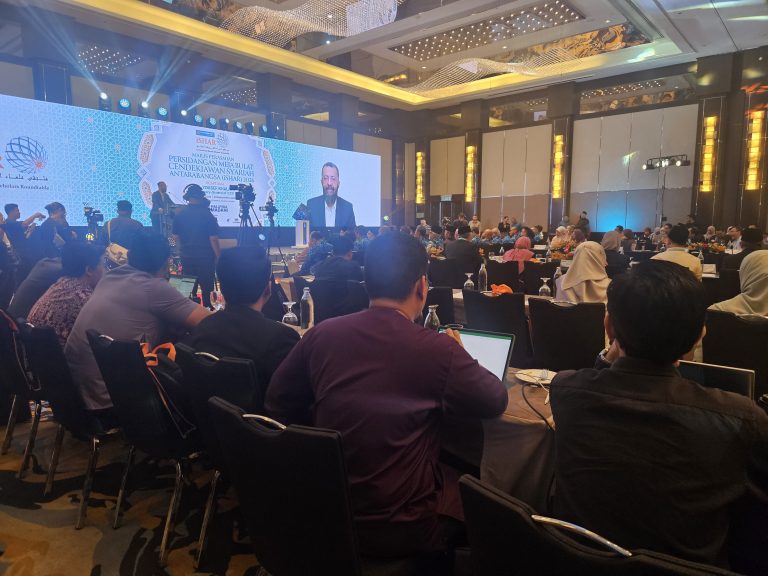
KUALA LUMPUR: Islamic finance must strike a balance between economic growth and moral responsibility while ensuring that financial systems ultimately serve humanity, Prime Minister Datuk Seri Anwar Ibrahim said.
He said the MADANI framework calls for a balance between economic growth and moral responsibility, as well as between profit and purpose, with Shariah-based Islamic finance offering a framework to achieve that balance.
Anwar said the world is currently facing a period of uncertainty marked by economic instability, geopolitical tensions and widening inequality, challenges which have real consequences for millions of people.
Against this backdrop, he said the question facing the financial sector goes beyond technical considerations and extends to how finance can serve humanity rather than allowing humanity to become subservient to finance.
He stressed that justice, transparency and accountability must remain at the heart of economic and financial institutions as they navigate an increasingly complex global environment.
Anwar’s remarks were contained in his speech delivered by Minister in the Prime Minister’s Department (Religious Affairs) Senator Dr Zulkifli Hasan at the opening of the International Shariah Scholars Roundtable (iSHAR) 2026 in Kuala Lumpur.
The Prime Minister also called for greater emphasis on turning discussions and ideas within the Islamic finance sector into tangible outcomes.
He said platforms such as iSHAR should go beyond dialogue, with ideas and resolutions translated into policies, products and practices capable of benefiting society.
Anwar also stressed that no single country, institution or scholar could address contemporary financial challenges alone.
He called for stronger strategic cooperation among Shariah scholars, regulators, financial institutions and academia, alongside the development of Shariah thought leadership that remains rooted in tradition while being responsive to contemporary realities.
Such efforts, he said, are important to ensure Islamic finance remains innovative, inclusive and competitive globally.
Anwar also highlighted four principles that should guide the future direction of the sector — justice in the financial system, inclusivity in economic participation, sustainability in development and integrity in every transaction.
He said the impact of Islamic finance should ultimately be measured by the changes it delivers, rather than merely by the discussions and conferences organised.
The Prime Minister called for Islamic finance to move beyond being viewed simply as an alternative financial system and instead demonstrate its capacity to provide solutions that benefit society.
iSHAR 2026, organised by Bank Rakyat, serves as a platform for Shariah scholars, regulators, industry practitioners and academics to exchange views on contemporary Shariah issues and strengthen regional cooperation in Islamic finance.
VOM