

Iran launches its first space tug and sets a new record for the heaviest object ever sent into space
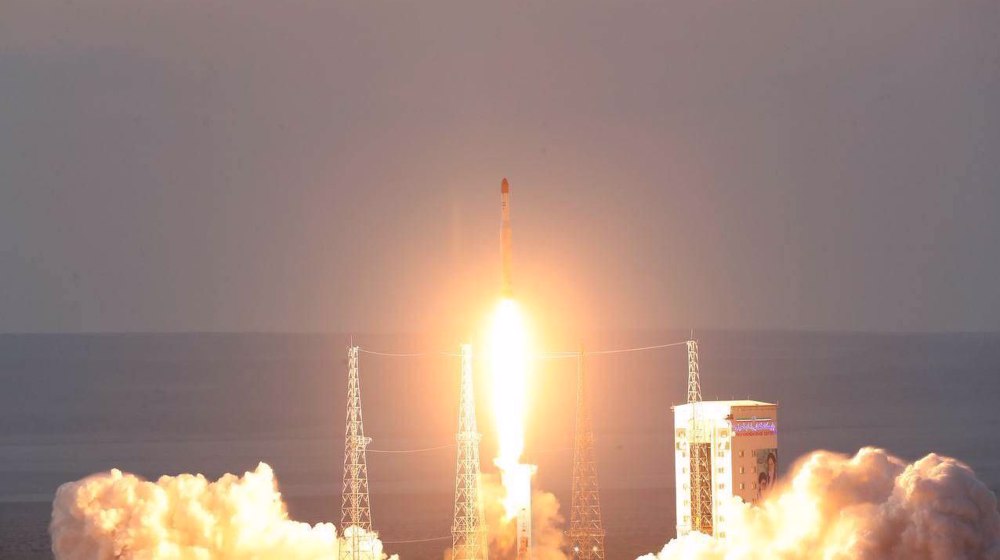
Iranian scientists and engineers have successfully launched a space tug into space on an Iranian-made rocket. This is a big step forward for the country’s space industry.
With the help of a Simorgh launcher, the Imam Khomeini Space Launch Terminal southeast of Semnan successfully sent the Saman-1 into space on Friday morning. The payload also included a CubeSat and some study materials.
The packages formed a 410-kilometer-wide path around the Earth, with a 300-kilometer-wide path between them and the sun.
The Iranian Ministry of Defence built Simorgh, a two-stage SLV that runs on liquid fuel.
The Simorgh set a new record for the most packages it could launch on its eighth flight. It successfully put the Saman-1 orbital transfer block and two other study payloads into orbit during this multi-phase mission. Together, they weighed about 300 kilograms.
Workers at the Iranian Space Research Centre (ISRC) created the Saman-1 system. Its goal is to put satellites in higher orbits, which will save money and get rid of the need for big, fuel-hungry launch vehicles.
In October 2022, a test flight of the space tug took place. When Hassan Salaryieh, the head of Iran’s space agency, thought about the system, he said that it “means a faster and smoother process of obtaining an orbital point synchronised with the Earth once a satellite raises its orbital height from its geostationary orbit to the operational one.”
The Fakhr-1 nanosatellite
Iranian sources say that the Fakhr-1 communication satellite was one of the things that today’s launcher carried. Engineers from the Iran Electronics Industries branch of the Ministry of Defence launched this satellite into a 410-kilometer orbit.
We named the nanosatellite after the scientist Dr. Mohsen Fakhrizadeh, who tragically lost his life. It is 3U in size and weighs less than 10 kilograms.
According to Tasnim News Agency, one of the missions’ goals was to test the Simorgh launcher’s ability to carry more than one warhead.
The main computer, power and energy management, radio communications, and flying dynamics are some of the most important parts of the Fakhr-1. Most of these parts were made in the United States by knowledge-based companies and are being sent into space for the first time.
The satellite sent telemetry data, which included information from its sensors and circuits, after it separated from the launch vehicle. The satellite got and carried out commands from ground stations properly during its first pass.
Even though the West has put sanctions on Iran in recent years, the country’s peaceful space program has made huge progress.
The country is one of the top ten in the world at making and releasing satellites.
Iran successfully launched its own Chamran 1 study satellite into orbit on September 14. This was a big step forward in the country’s space program.