

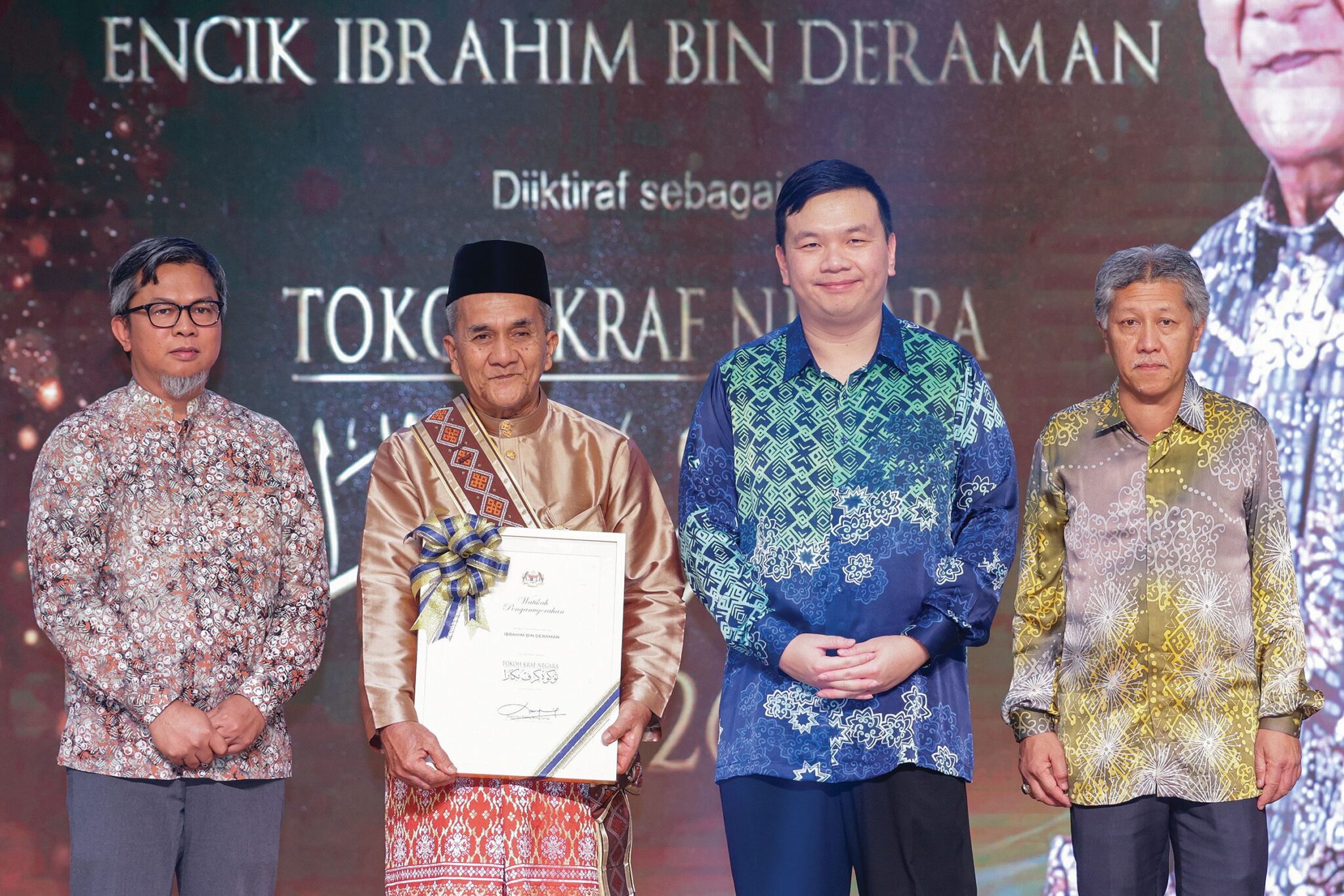
Ibrahim Deraman Named National Craft Icon 2026
KUALA LUMPUR: The process of creating batik may appear simple, but the reality is far different. Every stage requires a high level of skill and precision, as even a small mistake during the waxing or colouring process can affect the entire finished piece.
This aptly reflects the challenges faced by batik artisans in ensuring that the heritage art continues to have a place in the lives of younger generations.
According to National Craft Icon Ibrahim Deraman, 69, producing batik is not something that can be completed in a short period of time.
“Batik is actually difficult to make, although it may look easy to others. That is one of the reasons why people are not interested in getting involved in batik-making,” he said after being named National Craft Icon 2026 at the opening ceremony of the Malaysia International Craft Festival (MICF) 2026 here yesterday.
The award was presented by Deputy Minister of Tourism, Arts and Culture Chiew Choon Man.
Also present were Tourism, Arts and Culture Ministry Secretary-General Datuk Shaharuddin Abu Sohot and Kraftangan Malaysia Director-General Abdul Halim Ali.
Ibrahim specialises in producing batik using various techniques, including layered block printing, retak seribu (thousand-crack) batik and discharge batik.
His batik design themed “Gabungan Dua Zaman” (A Fusion of Two Eras) has captivated local craft enthusiasts and also attracted the attention of international visitors, including those from France.
More notably, batik produced by Ibrahim was also worn by the Malaysian delegation during the 47th ASEAN Summit.
Ibrahim said three of his eight children are continuing the family’s batik-making tradition.
He said batik should not merely be inherited in name, but must be learned and mastered by younger generations to ensure the traditional craft continues to thrive.
According to him, one essential quality young people must have is passion.
“If you have the passion, you will find a way to make it work. If you are not interested, no amount of exposure will make a difference. You must have the passion,” he explained.
Commenting on the recognition he received, Ibrahim expressed gratitude and happiness over the award, describing it as something unexpected for an “ordinary person” from a village.
“I am just an ordinary person from Kampung Talak, Tumpat, Kelantan, so receiving an award like this was truly unexpected.
“My hope is that this traditional batik craft will continue to grow and flourish, and remain preserved for future generations,” he said.
Meanwhile, Choon Man said the country’s craft industry recorded RM240.3 million in sales from January to July, with 96 per cent, or RM230.3 million, coming from the domestic market.
He said the figures demonstrated the strength of Malaysia’s domestic craft market.
“However, there is still vast potential to take Malaysian crafts further into the global market. This can be achieved through MICF 2026.
“MICF plays a strategic role in connecting local entrepreneurs with international buyers, markets and industry partners,” he said.
Choon Man said MICF 2026 carried an important message that heritage should not only be preserved but also strengthened so that it can continue to grow, innovate and remain competitive.
“MICF 2026 demonstrates the potential of handicrafts as both cultural assets and a competitive global industry.
“It brings together 400 local and international vendors from more than 20 countries,” he said.
UTUSAN