

Four-Hour Journey From Gombak to Kota Bharu
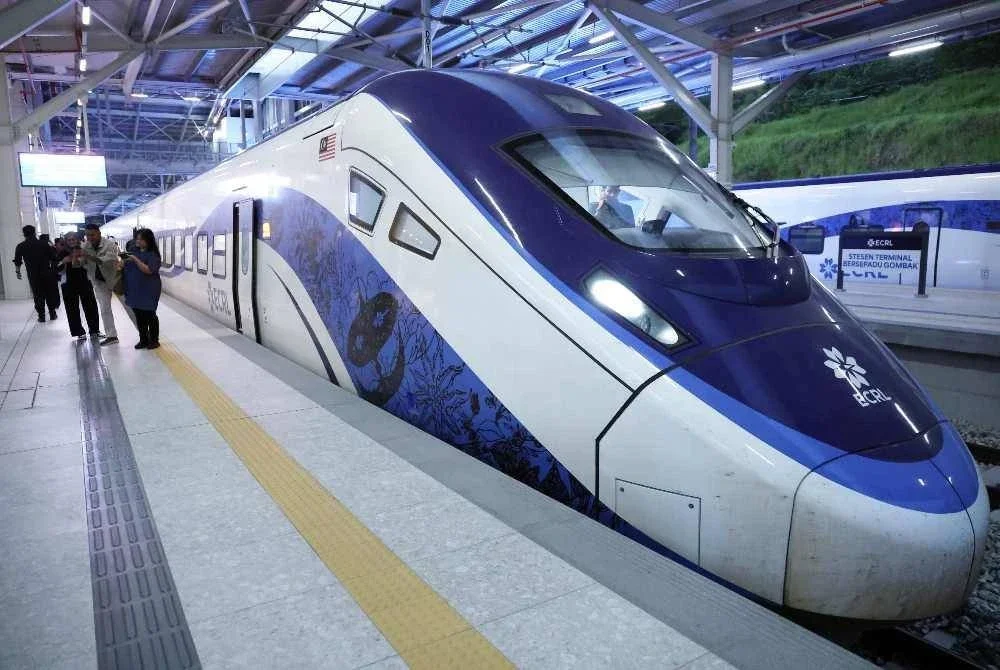
THE journey on the East Coast Rail Link (ECRL) train from Gombak to Kota Bharu takes approximately four hours, but reaching the city centre of the state known as Cik Siti Wan Kembang requires additional travel time and transport costs.
For the approximately 10-kilometre journey from the Kota Bharu ECRL Station to Siti Khadijah Central Market, a Sinar Harian journalist and fellow media representatives paid RM46 for a six-seater e-hailing service.
The experience was among the findings during the ECRL Rail Exploration Familiarisation Trip (FAM Trip), which also provided an opportunity to personally assess the train’s comfort and the condition of facilities at the stations.
The visit took place while the ECRL was undergoing trial operations ahead of the planned commencement of commercial passenger services on December 12.
The journey began at Gombak Integrated Terminal aboard an express train travelling at speeds of up to 160 kilometres per hour (km/h), while still providing passengers with a comfortable ride without noticeable vibrations.
In fact, the speed was barely noticeable as the writer was still able to use a mobile phone, walk around inside the train and record the scenery outside.
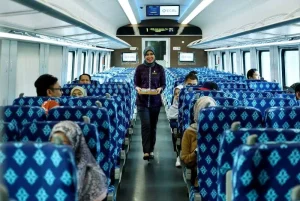
The stability was contrary to initial expectations that a train travelling at high speed would produce frightening vibrations that could cause anxiety.
The seats, equipped with adjustable backrests, provided good support, allowing the writer to sleep comfortably during the journey across three East Coast states.
Ample legroom, phone charging sockets and seats that can rotate 360 degrees further enhanced passenger comfort.
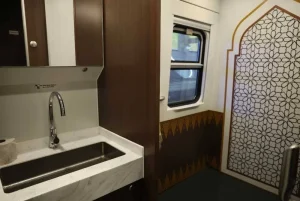
The air-conditioning system functioned well, while the toilets inside the carriages were comfortable to use while the train was moving.
For the writer, who hails from Selangor, the journey also provided an opportunity to enjoy panoramic views of paddy fields, hilly forest areas and villages alternating along the route, offering a different experience compared with travelling by highway.
However, there was a limitation when the writer’s mobile phone lost network coverage in several areas, causing temporary internet disruptions.

The communication disruption was among the aspects that warranted attention, particularly for passengers wishing to work, stay in touch with family during the journey or conduct live broadcasts on TikTok.
The actual cause of the disruption has yet to be determined, whether due to geographical conditions, tunnels or telecommunications network coverage.
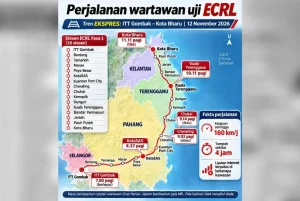
Based on the journey records, the train arrived at KotaSAS, Kuantan, at 8.37 am before passing through the Cherating area at approximately 9.02 am and Chukai 12 minutes later.
The journey continued to Kuala Terengganu, arriving at 10.11 am, before reaching Kota Bharu Station at exactly 11.11 am.
Arrival at Kota Bharu Station gave the writer an opportunity to inspect the premises, which featured a spacious and comfortable waiting area with a peaceful environment.
However, observations found that several facilities were still being prepared, including toilets that were not yet available for use as they were undergoing maintenance.
Business premises inside the station had also yet to begin operations, while some pathways outside the building remained sandy, with barriers placed around the access road.
However, these conditions were recorded during trial operations and do not necessarily reflect the facilities that will be available when the service opens to the public.
Media practitioners were also provided with food and drinks by the organisers before enjoying free time until the scheduled gathering at 4 pm.
With no dedicated transport provided for personal activities, the writer and several fellow media representatives decided to book an e-hailing service to visit Siti Khadijah Central Market.
23 Minutes to the City Centre
A six-seater e-hailing vehicle booked during the midday peak period at 12.33 pm cost RM46 for a 23-minute journey.
However, the return journey at 3.15 pm using a vehicle in the same category cost only RM22, with arrival at the station at 3.40 pm.
The RM24 difference between the two journeys was possibly influenced by changes in demand at the time of booking, as well as the e-hailing service’s dynamic pricing mechanism.
Overall, the return transport cost was RM68 for one vehicle, highlighting the need for passengers to consider additional expenses when continuing their journey after arriving at the station.
For the record, Malaysia Rail Link Sdn Bhd (MRL) previously announced that economy fares from Gombak to Kota Bharu would start at RM147 one way for express services and RM125 for transit services.
Both fares are subject to a dynamic pricing mechanism that varies according to travel time, demand and seat availability.
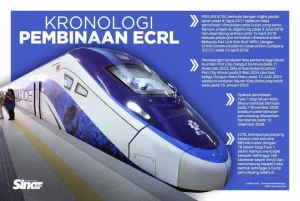
On November 3, the government also approved an allocation of RM30 million for the construction of a new bus terminal at Kota Bharu ECRL Station to strengthen connectivity between rail and road transport.
The development of this facility is important because the passenger experience depends not only on the speed of the train but also on access to transport after arriving at the destination.
The writer’s return journey was on a transit train, unlike the express service taken to Kota Bharu.
According to MRL, trial operations are being conducted from November 7 to December 2 to assess service readiness, station management and passenger experience before the commercial launch.
The writer’s experience demonstrated that the ECRL is capable of offering fast, smooth and comfortable travel between the Klang Valley and the East Coast.
However, conditions at Kota Bharu Station and communication disruptions at several locations along the route indicate that there is still room for improvement to ensure the facilities meet users’ needs and expectations.
Sinar Harian