

Early Warning System (EWS) to Be Tested on November 23 and 29 – Fahmi
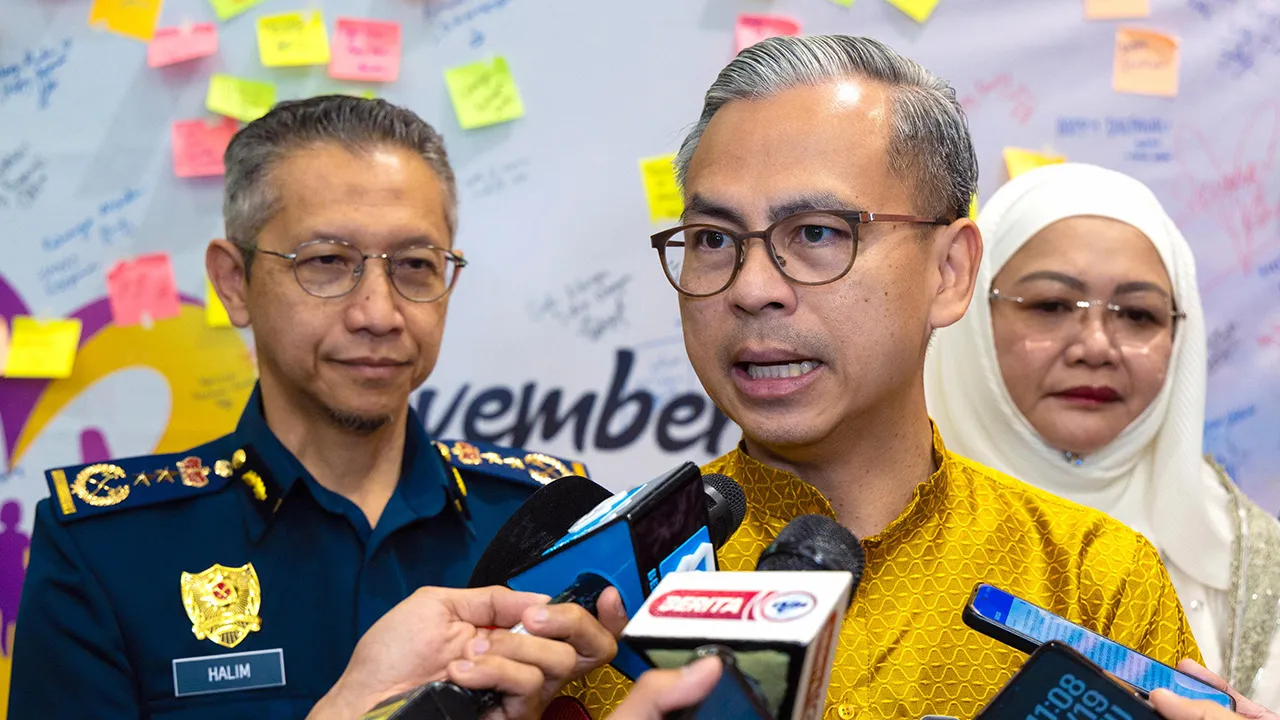
PUTRAJAYA: A simulation test of the national Emergency Warning System (EWS) will be conducted in the Parliament building area on November 23, before a simultaneous nationwide test is carried out on November 29.
Communications Minister Datuk Seri Fahmi Fadzil said the Malaysian Communications and Multimedia Commission (MCMC) would conduct an awareness campaign through Public Service Announcements (PSAs) to explain the types of messages and warning sounds that mobile phone users would receive.
He said the simulation test was aimed at ensuring that the public understood that the notifications were part of the system testing process and not actual emergency warnings.
“We will also request that these messages or public service announcements be broadcast in all cinemas, on all television and radio stations, and we will also collaborate with influencers and platforms such as TikTok to raise public awareness about the implementation of the Early Warning System, or EWS,” he told reporters after the Communications Ministry’s Monthly Assembly for November here today.
Fahmi said the implementation of EWS would not require users to download or install any applications, as the system would communicate directly with mobile phones that support the reception of such alerts.
He said the system would complement existing warning delivery methods, including short message services (SMS) and sirens installed along rivers by the Department of Irrigation and Drainage (JPS).
“Older mobile phones will still receive SMS alerts, but newer phones will receive information through EWS, which will appear as pop-up messages.
“We do not need to install or download any applications because this system will communicate directly with mobile phones and not through SMS,” he said.
Fahmi said EWS could be used not only to deliver natural disaster warnings, such as floods, landslides and earthquakes, but also potentially for public safety and security purposes.
He said the system could be used by the Royal Malaysia Police (PDRM) or the National Security Council (MKN) to convey important information to the public, including cases involving missing persons or children.
“For example, if a person is reported missing in a particular area and cannot be located, or if a child goes missing, information about the incident can be disseminated. This practice is already implemented in several other countries, where the same information delivery system is utilised.
“So we can see that notifications can be issued for natural disasters, including floods, landslides and earthquakes. EWS can also be utilised for public safety and security matters.
“EWS is geographically location-based. If an incident occurs in a particular area, the information will reach everyone within that area, although the broadcast is more general in nature. Therefore, some locations that are not affected may also receive the alert,” he said.
Commenting on the recent circulation of flood warning messages via WhatsApp, Fahmi clarified that the messages were not part of the EWS implementation, as the system uses pop-up notifications rather than SMS or WhatsApp.
BERNAMA