

Cheaper robotic whales are used in China’s aquariums, which makes tourists feel cheated
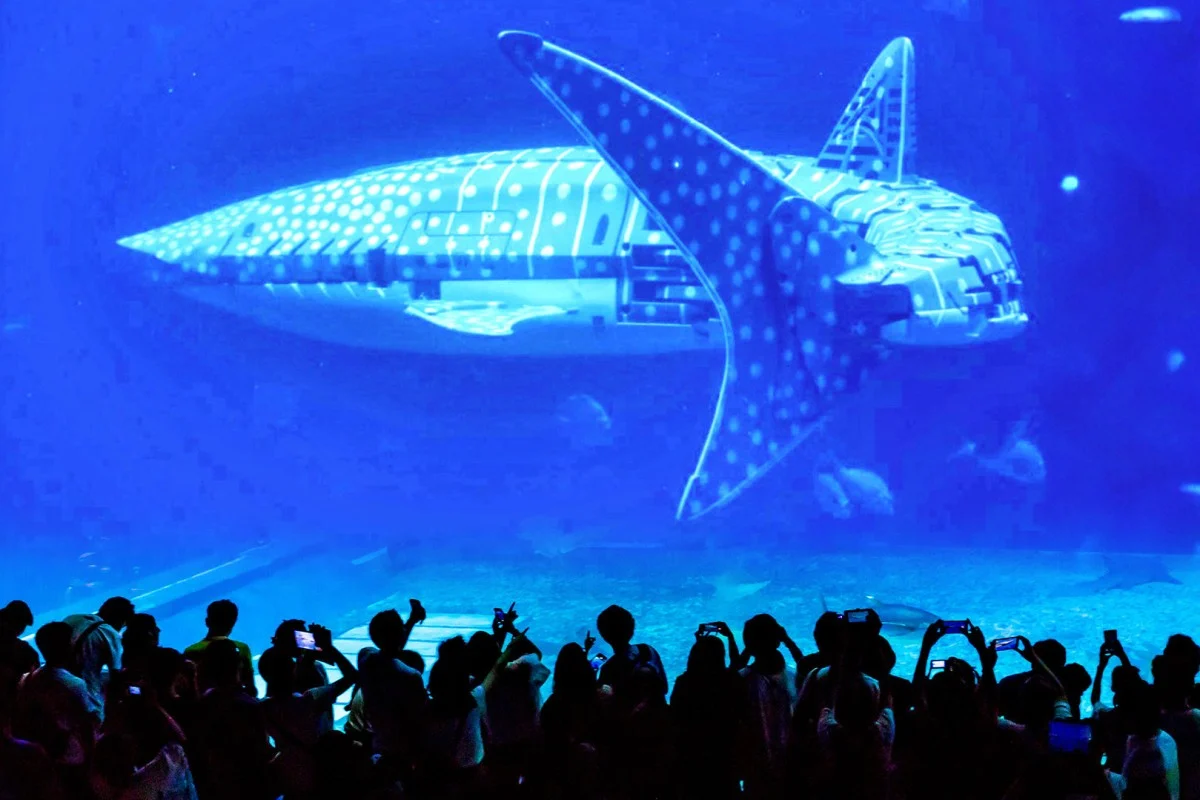
The display of a fake whale shark in an aquarium in southern China has angered some people. Here, people are passionate about the rights of customers and the well-being of animals.
The Xiaomeisha Sea World in Shenzhen, Guangdong province, has been open since October, and videos of a life-size robotic whale shark moving through the water have been making the rounds on the internet.
People had different reactions to the robot show. Some thought it was fake, others thought it was clever. It takes 230 yuan ($32) to get into the tank.
On the aquarium’s page on Dazhong Dianping, a restaurant and review service operated by Meituan, some guests expressed their dissatisfaction and requested a refund.
“I can’t believe the whale shark is fake,” said one reviewer. Why do you charge more than 200 yuan for a ticket?
Because of the fake whale shark, another guest said they would “report the place and have it shut down.”
On the other hand, some people agreed with the aquarium’s method.
A person who says they like cyberpunk said this about Xiaohongshu: “It’s a great way to show off big sea creatures without putting them in a tank.” Instead of hiding the whale shark’s real name from guests, the aquarium should use this chance to teach people why it’s important to protect animals.
It’s not the first time that a Chinese zoo has used a robot whale shark instead of a real one.
The National Business Daily says that a robot like this made its appearance at Shanghai Haichang Ocean Park in 2022.
The 111 Factory under the China Aerospace Science and Industry Corporation and Haichang Ocean Park Holdings Ltd. worked together to make the Shanghai robot. The robot, measuring 4.7 meters in length and weighing 430 kg, mimics the movement of a real whale shark under human control.
Visitors said that the robot’s movements did not closely resemble those of a real whale shark because it was kept in a tank and only came out for shows.
Although each robotic whale shark costs millions of yuan (hundreds of thousands of US dollars), this is significantly less than the cost of maintaining live whale sharks.
It can cost more than 100 million yuan (US$14 million) to keep and take care of the world’s biggest fish.
Li Jianping, head of the Academy of Future Ocean at the Ocean University of China, says that whale sharks rarely live longer than five years in aquariums. In the wild, they can live up to 130 years.
They can get the best water quality and temperature control in the aquarium, but the small area isn’t enough for their needs.
According to a representative from Shanghai Haichang Ocean Park, China prohibits the fishing of whale sharks as a national second-class protected species. Putting on shows with robotic whale sharks is a way to protect these animals and teach people about the ocean.
Some people who went to Xiaomeisha Sea World said they felt “cheated” and even asked for their money back. Others praised the aquariums for becoming more committed to animal welfare and said it was fine as long as people knew about the robotic shark ahead of time.
Wang Rongmei, a lawyer from Beijing’s Jingsh Law Firm, said that the park doesn’t break any rules as long as it doesn’t say that it has live whale sharks.
Li from Ocean University was hopeful that future technological progress would make it possible for robots to move more like real people.
In the end, he said, “The perfect aquarium should be nature itself.”