

Budget 2027: MIMOS Wants R&D to Translate into Economic Value
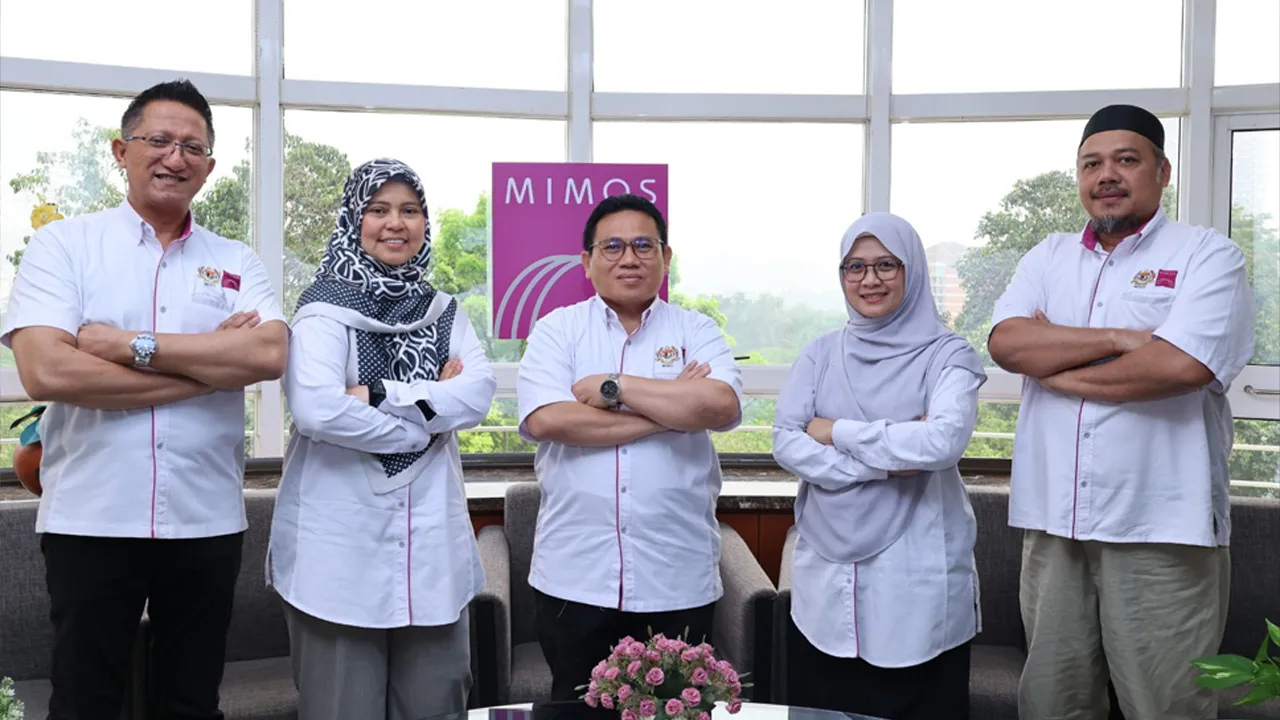
KUALA LUMPUR: Budget 2027 must serve as a catalyst to accelerate the transition from research and development (R&D) to the commercialisation of homegrown technologies, industry adoption and the creation of high-value economic opportunities.
MIMOS Berhad President and Group Chief Executive Officer Saat Shukri Embong said investments in R&D must translate into Malaysian-made technologies that can benefit industries, enhance national competitiveness and deliver tangible benefits to the people.
According to him, Malaysia has developed significant capabilities in R&D, technology and innovation, but the next step is to ensure these capabilities generate commercial returns, strengthen local intellectual property (IP) and deliver measurable economic impact.
“We need to move beyond merely being technology users towards developing and producing technologies that benefit society and industries in Malaysia,” he said during a special Budget 2027 interview with Astro AWANI at MIMOS Berhad here recently.
Budget 2027 allocates RM6 billion for R&D and commercialisation activities across ministries. In addition, Khazanah and the Retirement Fund Incorporated (KWAP) will invest RM1.2 billion to help local semiconductor companies move into higher-value segments.
Saat Shukri said the allocations presented an opportunity to align research capabilities with national industry priorities and market demand, thereby strengthening Malaysia’s technological sovereignty through the development of domestic capabilities.
“Our goal is not simply to develop more technologies, but to produce technologies that can be adopted, scaled up and utilised by industries to improve productivity and competitiveness.
“This is how R&D investments ultimately create value for the Malaysian economy,” he explained.
Meanwhile, MIMOS Berhad Deputy Group Chief Executive Officer and Group Chief Operating Officer Abdul Rashdee Abdul Kadir said technology adoption must address real business and industry challenges while delivering measurable productivity improvements.
“The main challenge is ensuring that technologies are actually used and deliver results.
“We need to assess whether a technology can save time, reduce costs or improve quality and productivity. Solutions must be tested and their outcomes measured before being scaled up,” he said.
Budget 2027 also includes RM30 million in funding from the Malaysia Digital Economy Corporation (MDEC) to help 4,000 micro, small and medium enterprises (MSMEs) adopt artificial intelligence (AI) and automate their operations.
The initiative also involves the training and certification of 5,000 AI professionals.
According to Abdul Rashdee, a practical approach tailored to business needs is essential to connect technology developers with companies that can benefit from their solutions.
“Success is not measured solely by the number of technologies developed, but by the extent to which they are adopted, implemented and scaled up.
“A stronger pathway from R&D to industry will enable Malaysian companies to derive greater value from technology investments,” he said.
Meanwhile, MIMOS Berhad Deputy Group Chief Executive Officer and Group Chief of Staff Nurezmy A. Majid said technology development requires a coordinated ecosystem involving the government, industry, academia and R&D institutions.
“Technology development cannot take place in isolation.
“Malaysia needs a strong and interconnected ecosystem in which policies, R&D, industry demand, talent development and commercialisation progress together,” she said.
She added that Budget 2027 provides an opportunity to strengthen links between research institutions, industry, investment and talent development pathways, enabling promising technologies to progress from validation to adoption and large-scale deployment.
MIMOS Berhad Group Chief Technology Officer Zulaikha Kadim, meanwhile, said Malaysia must continue developing strategic technological capabilities, particularly in AI, semiconductors and digital technologies.
According to her, Budget 2027 identifies quantum technology as a future skills priority.
The budget also states that the National Cyber Security Agency (NACSA) and the Malaysian Communications and Multimedia Commission (MCMC) will develop homegrown post-quantum cryptographic technologies to protect data against threats posed by quantum computers.
“The opportunity is not merely to adopt technologies developed elsewhere.
“We must also strengthen our capabilities to develop, validate and commercialise technologies that incorporate Malaysian intellectual property and can compete at regional and global levels,” she explained.
Meanwhile, MIMOS Berhad Group Head of Corporate Planning and Strategy Hazian Mamat said technology investments must be linked to clear and measurable economic outcomes, including productivity improvements, commercialisation, high-value employment and the strengthening of local companies.
“An outcome-based approach is essential to ensure that every investment in innovation makes a meaningful contribution to Malaysia’s long-term competitiveness,” she said.
She added that progress in the country’s technology strategy must also be assessed over the long term, focusing on the continuity of pathways from R&D to commercialisation, technology adoption and the development of talent needed to sustain Malaysia’s competitiveness in strategic technology sectors.
Overall, MIMOS views Budget 2027 as an opportunity to strengthen the transition from R&D to commercialisation, expand the adoption of homegrown technologies, develop Malaysian intellectual property and create higher-value economic opportunities.
According to MIMOS, the success of technology investments must ultimately be measured by their real-world impact through commercialisation, productivity, industrial competitiveness, the creation of high-value jobs and sustainable economic value for the nation.
AWANI