

BIM Expanded Nationwide to Cut Costs, Speed Up Projects
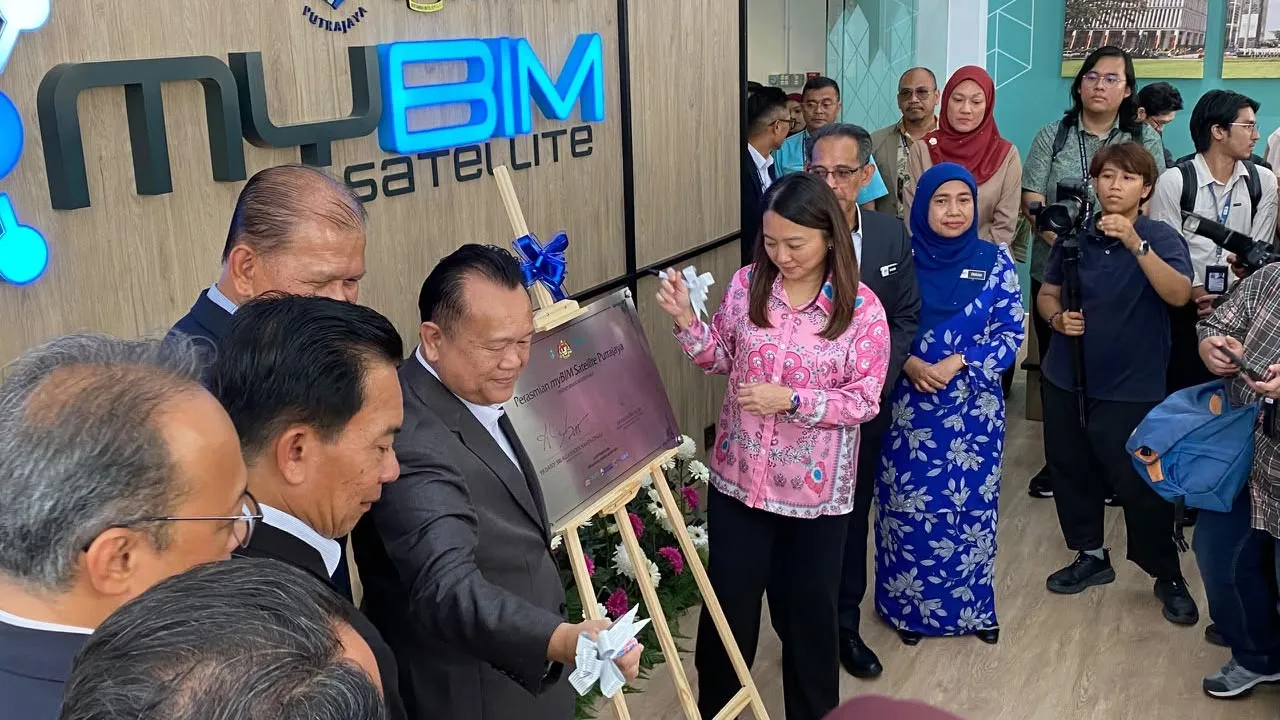
PUTRAJAYA: The use of Building Information Modelling (BIM) for government projects valued at RM10 million and above is being expanded nationwide in an effort to reduce expenditure, accelerate project implementation and improve efficiency in the construction industry.
Works Minister Datuk Seri Alexander Nanta Linggi said the use of digital technologies, including BIM, could help physical development projects be implemented more efficiently, accurately and systematically, while saving time and costs.
“The use of digital technology and BIM in implementing physical development projects, in particular, can help us become more efficient, more effective, more accurate and save time.
“All of this has financial implications, and we hope it will help reduce costs. Apart from work at construction sites, development can also be carried out in a more organised and systematic manner,” he said at Malaysia BIM Day 2026: Putrajaya Digital Built at the Putrajaya Corporation Complex here today.
In expanding the use of the technology, he said the government had allocated RM83.3 million to establish BIM Labs nationwide this year, involving the Public Works Department (JKR), including in Sabah and Sarawak.
He said a total of 16 BIM Labs under JKR would be established and are targeted for completion nationwide by December.
According to him, the facilities will enable contractors and consultants awarded government projects to use BIM facilities to accelerate project implementation.
He said BIM Labs are also being developed nationwide through the Construction Industry Development Board Malaysia (CIDB) as part of efforts to reduce the financial burden on contractors and consultants, including the cost of acquiring related software.
The effectiveness of BIM in reducing costs and preventing project delays can be seen, among others, through its use in the Pan Borneo Sarawak construction project in 2016.
Meanwhile, Works Ministry Secretary-General Datuk Seri Azman Ibrahim said the use of BIM in the project successfully identified and resolved more than 3,000 errors in design drawings, thereby avoiding the risk of delays estimated at about 10 years and saving the government RM157 million.
He said the technology could also speed up the plan approval process, reducing the time required from about 14 days previously to around 48 hours.
Azman said the Works Ministry also plans to integrate artificial intelligence (AI) into the technology in the future to further accelerate the process.
“If we look at it… the cost may appear higher because we are looking at the initial investment. But we also need to consider the returns. For example, the plan approval process, which used to take 14 days, can be reduced to 48 hours through the use of new technology.
“So, the cost needs to be viewed as a whole. We cannot look only at the cost of providing AI or new technology; we must also consider the greater benefits,” he said.
He said the government currently requires BIM to be used for government projects valued at RM10 million and above, while courses are also provided through CIDB to help contractors and consultants keep pace with the adoption of the technology.
Meanwhile, Minister in the Prime Minister’s Department (Federal Territories) Hannah Yeoh said the BIM Lab in Putrajaya would be managed by Putrajaya Corporation (PPj), with the technology expected to help improve the efficiency of urban planning and maintenance.
“This BIM Lab will be based here and managed by Putrajaya Corporation. We hope Putrajaya will become the first place to fully utilise this application so that urban planning can be more organised and systematic, while maintenance can help save government funds,” she said.
At the same event, the Putrajaya BIM Roadmap 2050 was launched as a long-term framework to expand the integrated use of BIM in the planning, development and management of Putrajaya’s assets.
The myBIM Satellite Putrajaya was also launched as a platform for training, competency development and BIM knowledge-sharing among government personnel and industry players.
Malaysia BIM Day 2026, themed “BIM Beyond Design”, highlights the application of BIM beyond design and construction to cover the entire asset life cycle, including planning, operations, maintenance and asset management.
The programme brought together about 600 participants from government agencies, industry, developers, contractors, professionals, academic institutions and technology companies, as well as 35 exhibitors.
Astro Awani