

Experts Point to Glacier Collapse as Likely Cause of Deadly Himalayan Flood in India
NEW DELHI: A devastating flash flood that tore through the Indian Himalayan town of Dharali this week was likely triggered by the collapse of a glacier-dammed lake, according to experts, raising new alarms over the growing impact of climate change on fragile mountain ecosystems.
At least four people have been confirmed dead, with more than 50 still missing, after a wall of water, mud, and debris thundered down a narrow mountain valley in Uttarakhand state on Tuesday (August 5). Shocking footage from the disaster showed entire buildings being swept away as residents ran for safety, many of them overtaken by the freezing floodwaters.
Initial statements from government officials blamed the incident on a sudden cloudburst, an intense rainfall event that hit the region. However, environmental scientists believe the disaster had deeper, more complex origins.
Experts now suggest that the flood may have been triggered by the collapse of a moraine-dammed glacial lake, a natural reservoir formed by melting glaciers and blocked by loose rock and sediment. Prolonged rainfall in the days leading up to the disaster may have saturated and destabilized the moraine, eventually causing a Glacial Lake Outburst Flood (GLOF).
“Given the persistent rainfall over preceding days and the sudden discharge observed, a GLOF, or collapse of a moraine-dammed lake, is suspected as the primary trigger,” said Dr. P.K. Joshi, a specialist in Himalayan hazards at Jawaharlal Nehru University in New Delhi.
He described the event as a “sudden high-energy flash flood,” noting that the terrain upstream of Dharali includes unstable sediment zones, making the region especially vulnerable to such catastrophic collapses.
Climate scientists have long warned that the Himalayan glaciers, often referred to as the “Third Pole” due to their vast ice reserves, are melting at an accelerated pace due to rising global temperatures.
As glaciers retreat, they leave behind meltwater lakes that are often dammed by fragile ridges of loose debris. These dams can fail with little warning, especially during periods of heavy rainfall or seismic activity.
Although cloud cover has made it difficult to obtain clear satellite imagery, researchers are continuing to analyze remote sensing data to pinpoint the exact source of the floodwaters.
“We don’t yet have definitive satellite confirmation,” Joshi said, “but early evidence strongly points to a glacier-linked outburst event exacerbated by climate-related factors.”
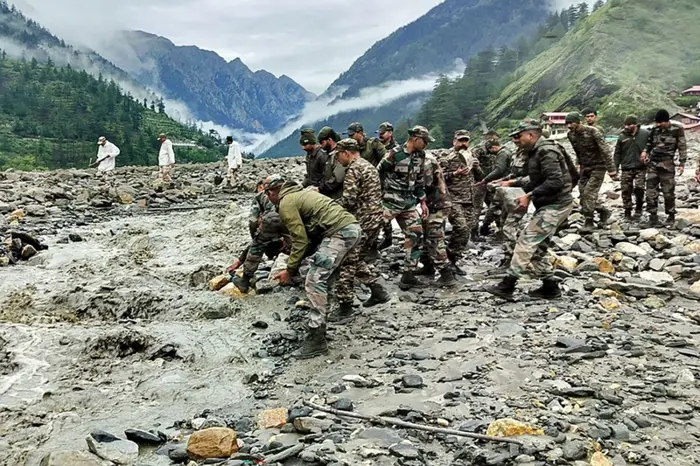
Rescue teams, including personnel from the National Disaster Response Force (NDRF) and the Indian Army, continue to search for the missing, with operations hampered by difficult terrain and ongoing bad weather.
Officials have urged residents in other vulnerable areas to remain vigilant, as more rainfall is expected in the coming days.
The disaster has renewed calls for stricter monitoring of glacial lakes and the implementation of early warning systems to prevent future tragedies.
“Events like these are becoming increasingly common,” Joshi warned. “We need to act urgently to adapt to the realities of a warming world, especially in sensitive zones like the Himalayas.”