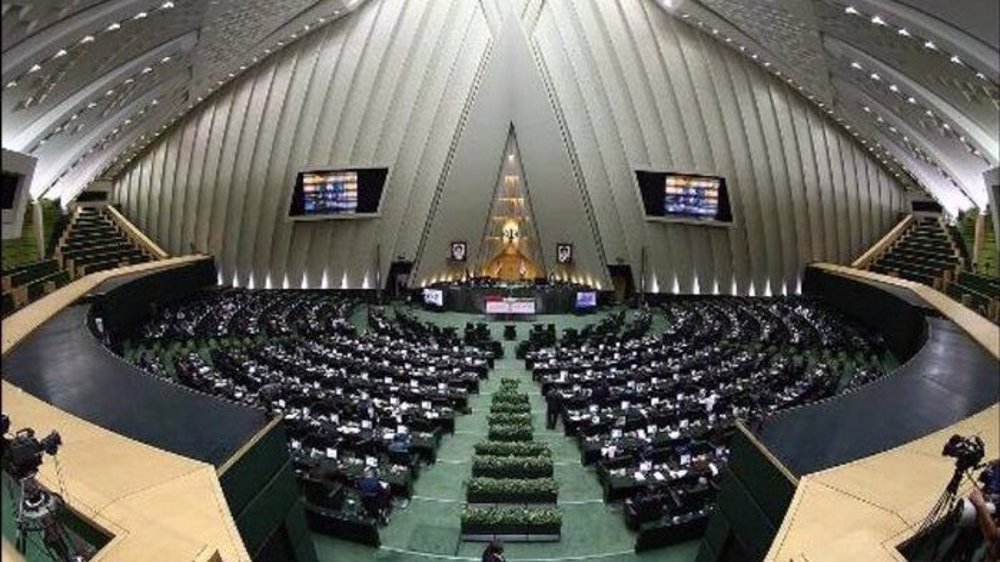
Iran’s Parliament Approves Bill to Suspend Cooperation with UN Nuclear Agency Amid Escalating Tensions
241
Share
Tehran, 25 June 2025— Iran’s parliament has approved a controversial bill to suspend its cooperation with the International Atomic Energy Agency (IAEA), intensifying the Islamic Republic’s standoff with Western powers following what Iranian officials have called a politically motivated resolution by the UN nuclear watchdog.
Alireza Salimi, a member of the parliament’s presiding board, confirmed on Wednesday that both the general and specific provisions of the bill have received parliamentary approval. Under the new law, IAEA inspectors will be barred from entering Iran unless the country’s Supreme National Security Council guarantees the security of Iran’s nuclear facilities and peaceful atomic activities.
The legislation follows a string of developments, including an IAEA Board of Governors resolution against Iran, which Tehran has condemned as biased and instigated by the United States and Israel.
Earlier this week, parliament speaker Mohammad Baqer Qalibaf stated that the Majlis was considering suspending cooperation with the IAEA until “tangible guarantees” are provided regarding the agency’s impartiality.
“The IAEA must prove its professional neutrality. Until then, suspending cooperation is a matter of national sovereignty and security,” Qalibaf told lawmakers during an open session.
Tensions escalated further after Israeli military actions targeting Iranian nuclear sites—specifically Natanz, Fordow, and Isfahan—prompted outrage in Tehran. Iran has criticized IAEA Director General Rafael Grossi for failing to condemn these attacks explicitly, which Iran says violated international law.
Senior lawmaker Ismail Kowsari has urged Iran’s Supreme National Security Council to impose a formal entry ban on Grossi, accusing him of facilitating aggression through his “politically motivated” reports.
Deputy Foreign Minister Kazem Gharibabadi went further, labeling Grossi “a tool in the hands of the Zionist regime and the US” and accusing him of complicity in war crimes. Similarly, Foreign Ministry Spokesman Esmaeil Baghaei claimed Grossi had “betrayed the non-proliferation regime” and made the IAEA “a partner to an unjust war of aggression.”
Mohammad Eslami, head of the Atomic Energy Organization of Iran (AEOI), stated that Iran would pursue legal channels to hold the IAEA accountable for its alleged inaction, particularly in light of continued Israeli attacks.
In a letter addressed to Grossi last Thursday, Eslami condemned the IAEA’s silence over the bombings and asserted that such attacks violated multiple international protocols, including the UN Charter and the Nuclear Non-Proliferation Treaty (NPT).
Adding his voice to the criticism, former Foreign Minister Javad Zarif accused Grossi of issuing an “irresponsible and fallacious” report that has inflicted “irreparable damage” to the agency’s credibility. “He must be held accountable for his complicity in the death of innocents in Iran caused by Israeli aggression using his report as a pretext,” Zarif posted on X (formerly Twitter).
The bill’s passage represents a major decline in Iran-IAEA relations and could complicate future negotiations on nuclear transparency and oversight, particularly as regional and global tensions continue to rise.