Trump Claims Crumble as US Intelligence Finds Iran’s Nuclear Program Intact After Airstrikes
229
Share
Washington, D.C.: A preliminary U.S. intelligence assessment has found that Iran’s core nuclear infrastructure remains intact despite recent U.S. airstrikes, undercutting President Donald Trump’s bold claims that the attacks had “completely obliterated” Tehran’s uranium enrichment capabilities.
The report, compiled by the Pentagon’s Defense Intelligence Agency (DIA) and first disclosed by CNN, contradicts repeated public statements from Trump and senior administration officials asserting that Iran’s nuclear ambitions had been “wiped out.”
According to four sources familiar with the classified findings, the DIA’s assessment is based on post-strike battle damage evaluations carried out by U.S. Central Command (CENTCOM) following Sunday’s pre-dawn air raids. The findings indicate that Iran’s enriched uranium stockpile remains untouched and that the targeted centrifuges suffered minimal damage.
“The DIA believes the strikes set Iran’s program back by a few months at most,” one source told CNN. “There was no destruction of underground facilities or the uranium stockpile.”
Despite this, White House Press Secretary Karoline Leavitt defended Trump and dismissed the intelligence report as politically motivated.
“This purported report was leaked in an obvious attempt to disparage President Trump and the courageous fighter pilots who carried out a flawlessly executed operation,” she said. “Everyone knows what happens when you drop fourteen 30,000-pound bombs perfectly on their targets: total obliteration.”
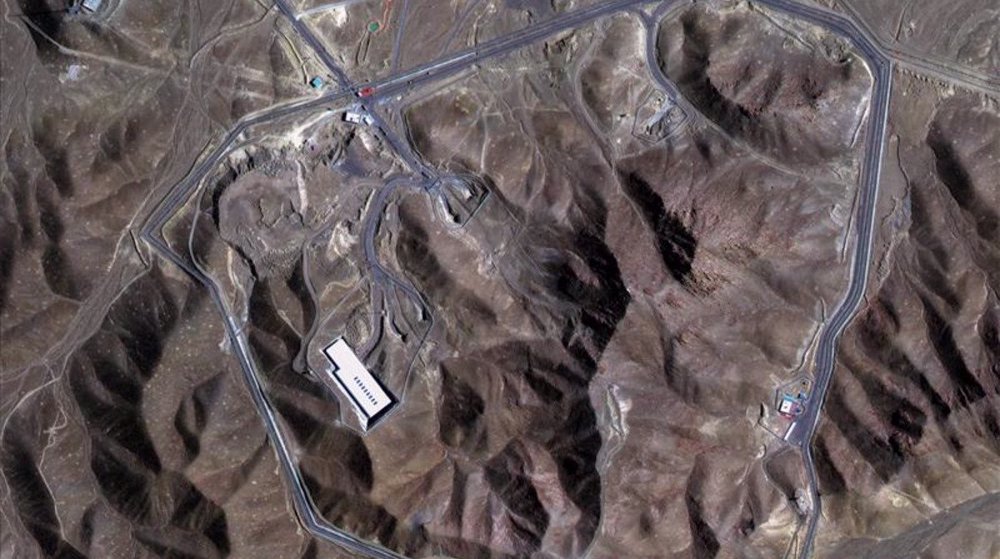
The strikes, which targeted key Iranian nuclear sites at Natanz, Fordow, and Isfahan, involved U.S. B-2 bombers and were carried out in coordination with Israeli operations launched days earlier. However, CNN cited officials and experts confirming that damage was mostly limited to above-ground infrastructure such as power grids and uranium conversion equipment, not the critical underground facilities.
Dr. Jeffrey Lewis, a nuclear expert at the Middlebury Institute of International Studies, said satellite imagery supports the DIA’s conclusions.
“Neither Israel nor the United States was able to destroy several key underground nuclear facilities,” Lewis stated. “These sites, including Natanz and Isfahan, could serve as the foundation for a swift reconstitution of Iran’s nuclear program.”
The fallout from the flawed military campaign appears to be rippling through Washington. Classified briefings for both chambers of Congress, originally scheduled for Tuesday, were abruptly canceled and rescheduled for Thursday amid growing bipartisan demands for transparency.
Iran has flatly denied that its nuclear program was crippled. Behrouz Kamalvandi, spokesperson for the Atomic Energy Organization of Iran (AEOI), said on Tuesday that the country’s nuclear efforts will continue despite the attacks.
“This industry is deeply rooted in our scientific and technological foundation,” Kamalvandi said. “No foreign power can dismantle it. Not only will it survive, but it will expand.”
The airstrikes also triggered a fierce Iranian response, with devastating missile attacks launched on the U.S. Al-Udeid Air Base in Qatar on Monday. The escalation reportedly pushed the Trump administration into seeking a ceasefire, with Trump announcing his resignation shortly after, citing pressure from both domestic and international fronts.
As tensions remain high, the disconnect between political rhetoric and intelligence realities has raised concerns about the long-term consequences of U.S. policy in the region — and whether the attacks will accelerate, rather than slow, Iran’s nuclear ambitions.