

Lebanese army takes back Palestinian areas in the Bekaa that were used by Hezbollah and the Syrian government.
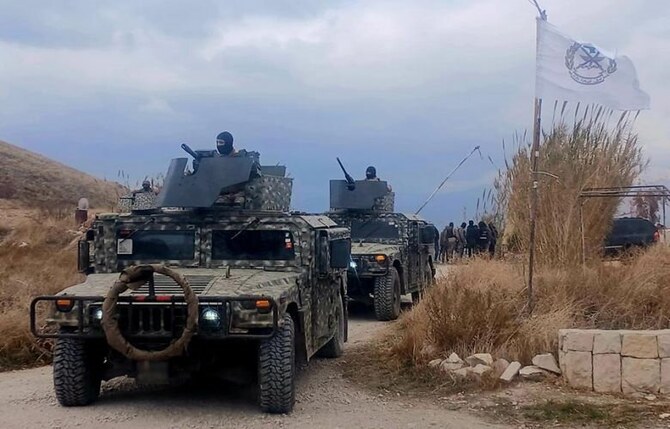
On Saturday, the Lebanese army took over several important strategic spots that were previously controlled by different Palestinian groups.
The groups had ties to both Hezbollah and the government of former Syrian President Bashar Assad, which fell 13 days ago. They were a threat to the eastern part of Lebanon.
In western Bekaa, the army took over the Sultan Yaacoub site from the Popular Front for the Liberation of Palestine. In central Bekaa, between Qousaya and Deir El Ghazal, the army took over the Hechmech site from both the Popular Front and Fatah Al-Intifada.
Army leadership said that the forces took over the sites and “stole a lot of weapons, ammunition, and military gear.”
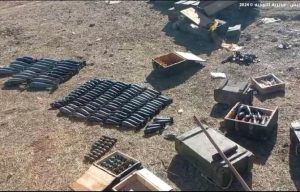
In order to keep things safe and stable and to enforce state authority in different areas, the army “continues to control the positions previously occupied by Palestinian groups within Lebanon,” the statement said.
The camps had been out of the control of the Lebanese government for about 40 years because the people who lived there refused to give up their weapons, even though the Taif Agreement of 1989 said that all weapons should be given to the Lebanese government except for guns in Palestinian camps in Lebanon, which were thought to be Syrian-protected areas.
Arab News talked to Hisham Debsi, director of the independent Palestinian centre, Tatweer for Strategic Studies and Human Development. He said, “The Syrian regime set up 13 Palestinian organisations, creating its own system that later served its own policies and those of Hezbollah.” When Hezbollah fell, these groups, which are based in the Bekaa, lost their protection. When the Assad government fell, it was the last line of defence for these groups, which you could call mercenaries.
“They were an embarrassment to the Palestinian cause because they spoke for it when they were really working for the Syrian government and Hezbollah,” he said.
Debsi said that these Palestinian groups wanted to “marginalise Fatah and end independent Palestinian decision-making.” He also said that when the Lebanese army took control of these places, “normalcy” returned.
He said this about what would happen to Palestinian militants who were part of these groups: “As individuals, if they have families in the Lebanese camps, they can join them.” Most of them, though, are Palestinians who fled Syria and can now live anywhere they want in the country.
Debsi said that most of the Palestinians who sought safety in Lebanon during the protests in 2011 had since gone to Europe, and only a few were still in the camps in Lebanon.
During the most recent conflict in Lebanon, Israel did not directly target Palestinian groups’ places, which were bombed during the war in 2006. Reports have said for years that these places held weapons, but there has never been solid proof to back up those claims.
To follow the safety rules set by UN Resolution 1701, the Lebanese army said on Saturday that its intelligence unit had raided three Palestinian refugee camps in the Bekaa Valley and arrested six people and collected weapons.
During their invasion of southern Lebanon, Israeli troops continued to break the ceasefire agreement by destroying more homes in the town of Naqoura. And instead of a Lebanese Army post near the town’s harbour, they set up a permanent military checkpoint. Near the UNIFIL offices, they also cut down citrus groves.
A low-flying Israeli drone flew over the border, which people from the south are not allowed to get close to or cross.
In a statement from a southern suburb of Beirut, the General Directorate of Civil Defence said that search and rescue teams had successfully recovered the bodies of four victims from the rubble of the Ayoub building in the Haret Hreik area. Israeli airstrikes struck the building on September 27 as they attempted to attack the home of Hezbollah Secretary-General Hassan Nasrallah.
The bodies, along with three other bodies found in the same area on Friday, will be identified through DNA tests, the statement said.